




Breaking Point
A little after 5:00 a.m. on April 2, Los Angeles resident Celestine Lewis woke up, got her two children ready for school and then walked them to their...
A little after 5:00 a.m. on April 2, Los Angeles resident Celestine Lewis woke up, got her two children ready for school and then walked them to their bus stop. Because the bus arrives before sunrise in a dangerous neighborhood, Lewis waited with them, just as she does every morning. At about the same time, several miles away, Jose Gaona was just arriving home from his night job. He took his two sons to the school bus stop and then returned home to get some sleep. That morning, these two families encountered the same misfortune - the school bus never arrived. Specifically, Los Angeles Unified School District (LAUSD) bus drivers employed by Laidlaw Education Services went on strike to protest for better wages and benefits. During the ensuing four-week work stoppage, the Lewis and Gaona families, as well as thousands of others like them, labored while their school bus routes were delayed, deferred or cancelled. As in all school transportation strikes, while the drivers and their employer haggled over a suitable deal, the real victims were the children. "We've had kids out here on the picket line with us," says Chanita Gardner, a striking driver for Laidlaw. "The kids missing school is the part of this that they need to show on the news." Naturally, most school bus driver strikes are the result of sour contract negotiations. Unorganized "wildcat" strikes based on other issues also occur from time to time. But regardless of type, all driver strikes have the potential to disrupt student transportation, frustrate parents, school officials and others, induce exorbitant financial losses and lead to wholesale changes in pupil transportation operations. The bottom line is that driver strikes are rarely a good thing for anyone involved, not even the presumed winner. When dealing with a strike, school transportation operators should consider the following three questions:
1. What steps can be taken to prevent a strike or to prepare for one?
2. If a strike breaks, how can it be slowed, resisted or stopped?
3. What lessons can be learned to avert future strikes?
Answering these questions will give student transportation personnel effective management tools for addressing this increasingly common phenomenon. A strike-proof culture
When negotiating parties refuse to come to an agreement - or worse, won't even discuss their differences - a strike is nearly unavoidable. Though it may sometimes seem to be the case, these communication breakdowns are not a plot by greedy contractors or seditious unions. Rather, such disagreements most frequently stem from two main problems - the lack of free-flowing information or the absence of a friendly relationship. Filling these two voids is the best way to establish a healthy working environment, one in which striking is unlikely. "Every strike can be avoided," says Jim Ferraro, general manager for Laidlaw in Los Angeles and head negotiator for the company during the LAUSD strike. "You have to keep employees well aware of what is taking place and continue to put information in their hands so they can make sound decisions." In the LAUSD strike, for instance, one of the pivotal demands made by the drivers was for a reduction in health insurance premiums. Laidlaw's claim was that the company's health care provider dictated the prices for health insurance. Two weeks into the strike, both the driver's union (Teamsters Union Local 572) and Laidlaw began searching for a new health care provider to reduce costs. Although it may not have prevented the walkout altogether, a more informed driver force could have tackled this issue well in advance of the strike. "You have to have a free, open and honest exchange of information in a strike situation," says Pat Houlahan, director of administrative services for Francis Howell School District in St. Louis. Francis Howell and neighboring Ft. Zumwalt School District were mired in a three-month driver strike in late 2001 and early 2002 when their contractor, First Student, failed to reach a deal with the drivers' union. Houlahan says that the strike taught him how important it is for both parties to keep open lines of communication. One way of accomplishing this is by passing out forms with updates on important issues such as budget allocations. Also effective are regular meetings with all employee positions represented and evaluations that solicit employee feedback on management, pay and working conditions. "The employer has to be understanding of the drivers' needs, and the drivers deserve to know where the money is going," says Houlahan. In addition to keeping information traffic high, operations can also benefit from having a good-natured relationship with their driver force and its union. Parties may start out with honorable intentions, but strikes often breed a strong feeling of antagonism that interferes with impartial negotiations. Breaking the confrontational norm is critical to success in labor disputes. "Starting from a common denominator is the key to labor negotiations," says Todd Fuller, media relations director for the Missouri State Teacher's Assn. (MSTA). "You have to come to the table with a willingness to discuss the issues and a congenial attitude instead of an adversarial one." The MSTA represents teachers in labor matters but also assists support staff and school bus drivers. According to Fuller, the MSTA and similar associations can help ease labor relations by fostering a team attitude where everyone's goal is the same - to help children. Pre-strike preparation
Sometimes strikes are immediately foreseeable, due to a strike vote, an expired contract or a direct verbal threat. Other times, they creep up slowly and go into effect without warning. In either case, every district, regardless of its situation, should develop a pre-strike operations plan. Although the vast majority of operators interviewed for this story had no such plan in place, its value is hard to deny. Initial development of a pre-strike plan takes place at the beginning of a district's business relationship with the transportation provider or the drivers themselves. When a district contracts with a private transportation provider, the contract should make it clear who is responsible for all costs incurred during a work stoppage. This provision protects a neutral third party from all subsequent expenses of a labor war. In the case of a school district that handles its own transportation, drivers should be notified at the time of their hire what the state and federal laws say about the liability in public employee strikes. Next, a contingency plan must be drawn up to serve as a flexible guideline in the event that a strike does occur. Special Response Corp., a strike security provider in Baltimore, recommends that operators ask the following questions to help with pre-strike planning:
Will we attempt to conduct business as usual?
How will facility access be controlled?
How many employees will strike?
Will criminal charges be filed if the police make any arrests?
Will there be documentary coverage of the strike and how?
Will we need to establish a media relations strategy?
Based on the answers, a rough outline should be drawn up, explaining how authority will be delegated and what procedures will be followed. Obviously, it's impossible to predict the exact answers to these questions, so the plan must be used only as a guideline. But once it becomes clear that a strike will occur, it's important to flesh out the plan with more details. This includes setting up a management chain of command and advising people of their roles. "We had a plan developed more than a year and a half in advance of the strike," says Gary Dechaine, director of transportation for Robbinsdale Area Schools in New Hope, Minn., where drivers went on strike in December 2000. "From a transportation perspective, it involved keeping the parents and public informed, explaining the state of negotiations, providing alternatives to buses and deciding how we would change our normal operations." Don't hit the panic button
When a strike breaks, the resulting state can be chaotic, characterized by a clamor of concerned community members, picketing drivers and inquisitive news reporters. During such a time, the needs of the families who are directly affected must be put before all else. "During a strike," says Houlahan, "managers really have to come back to the customer service philosophy." And ultimately, the customers are the parents and their children. Thus, the first order of business should be to update them on how transportation will be affected by the strike. To achieve this goal, school districts commonly use mass mailings as their preferred method of communication. "We conducted a mass mailing to all of the households with students who ride buses," says David Himmelberger, supervisor of transportation for Bethlehem (Pa.) Area School District. "The letters contained warnings of who would be most affected and an advisory to parents to start planning to do the things they would need to do as a family." Last September, Bethlehem avoided a driver strike with an eleventh-hour contract settlement, but Himmelberger says that the mailings helped to ease some of the rising public concerns. At some school districts, a very large student enrollment makes it impossible to notify all families of an impending strike. In these districts, mailings alone will not solve communication problems. Sound alternatives include frequent Website updates and special phone lines set up for information requests. Choose the medium based on the traits of the audience you're trying to reach. For example, Cricket Bauer, a communications officer for LAUSD, notes that the district benefited during the Laidlaw strike from a strong cooperative effort between the dispatch and communications department. "We had 200 operators on an 800 number with the collective ability to speak English, Armenian, Russian, Chinese, Korean and Spanish," she says. Not all operations have access to dispatchers who speak this variety of languages, and even fewer need it, but for communications purposes, it always helps to consider the ethnic makeup of a district. Though parents and students are the primary customers, the neighboring community also deserves some consideration. As the presence of picketing strikers and street traffic increases, so do the community's concerns. The proper media outlets should be contacted and briefed on the strike's effects. Districts without designated media relations departments should assign spokespeople to handle this task. In the communications arena, poise and restraint are in order as well. The contentious atmosphere during a strike can cause some negative opinions to be expressed, and it's important for a district to avoid making disparaging comments or getting caught up in gossip. Barb Weiford, transportation director at Green (Ohio) Local Schools, says that she found some informational flyers being passed around by union members that contained nothing but propaganda. "Given my situation, I couldn't really print something out to dispute these things," she says, "but whenever I spoke to a driver, I made sure to set the record straight." Operate outside the box
Most school bus driver strikes cripple operations so severely that at least one branch of bus service must be canceled. School districts are then left scrambling to find other methods to get children to and from school. Most often, districts gather together every extra employee with driving experience, including supervisors and trainers, to cover routes, while asking regular drivers to run multiple routes. In many cases, school districts also help out by organizing carpools and asking parents for increased cooperation and vigilance. But when this isn't enough, operations must be more creative. "We know that parents have other obligations, so the administration agreed to open the school extra early and keep it open late. That way, if necessary, parents could drop off and pick up kids at a convenient time," says Robbinsdale's Dechaine. In doing so, he notes, many employees had to be paid overtime to work the extra hours and look after children. Another problem is that carpools can be confusing to young children because they have trouble recognizing unfamiliar vehicles arriving to pick them up. Houlahan describes a solution to this problem. "We had parents start decorating their cars with dolls and mascots so that the kids could tell which ride was theirs," he says. Additionally, many transportation departments cover routes by seeking the temporary services of a local contractor. As it turns out, this approach may have a hidden benefit, as it gives a school district the opportunity to measure the effectiveness of another transportation provider. After a strike ends, it's not uncommon for a district to negotiate a new deal with the contractor that helped it fill routes during the work stoppage. If a district can't secure the services of a contractor but has school buses available, the next best thing is finding spare drivers. When drivers at Green Local Schools nearly went on strike in August 2001, Weiford was planning to go out of her way to procure extra drivers. "If a strike had occurred, I was prepared to drive, get mechanics and subs to drive and pick up drivers from childcare operations and places with large driver pools," she says. Other places to look are Head Start operations and Sunday schools. Unfortunately, using help from temporary contractors or independent drivers can lead to anger and resentment among the ranks of striking employees. Replacements, or SCABs, consistently attract the ire of union-represented strikers. But in the pupil transportation industry, the importance of getting children to and from school safely transcends the politics of labor proceedings. Enlist third-party help
No matter how desperate the situation may seem, there are people and groups available to help. Consulting the state department of education is always a good start as its officials can give advice about state labor regulations. Aside from legislative guidance, state employees may also have records of previous driver strikes that can provide insight into the best and worst policies to follow. According to Houlahan, the advice of lawyers is invaluable. "We were in constant contact with our attorneys as well as the contractor's attorneys during the strike," he says. "They helped us stay compliant with labor laws, and, above all, kept us from doing anything that might breach our contract with the transportation provider." In addition, Houlahan says Francis Howell School District was fortunate to have a great working relationship with the local police. "They assisted by directing traffic, allocating resources and equipment and being on call for us." Possibly more important is the security police provide. It doesn't take a great deal of cajoling to turn pickets, protests and rallies into outright riots. Communicating and cooperating with law enforcement can prevent a potentially dangerous striker insurrection. Of course, police are obligated to provide security in matters affecting the general public. But for added protection, there are private strike management and security companies that specialize in offering assistance. Dechaine says that these companies serve as an excellent deterrent to misconduct on the picket line. "We hired a company to provide security at our facilities, and they maintained video surveillance so that if any of the strikers caused a problem, it would be well documented," he says. Security companies also regulate access to facilities and protect equipment, such as school buses. Community leaders, city council representatives and municipal authorities are other good resources during a strike. Politicians can help put pressure for a settlement on the striking parties, while community advocates can work to establish safe walking routes and neighborhood watch efforts. At Ft. Zumwalt School District, Patty Corum, assistant superintendent for personnel, credits the citizens of the surrounding neighborhoods with providing these useful services that the transportation department could not. "From easing traffic to getting kids to school, the community really pulled everything together, and attendance was never significantly affected," she says. Furthermore, even when it's not directly involved in the contract dispute, a school district can invite groups to accelerate the negotiations process. In collective bargaining proceedings, negotiations that reach an impasse can be resolved by alternative dispute resolution, more specifically, arbitration or mediation. Although both parties must consent to having an arbitrator or mediator hear their case, any party, including the school district, can contact and request these services. Other groups that may help settle disputes are teacher and school support staff associations and third-party unions. Live and learn
At the conclusion of a school bus driver strike, the situation must be assessed from all sides. First, disciplinary action must be handed out and criminal charges, if necessary, must be filed. Last November, a one-day wildcat strike by drivers plagued transportation operations at Broward County (Fla.) Schools. Arlin Vance, transportation director, says that because public employees cannot strike in the state of Florida, there was widespread speculation on how the offenders would be disciplined. "In the end," says Vance, "all participating drivers were suspended from 15 to 30 days, but I believe most of them realize that after what happened, they got off lucky just saving their jobs." Next, what's lost or achieved must be determined. Miguel Lopez, business representative for the Teamsters Union Local 572, says that the success of a strike is measured, from the striker's perspective, by four basic qualities. "One, nobody was arrested; two, nobody was hurt; three, nobody was terminated; and four, the employees went back to work with increases." Successes in these four areas are generally successes for all parties involved, since union victories will likely lead to higher driver morale. And, ultimately, districts and contractors should be concerned with boosting post-strike productivity levels. Dave Wehrle, lead driver for KCI Head Start in Anchorage, Alaska, has experienced driver strikes in the past. He says that, after a strike, the payoff to the employer can be considerable if the employer keeps the drivers in the loop. "Regardless of finances, employers have to treat drivers as they would want to be treated," he says, "People understand fiscal management, but they may not understand mysterious equations." A strike's outcome, good or bad, serves to emphasize the significance of an open, honest relationship between the negotiating parties. If everyone shares the common interest of safely transporting students, the relationship has a better foundation from which to start, and a future strike becomes less probable.5 Major School Bus Driver Strikes of the Past Decade
1) Overwhelming defeat for drivers
Seattle Public Schools
March 1995
Laidlaw school bus drivers contracted by the district stayed away from work for 30 days, affecting about 13,000 students. As members of Teamsters Local 763, the drivers demanded a pension plan from the contractor. Laidlaw refused to give in to the strikers, despite the fact that they received strong support from the community, parents, school officials and the union. Laidlaw filled routes with inexperienced and hastily-trained drivers, causing widespread safety concerns among parents and increased pressure for a settlement. The drivers returned to work after agreeing to a contract with no pension and only a modest wage increase. 2) A victorious union-driver effort
Fort Zumwalt School District and Francis Howell School District
St. Louis
October to December 2001
School bus drivers for two large school districts in suburban St. Louis - Fort Zumwalt and Francis Howell - remained on strike for almost three months after talks repeatedly broke down between Teamsters Local 610 and First Student Inc. The strike involved approximately 350 drivers and affected transportation to about 26,000 students. In an impressive victory for the strikers, the strike ended with the approval of new contracts that gave drivers 70- to 80-percent wage increases. 3) Far-reaching effects
Los Angeles Unified School District
April 2002
This strike in the nation's second largest school district resulted in the cancellation of dozens of sporting events and field trips as well as significant delays to normal school service. With at least 700 of LAUSD's 2,220 bus routes disrupted by the strike, more than 10 percent, or 75,000, of the district's students experienced transportation delays. The feud was between 800 members of Teamsters Local 572 and their employer, Laidlaw Education Services. The strike ended in a compromise, with drivers accepting a new contract that included wage increases and enhanced health care. (See sidebar: "Diary of a Strike") 4) The quick sting of a wildcat strike
Shelby County Public Schools
Shelbyville, Ky.
October 1997
Thirty-five of the district's 61 drivers staged a one-day walkout in an effort to increase administrative support and safety for the driver force. The walkout, which was disruptive enough to cancel school for a day, came after a driver was severely beaten by a 17-year-old student. The brief strike led to a district-wide security upgrade in school buses, which included better dispatch operation, additional driver training, an enhanced discipline code for riders and closer ties with law enforcement officers. 5) A long, bitter war
Martin County School District
Palm Beach, Fl.
June 1999 to March 2001
When the Martin County School District tried to reduce operating costs by signing a contract with Laidlaw, no one could have predicted the extent of the contract disputes that ensued over the next 18 months. After intermittent negotiations stalls, strike votes and third-party mediation, the two sides finally agreed to resolve their differences with a contract that featured driver wage increases. But the damage was already done, and in June 2002, when Laidlaw's three-year contract expired, Martin County decided to end its relationship with Laidlaw and re-assume control of its own transportation operation.Diary of a Strike
TIMELINE
August 2001 - Following the expiration of their contract in July, LAUSD bus drivers and Laidlaw engaged in eight months of failed negotiations and labor disputes. Still, on April 1, officials for Teamsters Union Local 572, which represented the drivers, announced that a strike was not immediately pending.
Tuesday, April 2, 2002 - More than 800 Laidlaw drivers in Los Angeles Unified School District (LAUSD) abruptly went on strike, abandoning about a third of the district's 2,200 bus routes.
Thursday, April 4 - Union representatives and Laidlaw management sat down to negotiate with the assistance of a federal mediator from the National Labor Relations Board in Washington, D.C. The meeting spurred optimism and future talks, but several days later, the strikers refused a new Laidlaw contract offer.
Monday, April 8 - Striking drivers turned down a proposal by the federal mediator to end the work stoppage by entering into binding arbitration. Additionally, the union voted to end all talks and asked the district to enter into the dispute. LAUSD refused to get involved.
Wednesday, April 10 - At an LAUSD school board meeting, a resolution was passed stating that drivers have the right to earn a salary with which they can clothe, feed and shelter their families. The intervention by the board came amidst increased pressure for district involvement, especially by state congress members.
Monday, April 15 - Striking drivers rejected another settlement proposal that reportedly would have increased wages but not benefits. According to union officials, only two of 415 voting members approved of the deal. Meanwhile, Laidlaw and the Teamsters separately agreed to search for a health insurance provider that could increase contractor savings.
Thursday, April 18 - The two sides resumed negotiations, meeting for 12 consecutive hours. Laidlaw made another offer, but no further talks were scheduled.
Sunday, April 21 - The union again voted down Laidlaw's contract offer. More than 90 percent of voters rejected the package, claiming that it was nearly identical to earlier offers.
Monday, April 22 - Teamsters filed an unfair labor practices charge against Laidlaw, alleging that the company called strikers and threatened to terminate employees who didn't return to work. Union officials said they would drop the charges if both parties could begin a new round of negotiations.
Friday, April 26 - Negotiators from Laidlaw and the Teamsters announced that the two sides had reached a tentative contract agreement to end the month-long strike. LAUSD officials set up the meeting in which the deal was made and invited third-party union agents to help push for a compromise.
Sunday, April 28 - Striking drivers voted 339 to 58 in favor of a three-year contract that gave them 3.5 percent wage increases each year, and more importantly, improved health benefits and an annual week of paid vacation.
Monday, April 29 - School bus service returned almost to normal as 665 of the 707 Laidlaw routes were back in service. The 42 missing drivers were unaware of the strike settlement, but all came back to work by Tuesday. Events that had been postponed or cancelled were rescheduled. THE AFTERMATH
All told, the strike lasted for 28 days, 19 of which were school days. More than 10 percent of the district's 736,000 students experienced significant delays in both special-needs and regular school transportation. Additionally, all field trips, extra curricular activities and sporting events had to be canceled or suspended for nearly a month. From an economic standpoint, the lost wages for drivers, diminished revenues for Laidlaw and operational costs to the union, contractor and school district added up to millions of dollars. Factoring in the inconveniences faced by parents, teachers and district officials and the opportunities missed by thousands of students, the strike had sweeping repercussions. "We had to shut down our operation completely," says Jim Ferraro, summing up the effects of the strike. "There is no real recovery for anyone involved."
More Management
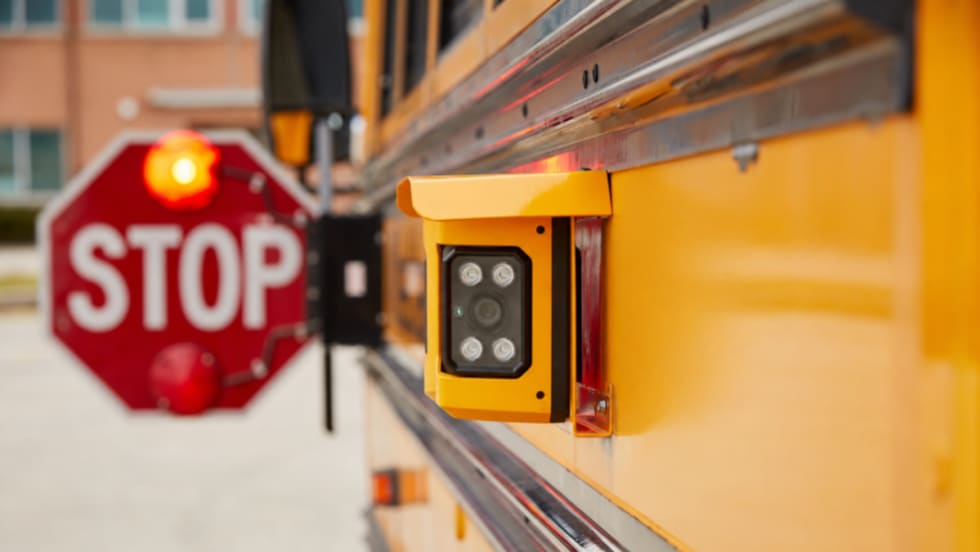
Walton County Schools Adds Gatekeeper Stop-Arm Enforcement System
The Florida district will deploy Gatekeeper’s updated Student Protector technology, which now incorporates AI to improve video evidence.
Read More →
Zum Reaches 19 States With New York Expansion
The addition of the Empire State to the student transportation company's roster marks a growing expansion in the Northeast as it scales its tech and school bus services.
Read More →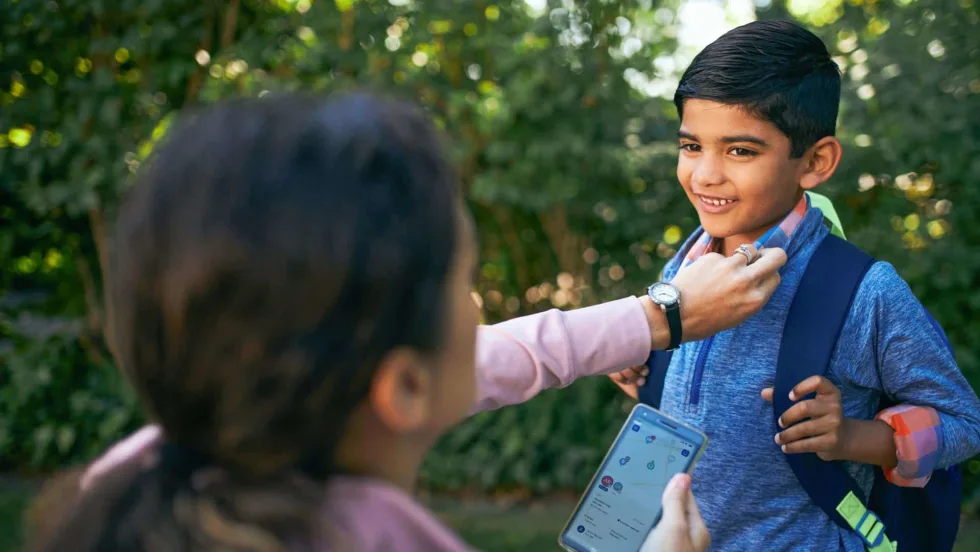
First Student Updates Its Parent App
First View connects both yellow bus and alternative transportation, giving families one platform to track student trips for the new school year, with 15 languages supported.
Read More →
The Back-to-School Checklist Every Director Should Complete Before the First Bell
Help your transportation team start the school year strong with these tips for contingency planning, communication, fleet visibility, technology, and trip management.
Read More →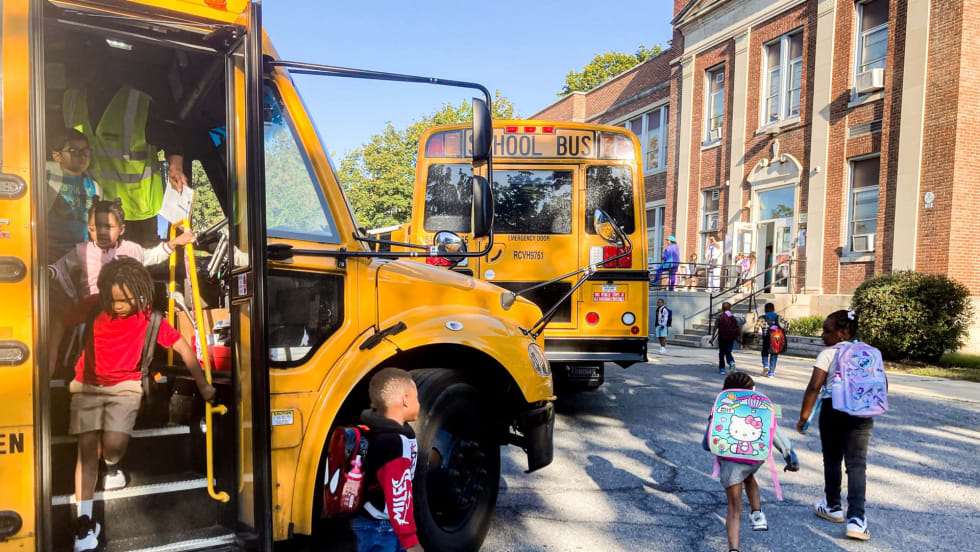
How a New York District Cut Nearly $1M in Transportation Costs While Expanding Bus Access
A data-driven overhaul with BusRight reduced Poughkeepsie City School District's planned routes from 26 to 17 while extending school bus service to about 1,200 additional students.
Read More →
Budgets Down, Enrollment Shifting: What the Data Says Districts Should Watch
School transportation departments face two converging challenges this year: tightening budgets and shifting enrollment. Most districts still address these issues separately, but the assumption that either trend will simplify operations is proving incorrect.
Read More →
These 8 School Transportation Companies Made the 2026 Inc. 5000 List
Find out which school transportation contractors, technology providers, and suppliers ranked among America’s fastest-growing private companies.
Read More →
The Link Between Emotional Intelligence and School Bus Safety
How can emotional intelligence help transportation pros navigate stress, manage change, and build stronger relationships? Listen to find out.
Read More →
What Emotional Intelligence Has to Do With School Bus Safety
In this video, discover how emotional intelligence can help transportation leaders and drivers navigate stress, manage change, and build stronger relationships. The Route is sponsored by IC Bus.
Read More →
Beyond Two-Way Radios: School Bus Communications Evolve With Push-to-Talk Over Cellular
PRYME Radio and PositionPTT join forces to advance hands-free radio use and reduce distracted driving. See how PoC compares with traditional radios on range, cost, safety, and connectivity.
Read More →