




Boston's Ergonomic Revolution
Meeting the needs of school bus drivers can take many forms — higher pay, improved training, greater emotional support. The physical demands of the jo...
Meeting the needs of school bus drivers can take many forms — higher pay, improved training, greater emotional support. The physical demands of the job also require careful scrutiny. Aches and pains, some debilitating enough to require medical leave, are common among drivers, but ergonomic features can help to alleviate these problems and reduce the amount of time drivers spend on the disabled list. It's simple enough to tick off a laundry list of available options that can improve driver ergonomics. They include air-ride seats, tilt and telescoping steering wheels, electric or air-powered doors, softer suspensions and improved windshield visibility. It's much more difficult to convince cost-conscious administrators and school boards that these "options" are worth the extra bucks. That's where Boston Public Schools (BPS) enters the picture. The district operates approximately 600 buses and vans, with a unionized driver force of about 670. The drivers are a veteran crew, mainly because the job offers high wages (approximately $17 an hour), good beneifits and a healthy work week (about 35 hours). But complaints about the district's aging fleet have been accumulating. The rigors of the job are no doubt partially responsible for some of the discontent. Many drivers complete three routes in the morning and again in the afternoon. Each route may require 15 to 20 stops. That's a lot of stopping, starting and door opening, not to mention pot holes, detours and temporary roads. Calls for kinder, gentler buses were finally heard — and acted upon — last year. In August, the school district began receiving an order for 190 buses — 145 35-passenger "half buses," 20 71-passenger conventional buses and 25 flat-floor minibuses. The new buses are equipped with air-ride, multi-adjustable seats; power doors; tilt steering wheels; and outside mirrors with electric defrost. For the 1998-99 school year, 140 71-passenger buses are being spec'd, and 100 more are scheduled to be ordered for the 1999-2000 school year. Ergonomic considerations will be high on the agenda for these buses, too. How this revolution in ergonomics was accomplished is a lesson in persistence and a willingness to research the pertinent issues. Driver spurs movement
Sandra Baldwin-Goncalves is generally credited with leading the drivers' push for ergonomic improvements. She chairs the Occupational Health Committee for the Boston School Bus Drivers Union, which is a bargaining unit of the United Steelworkers of America, and was heavily involved in preparing a 1993 report called "School Bus Design Project: Ergonomic Injury Among Boston School Bus Drivers." It was funded by a $20,000 grant obtained through Massachusetts' Department of Industrial Accidents. The report was instrumental in bringing the ergonomic deficiencies of BPS' school buses to the attention of the school board and National School Bus Inc., the vendor that manages the drivers. Among other things, it suggested the need for power-assisted doors and fully adjustable seats with improved lower back support. Survey reveals ailments
In 1995, Baldwin-Goncalves' Occupational Health Committee commissioned a health survey of Boston's school bus drivers that identified specific work-related ailments. She credits that survey with bringing about the necessary changes. "The transportation department started to pay attention to the studies and added ergonomic features into the bid specs," she says. "The initial response of the city budget people was, 'Oh my gosh, that adds costs to the bus,'" recalls Paul Keith, general manager of National School Bus Service's Boston division. But BPS drivers were able to convince the budget-makers that the ergonomic extras were more than compensated for by the savings in workers' compensation claims. "I am very proud of the work our drivers have done here in Boston to become part of the solution and not just part of the problem," Keith says. For her dedication to improving the occupational health in her work environment, Baldwin-Goncalves received the 1995 Award for Worker Activism from the Work Environment Department of the University of Massachusetts, Lowell. She has since administered a $20,000 grant to study violence against school bus drivers. "Sandra has got the bounce and energy of about 30 people," says Keith. Praise for Baldwin-Goncalves and her driver colleagues is also offered by BPS Transportation Director Rich Jacobs. "They put together this ergonomics committee and did an awful lot of research on some of the different problems, from opening the manual doors to sitting on seats with poor suspension and back support," he says. Jacobs says the ergonomic features on the district's new buses are a welcome addition, not only from the standpoint of reducing workplace injuries but also in improving driver performance. "We need the drivers to be comfortable and stay alert," he says. "If you can keep them alert, you're going to have safer drivers." End to brutal rides?
Peter Crossan, president of Coastal Bus & Equipment Sales, the Rowley, Mass.-based distributor of Blue Bird school buses, says upgraded ergonomics are necessary at BPS, where many of the older half buses rode like "an empty concrete mixer." "Driving a half bus for seven or eight hours in downtown Boston is brutal," Crossan says. "These drivers have very legitimate work-related injuries." The new half buses, Crossan says, are equipped with parabolic suspensions, which dampen the vibration. "A softer suspension is just more forgiving on the body," says Crossan, who is supplying the district with several hundred new buses. He also described the new high-back, air-suspension seats as a "tremendous upgrade." The old buses had "old-fashioned, bottom-of-the-line mid-back seats," he says. Power doors, in this case electric rather than air-assisted, were high on the list of driver priorities. Although they added approximately $60,000 to the price of the 190 buses, BPS approved their installation. Crossan says this was a wise investment. "One driver out on a workers' comp claim for one year is equal to that," he says. "The mathematics are clearly in favor of buying the accessories." Crossan also praised the district's decision to approve heated mirrors. These mirrors, he says, are valuable because drivers don't have to manually scrape the ice off of them on winter mornings. They're also useful during other times of the year. "Whether it's foggy or misty or rainy, a heated mirror will instantly dry the mirror surface and provide visibility in the danger zone," Crossan says. New study planned
Although the new buses have been on the road for only six months, the early returns are promising. "For the most part, the drivers are very, very happy," Baldwin-Goncalves says. "It's been a very positive response." Baldwin-Goncalves plans to spearhead another study. This one would rate the ergonomic performance of the new buses. "I'm getting ready to make out an application for another study grant from the Department of Industrial Accidents," she says. "This is no time to sit back and rest on our laurels. The Occupational Health Committee will continue to pursue other options and negotiate to ensure that ergonomic standards are adopted into the new fleet of full-size buses."
More Management
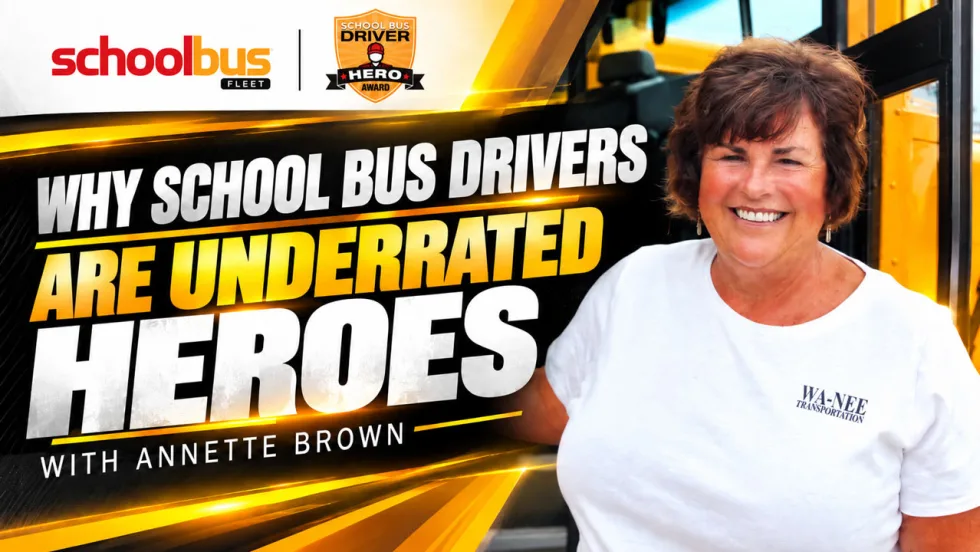
Meet the 2025 School Bus Driver Hero Winner: Annette Brown
We caught up with Wa-Nee Community Schools' Annette Brown on site at SBFX, where she was named the 2026 School Bus Driver Hero Award winner. Hear about her reaction, what she loves most about being a school bus driver, and more!
Read More →
Predictability Is Like Ketchup (According to 6-Year-Olds)
To students, a different school bus can feel like a full-blown crisis. One driver reflects on why familiar routines, showing up on time, and being reliably boring matter more than we think.
Read More →
Samsara Launches Free Driver Rewards Program
The new Driver Perks program gives eligible professional drivers access to discounts and offers without adding a cost for participating fleets.
Read More →
How Tax-Exempt Municipal Leases Can Help Finance School Buses
Let’s explore school bus financing options, including municipal leases, vendor payable accounts, and balloon payments, and how they can help stretch fleet budgets.
Read More →
Nominate Rising School Transportation Pros Under 40!
We’re searching for the next generation of leaders making an impact across the K-12 student transportation industry to recognize as SBF’s 2027 Trailblazers. Nominations are open now!
Read More →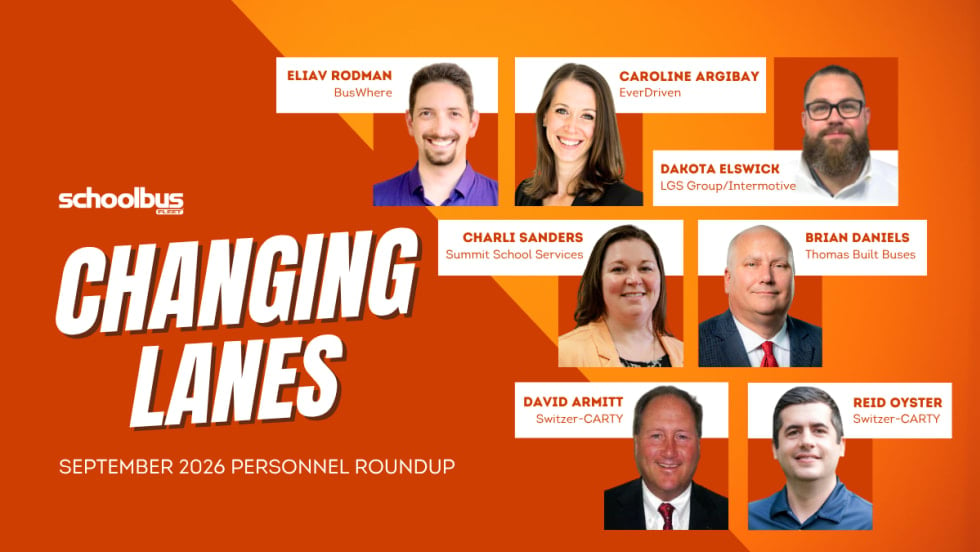
Changing Lanes: BusWhere, EverDriven, InterMotive, Summit School Services, Switzer-Carty & Thomas Built Buses
Check out who's been hired, promoted, and appointed to leadership positions at various school transportation suppliers, contractors, and manufacturers.
Read More →
The Most Expensive Thing You Do Before Selling a School Bus: Wait
When should you sell an aging school bus? Learn how maintenance, mileage, corrosion, specifications, and timing can affect resale value long before the auction.
Read More →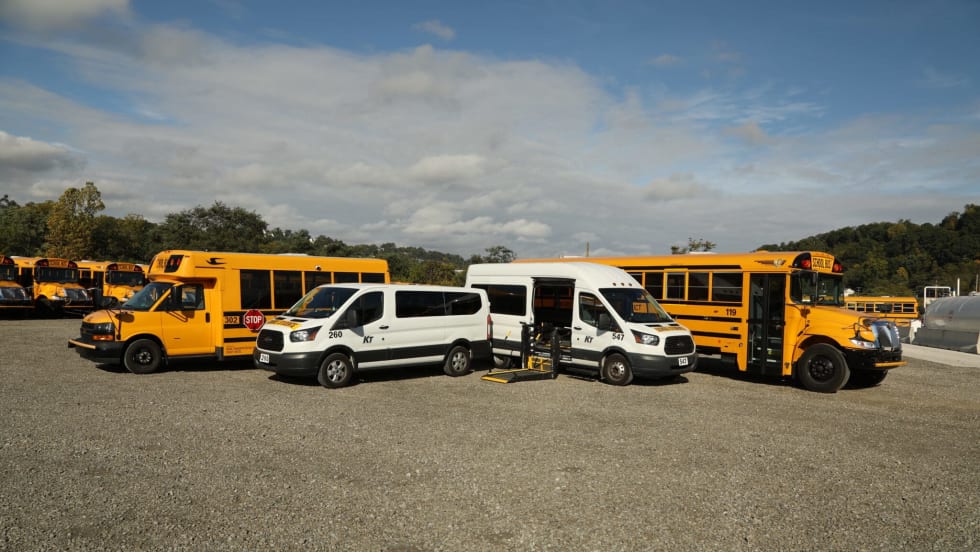
American Student Transportation Partners Acquires AJ Myers and Sons
A new deal brings a 75-year Pennsylvania student transportation provider into one of the nation’s largest private school bus contracting groups.
Read More →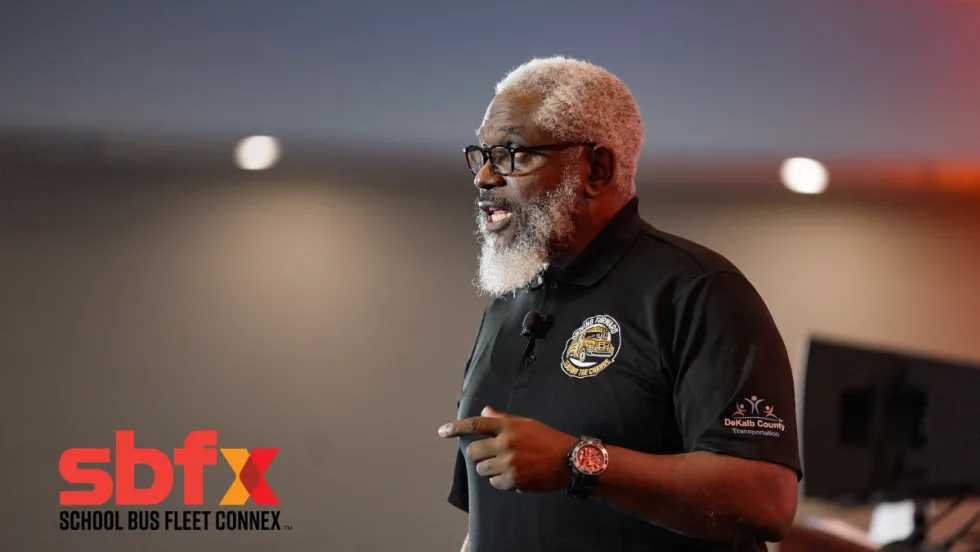
What I Brought Home From SBFX: Relationships, Leadership, and Preparing What's Next
Who could lead your transportation operation tomorrow if you couldn't? Bernando Brown explores succession planning, mentorship, and preparing emerging leaders to step up.
Read More →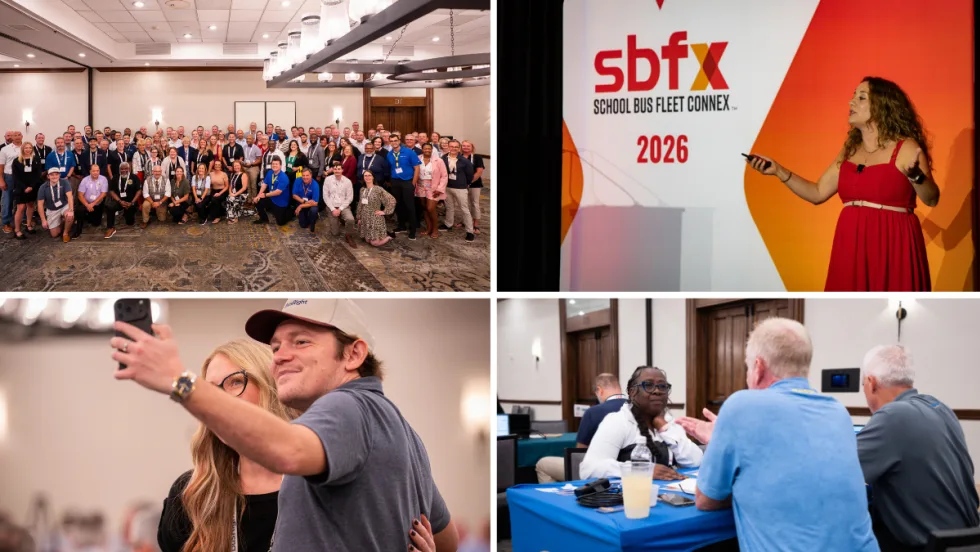
Inside School Bus Fleet ConneX 2026: Industry Leaders Connect in Scottsdale [Photos]
See highlights from SBFX 2026 in Arizona, where school bus operators and suppliers gathered for meetings, education, networking, awards, and more.
Read More →