



Big changes ahead for S.C. bus fleet
COLUMBIA, S.C. — The South Carolina General Assembly approved a bill that requires the replacement of the state's school buses every 15 years.<...

COLUMBIA, S.C. — The South Carolina General Assembly approved a bill that requires the replacement of the state's school buses every 15 years.
Donald Tudor, director of transportation at the South Carolina Department of Education, said that the move is essential and long-awaited.
"We've been working on such legislation for about 15 years, and we are delighted that the General Assembly has established this policy," he said.
The bill requires the state to annually purchase 380 new school buses — replacing one-fifteenth of its fleet — with funds appropriated by the General Assembly. The purpose is to rejuvenate the state's fleet, some buses in which are more than 20 years old. South Carolina is the only state that owns and operates its school bus fleet.
Tudor said that by the end of this fiscal year, the state will have purchased 712 new buses. He said that he hopes to be able to purchase another 460 buses with funds from the next fiscal year's budget.
"Within a 12-month period, we will possibly be able to deliver more than 1,100 new buses out of an operating fleet of 5,700 — that’s a great start," Tudor said. "The monies that have been appropriated so far are moving us toward the 15-year replacement cycle at a faster than one-fifteenth pace."
The road to passing the bill has been a bumpy one. In late May, it was approved by the state Legislature, only to be vetoed by Gov. Mark Sanford on June 6.
In a letter to House Speaker Robert Harrell Jr., Sanford said the state should consider privatized bus service or leasing a substantial portion of the bus fleet. In the long run, he said, the state should consider decentralizing school transportation services. However, the House and Senate voted to override Sanford's veto on June 7.
In addition to requiring the replacement cycle, the bill contains numerous safety-related provisions designed to protect children. One provision allows young students (age 3 through second-grade age) to be picked up close to their homes if their parents are unable to walk them to their bus stops. Another provision restricts students' rides to and from school to 90 minutes.
Moreover, all buses are required to undergo at least one annual inspection, and all bus drivers, including those employed by private schools and day care centers, are required to pass a driver certification program developed by the State Board of Education.
These are just a few of the provisions — others include a mandate for the State Board of Education to establish a grant program to provide transportation for students who attend alternative public schools, as well as a mandate for the board to use biodiesel fuel to power the fleet when possible.
Of the provisions, Tudor said, "They are things we have practiced, but couldn't enforce because they weren't in statute. We've long needed them, and they will greatly improve the safety of our school bus operation."
More Safety
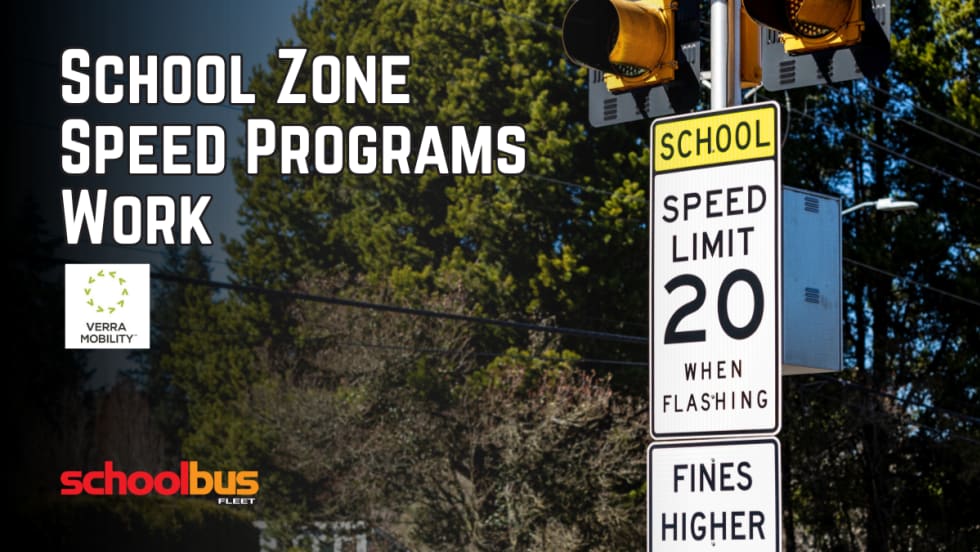
New Study Finds School Zone Speed Safety Cameras Cut Speeding Violations 97%
A Florida university's research demonstrates that Verra Mobility's automated enforcement changes driver behavior and significantly improves school zone safety.
Read More →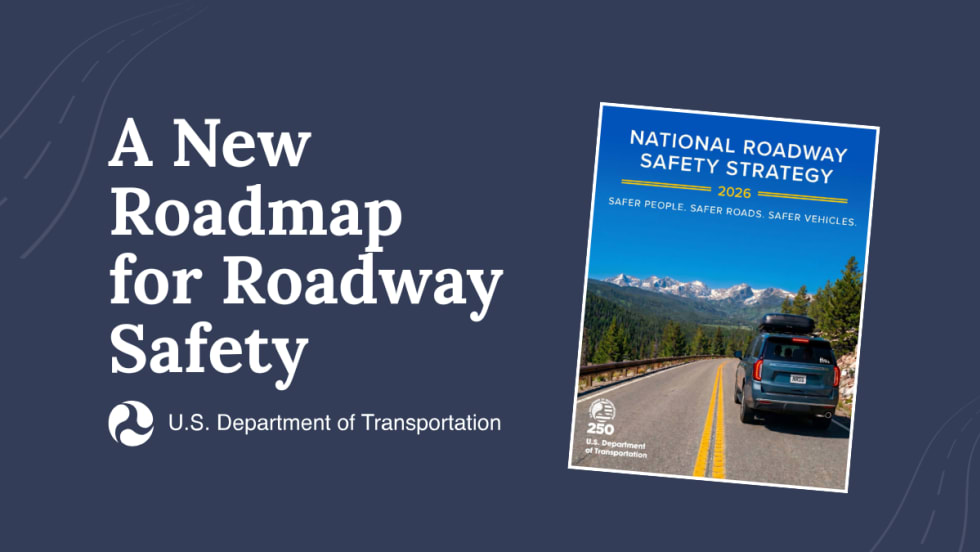
What Changed in DOT’s New National Roadway Safety Strategy?
The federal agency's new plan shifts its focus to safer people, roads and vehicles, with a new three-pronged approach instead of five. One outlined action even addresses a key industry concern around illegal school bus passing.
Read More →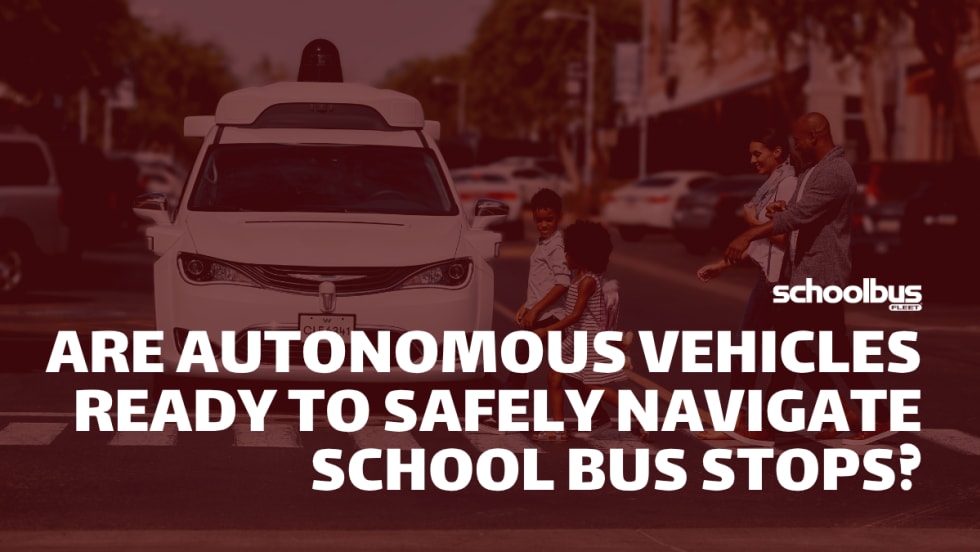
Are Autonomous Vehicles Ready to Safely Navigate School Bus Stops?
NHTSA is accelerating autonomous vehicle deployment through new safety standards and commercial approvals. See why school transportation leaders are watching.
Read More →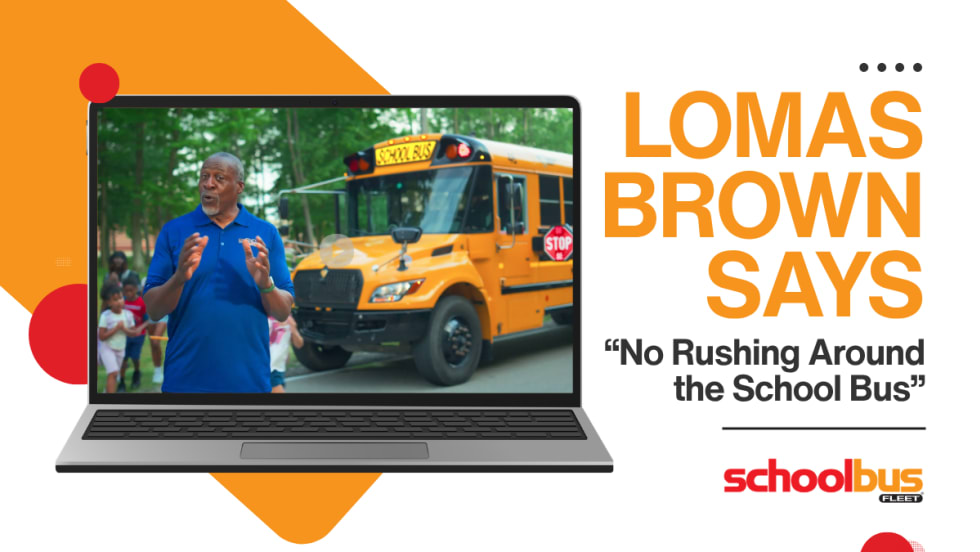
NFL Star Lomas Brown Kicks Off New Illegal School Bus Passing PSA
Just in time for the back-to-school season, the former Detroit Lions offensive tackle took time to record a video encouraging motorists to slow down around school buses.
Read More →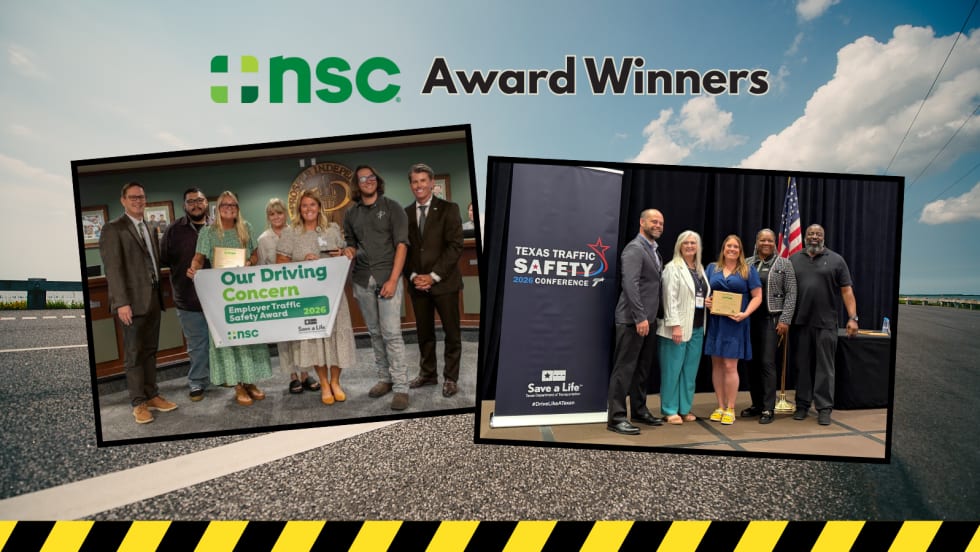
How Two Texas Districts Built Award-Winning Safety Programs
Learn how Prosper ISD and Rockwall ISD earned National Safety Council honors through hands-on training, safety culture, and strategies that reduced transportation incidents.
Read More →
NHTSA Releases 10-Year Review of Fatal School Bus Crashes
The latest federal analysis reinforces the safety of school buses while identifying where school-age pedestrians and other motorists remain most at risk.
Read More →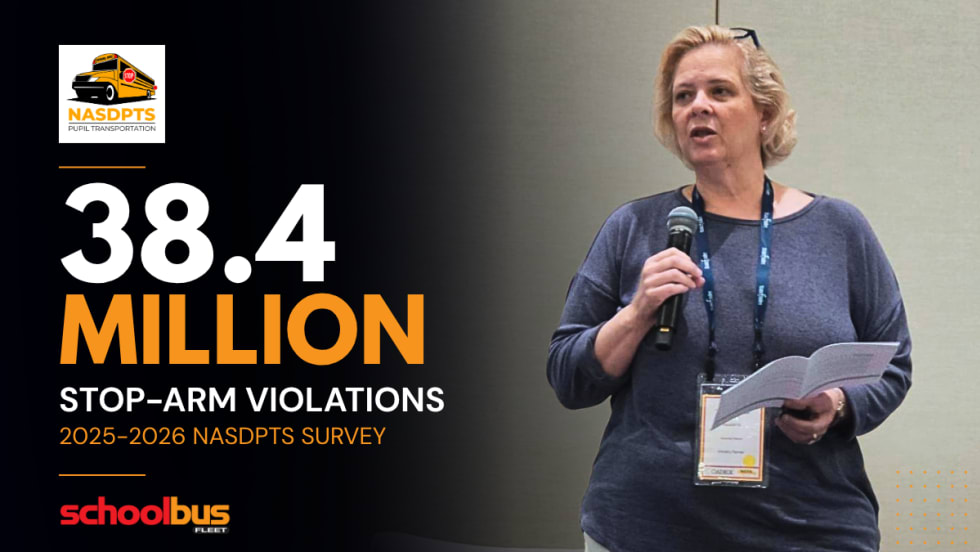
2026 NASDPTS Survey: Data Shows Further Reduction of Illegal Passing
New data is in! School bus stop-arm passings are down to 38.4 million violations per year, about a 2.3% decrease from last school year — but passings on the right side of the bus are higher than ever.
Read More →
Another School Bus Fatality Reported in Monsey, New York
A 7-year-old girl died after being struck by a school bus in Rockland County, New York while crossing the street. Here's what we know.
Read More →
NSTA Announces 2026 School Bus Driver International Safety Competition Winners
Drivers from across the U.S. and Canada showcased their safety and driving skills, with two defending champions successfully retaining their titles.
Read More →
The Driver Shortage Playbook
Driver shortages are still a major challenge for student transportation fleets, but the real issue has shifted. It’s no longer just about filling seats quickly. It’s about finding safe, reliable drivers who meet performance expectations and want to stay. The Driver Shortage Playbook covers why traditional recruitment tactics are falling short and how school fleets are adapting with smarter hiring, stronger retention strategies and a greater focus on driver quality.
Read More →