




Bidding on quality
A veteran of the school bus contracting industry gives his perspective on what makes for a successful company. The key is in knowing what it costs to provide exceptional service.
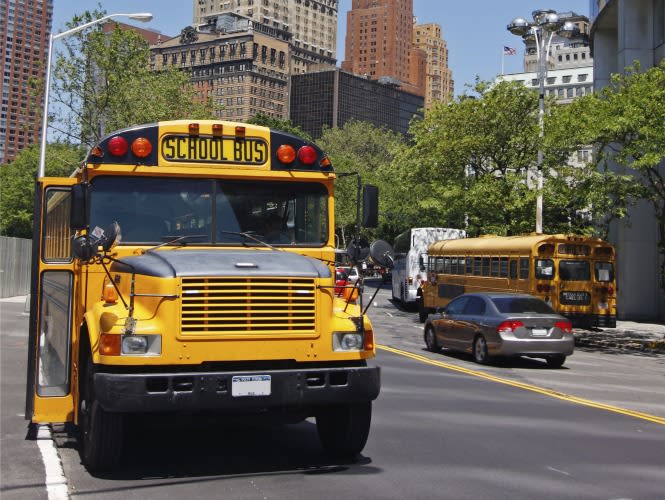
iStockphoto.com/ErickN
Some large school bus contractors tell their shareholders the reasons for declining profits and margins are the current economic downturn and that school districts are reducing the number of routes. They usually also throw in a line about adverse weather conditions to support their decline.
These claims belie the truth about school busing in North America. Companies that view school bus contracting as a commodity business are doomed to failure. Correspondingly, school districts that bid their contracts as a commodity are ensuring that they will not receive the best, safest service available at a fair price.
Downturns don't cut profits
Starting in the 1970s, school districts that contracted services were always looking for ways to optimize and efficiently reduce the number of routes they operated. For example, the Los Angeles Unified School District in the early '80s eliminated more than 300 Crown buses to reduce costs.
Countless other school districts over the past 40 years have periodically reduced routes for efficiency and cost savings. School districts reduce routes in good economic times as well as difficult economic times.
During economic downturns, school bus contractors actually are able to significantly reduce recruitment, training and driver turnover costs. It is a well known fact that during good economic times, contractors have a difficult time recruiting and retaining drivers.
When there is low unemployment (5 percent or less) companies struggle to hire drivers. Many times, large recruitment and retention bonuses have to be paid. High turnover is very expensive for companies, with the average cost of training a school bus driver being more than $3,000.
Blaming declining profits on an economic downturn is merely an excuse for poor management decisions.
Don't blame the weather
Claiming that weather negatively impacts profits is baseless if one looks at the facts. Of all the countries in the world, the U.S. historically has had the worst and most varied weather conditions. We have harsh winters, hurricanes, tornados, droughts, too much rain, not enough rain, too much snow, no snow, etc.
However, kids continue to be transported to school, and the number of days is set by state law. Sure, a few days may be eliminated during a snow storm, but those days usually are made up in later months to ensure that the minimum number of days of schooling is achieved.
The real reason some contractors are experiencing profit problems is that they have failed to understand the nature of the business and what it takes to succeed. They view the business as a commodity, where low price wins. The decision-making is based on offering the lowest price and attempting to drive out the competition so ultimately a monopoly can be formed.
This approach has been tried by several companies, with the ultimate fate of eventual bankruptcy and/or acquisition by a competitor.
Remember Mayflower's school bus business? It consistently bid margins significantly lower than the competition. It took approximately 10 years for them to fail. In reviewing their financials before they were acquired by Laidlaw, I recall margins of less than 2 percent on several contracts and a number of contracts that were losing money. They operated the business as a commodity and paid the price.
Adjust with unemployment
Several factors influence bidding a school bus contract. Driver wages and fuel are two of the most important factors.
Logic would dictate that when unemployment is high — above 6 percent — school bus contractors have an easier time recruiting and retaining employees. Thus, pricing will be reduced. Correspondingly, when unemployment is low, prices will increase.
We did a study to correlate unemployment rates with bid rates. We found that successful contractors indeed raised their prices in relation to the unemployment rates.
We also discovered that the companies that use the excuses of the economy and weather did not base their prices on the above factors. In fact, they continued to use the commodity approach to basing their bids regardless of what the unemployment rate was.
Fuel prices have fluctuated significantly since 1973. Sophisticated bidders have accounted for these fluctuations and have used a number of interventions to eliminate this variable as a significant factor in margin retention. Fuel hedging, district reimbursement policies and other programs have effectively stabilized the price impact of rising fuel costs in bids.
Value-added service
Why are some school bus contractors reporting EBITDAR (earnings before interest, taxes, depreciation, amortization, and restructuring or rent costs) of 20-percent plus?
First, they do not view the business as a commodity business. They view the business as a value-added service where they compete based on safety, customer service and price. They have determined what a fair return to their shareholders is and what it costs to deliver superior service, and they offer their services and features based on that model.
These successful contractors understand what it costs to effectively provide exceptional service. They may not win every bid, but the bids they do win offer a fair financial return and exceptional service to the school districts that select them.
When the commodity bidder wins, the margins are so thin that they rarely can provide the level of performance and safety that satisfies the customer. All one has to do is review the complaints from parents and district staff regarding the level of service and look at their renewal rates. Since the contracts were bid so low, many times they can't even cover their expense line. These companies continue to look for every way to reduce costs and thus have no room for performance improvement.
But there are contractors that consistently have more than a 90-percent renewal rate. The exceptionally performing school bus companies are constantly talking about customer service, technology enhancements and safety interventions. The commodity-bidding companies are constantly talking about expense reduction, profit enhancements and adverse economic times effecting margins.
Industry outlook
Where is school bus contracting headed?
Having more than 30 years' historical perspective on the industry, I believe that commodity bidders will fail and either be forced to raise their prices or will eventually be sold or forced out of the market. School busing cannot be sustained by companies that bid using a commodities model.
Based on what I've seen, school districts that operate the service themselves are consistently more expensive to operate versus contracting out the service. Therefore, I don't see districts reverting back to operating their own fleets if contractors avoid the commodity bid model.
Exceptionally performing contractors are controlling prices by retaining quality management. They typically have had management in place for a long time.
They also use technology to reduce costs. A number of contractors are using fleet management programs by GreenRoad and other companies to reduce fuel costs and accidents. One contractor that began using one of these programs reportedly cut its fuel costs an average of $46 per bus per month and decreased accidents by 50 percent.
Successful contractors are investing in technology and training to reduce costs. These companies have at least two more things in common: quality management and a business model that refuses to view the marketplace as a commodity.
Howard Wallack is president of Transportation Sector Consultants Inc. (TSC). Prior to joining TSC in 1994, he was with Laidlaw Transit as president and executive vice president of operations for U.S. school bus operations.
More Management
School Transportation’s Biggest Pressures and Opportunities: SBFX Attendees Weigh In
School bus operators point to rising costs, staffing, and vehicle prices as immediate pressures while identifying technology, training, and routing as opportunities for growth.
Read More →
STA Acquires Sunrise Transportation
Student Transportation of America expands in Illinois and Connecticut through Sunrise's fleet of nearly 1,000 vehicles.
Read More →
EPA Opens $180M DERA Funding Round for Diesel Upgrades
The 2026 Diesel Emissions Reduction Act program seeks applications from eligible organizations to accelerate the retirement of legacy diesel vehicles.
Read More →


HopSkipDrive’s CareEngine Targets the ‘Exceptions’ in Student Transportation
The new platform works alongside districts’ existing transportation management systems to coordinate specialized rides, automate last-minute changes, and turn ride data into operational improvements.
Read More →
The Right Ride for Every Student: Navigating the New Student Transportation Ecosystem
How should districts blend school buses with small-vehicle transportation and other options? EverDriven CEO Mitch Bowling discusses safety, costs, partnerships, and strategy.
Read More →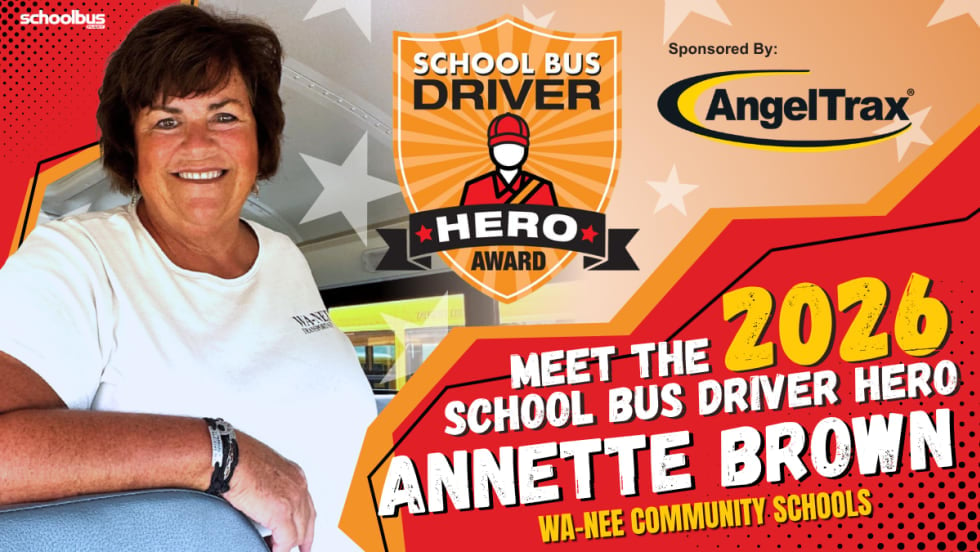
Annette Brown Always Takes the Extra Time: Meet Our 2026 School Bus Driver Hero
For more than 30 years, the Wa-Nee Community Schools driver has treated students like family, combining safety, compassion, and servant leadership to make a lasting difference on and beyond the school bus.
Read More →
How to Build a Better Driver Training Program
Ready to boost up your school bus instructor training? Here’s how to pick the right talent and improve recruitment, retention, and safety.
Read More →
CALSTART and Forth Combine to Form Catalyst Mobility
The new name represents a renewed vision for the nonprofit focused on advancing clean, equitable, and affordable transportation solutions that move people and goods.
Read More →
What Makes a Great School Bus Driver Trainer?
Choosing the right school bus driver trainer takes more than experience. Learn six keys to selecting and developing trainers and evaluating program effectiveness.
Read More →
School Bus Contractors Expand Through New Deals, Acquisitions & Partnerships
STA's Canadian division acquires Ontario-based G&L Stevenson Transport; Durham School Services adds a new district in California; First Student expands in New Jersey; and Minnesota Coaches rebrands and acquires Halo Transportation.
Read More →