




Related: 10 Keys for Contractors to Protect Business During COVID-19
Back-to-School Planning: Minimizing COVID-19 Liability Exposure
Transportation law expert Matthew Daus shares information on recommendations and requirements from various federal agencies and providing safe student transportation while minimizing liability exposure.
by Matthew Daus
June 15, 2020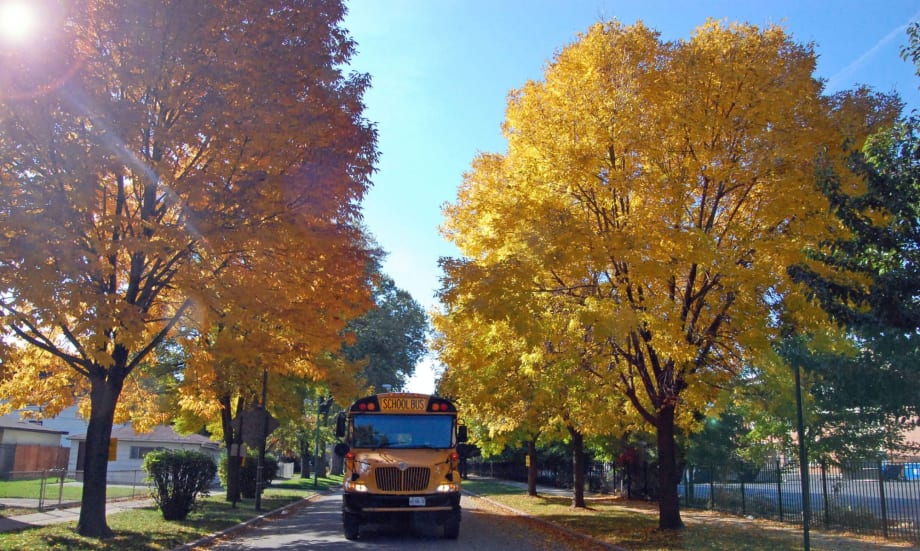
File photo courtesy Sunrise Transportation
5 min to read
As states and businesses reopen as the COVID-19 pandemic continues, schools will surely follow. Pupil transportation companies need to prepare to safely transport students while minimizing liability exposure and risks of claims, government regulatory enforcement, and litigation.
This brief overview provides a sampling of guidance and issues that pupil transportation operators need to be aware of and address; however, since government advice changes frequently and litigation is just commencing, it is advisable to consult with counsel before implementing any safety and health plans.
OSHA Compliance
The Occupational Safety and Health Act (OSHA) requires employers to comply with safety and health standards and regulations put into effect by OSHA, or by a state with an OSHA-approved state plan. OSHA has not yet issued specific guidance for school bus companies but has released revised COVID-19 enforcement policies to ensure employers are taking action to protect their employees and is increasing in-person COVID-19 inspections at all types of workplaces.
Pupil transportation companies should: assess the hazards to which their workers may be exposed; evaluate the risk of exposure; and select, implement, and ensure workers use controls to prevent exposure.
Control measures may include a combination of engineering and administrative controls, safe work practices, and personal protective equipment (PPE). Companies that need to clean and disinfect environments potentially contaminated with COVID-19 should use registered Environmental Protection Agency (EPA) disinfectants with labeled claims that the product is effective against COVID-19. The EPA-approved disinfectants for COVID-19 are found on “List N.” Workers who conduct cleaning tasks must be protected and may need appropriate PPE to prevent exposure to the chemicals.
CDC Guidance
On May 14, the Centers for Disease Control and Prevention (CDC) issued a set of recommendations that detailed practices that school transportation companies should follow. Drivers should practice all safety actions and protocols as indicated for other staff (e.g., hand hygiene, cloth face coverings), and the CDC recommended that schools create distance between children on school buses (e.g., seat children one child per row, skip rows) when possible. States and school districts may implement other guidelines, which could consist of health screenings for students before boarding the school bus, limited capacity routes, different schedules for schoolchildren, and multiple trips throughout the day.
The CDC has also provided guidance to promote vehicle safety, employee safety, and general bus safety. School bus operators should develop a COVID-19 health and safety plan to protect employees. That plan should include measures to physically separate bus operators and passengers, designate an employee to be responsible for responding to COVID-19 concerns, and provide employees with disinfectant wipes, gloves, and alcohol-based hand sanitizers.

Credit:
Matthew Daus is a partner and chairs the Transportation Practice Group at Windels Marx Lane and Mittendorf. Photo courtesy Matthew Daus
EEOC Guidance
The Equal Employment Opportunity Commission (EEOC) clarified its position on making “reasonable accommodations” for employees with any underlying medical conditions listed by the CDC. The Americans with Disabilities Act (ADA) does not allow employers to exclude employees from onsite work locations simply because they have an underlying medical condition. As employees return to work, employers must be cognizant of possible discrimination suits based on age or preventing access to the workplace due to an employee’s underlying conditions.
The EEOC has also stated that employers can continue to screen employees for the virus and make “disability related inquiries and conduct medical exams if job-related and consistent with business necessity,” to exclude an employee with a medical condition that poses a direct threat to health and safety.”
If the school administration enacts rules to protect students, there are legal precedents indicating that bus operators “owe the same duty of care entrusted to its care and custody” as school authorities. Accordingly, pupil transportation companies should complete a thorough direct threat analysis, which includes an individualized assessment based on relevant factors, and a determination as to whether the threat can be reduced or eliminated through a reasonable accommodation (such as providing drivers with PPE and other steps to limit contact with passengers).
Risk Mitigation
Pupil transportation operators have a “duty of care” to act as a “reasonable employer” under the circumstances, to avoid lawsuits for negligence and other claims from any third parties exposed to COVID-19 through school bus transmission, which may result in injury or death. Companies should not only endeavor to go above and beyond in terms of providing appropriate disinfectants, social distancing and PPE, but should be cognizant of laws, regulations, and even advice or guidance from expert agencies. Any federal, state, or local mandates should be strictly followed, as a failure to do so could lead to liability.
Governors and mayors around the country have and will continue to implement executive and emergency orders addressing the specifics of reopening businesses and schools, including safety and PPE requirements. Likewise, any contract amendments, regulations, or other directives from school districts or education departments, should be strictly followed, as such measures may be evidence of a “duty of care.” Even official guidance, such as the CDC’s recommendations — although not a legal mandate — should be followed, as this information can be cited as evidence establishing a “duty of care” in negligence lawsuits, leading to potential liability for school bus companies.
Review the various products and devices being implemented in the industry, and research thoroughly what other companies are doing; weighing not just the costs involved, but more importantly, the safety and consistency with official guidance.
Matthew Daus is a partner of and chairs the Transportation Practice Group at Windels Marx Lane and Mittendorf. He also serves as transportation technology chair at the City University of New York’s Transportation Research Center.
Subscribe to Our Newsletter
More Management
EverDriven Launches Route Consolidation Calculator to Estimate Diesel Savings
As diesel prices hit record highs, the largest alternative transportation provider says a 10% route consolidation could save a 120-route district more than $78,000 a year in fuel alone.
Read More →
Zum Secures Continued Financing Support for School Bus Expansion
Generate Private Credit has financed approximately $75 million in school bus deployments across three states, supporting more than 500 buses as Zum expands across the county.
Read More →
Beyond Discipline: A Different Approach to Student Behavior on the Bus
After implementing a dean of students program in Oregon, North Clackamas is seeing positive improvements. Here’s how it worked. The Route is brought to you by IC Bus.
Read More →
A Dean of Transportation's Different Approach to Student Behavior on the School Bus
After implementing a dean of students program in Oregon, North Clackamas is seeing positive improvements on the bus. Here’s how it worked.
Read More →
Inside NAPT ACTS 2026: Highlights from Louisville
From federal updates and student behavior strategies to new school bus technology and industry awards, see highlights from NAPT ACTS 2026 in Louisville.
Read More →
Meet the 2025 School Bus Driver Hero Winner: Annette Brown
We caught up with Wa-Nee Community Schools' Annette Brown on site at SBFX, where she was named the 2026 School Bus Driver Hero Award winner. Hear about her reaction, what she loves most about being a school bus driver, and more!
Read More →
Predictability Is Like Ketchup (According to 6-Year-Olds)
To students, a different school bus can feel like a full-blown crisis. One driver reflects on why familiar routines, showing up on time, and being reliably boring matter more than we think.
Read More →
Samsara Launches Free Driver Rewards Program
The new Driver Perks program gives eligible professional drivers access to discounts and offers without adding a cost for participating fleets.
Read More →
How Tax-Exempt Municipal Leases Can Help Finance School Buses
Let’s explore school bus financing options, including municipal leases, vendor payable accounts, and balloon payments, and how they can help stretch fleet budgets.
Read More →
Nominate Rising School Transportation Pros Under 40!
We’re searching for the next generation of leaders making an impact across the K-12 student transportation industry to recognize as SBF’s 2027 Trailblazers. Nominations are open now!
Read More →