




Avoid Collisions & Increase Safety with Detection Technology
Even in daylight, blind spots around a school bus make it easy to miss nearby passengers. Thanks to new tech, the danger zone can now be detected — and lives saved because of it.

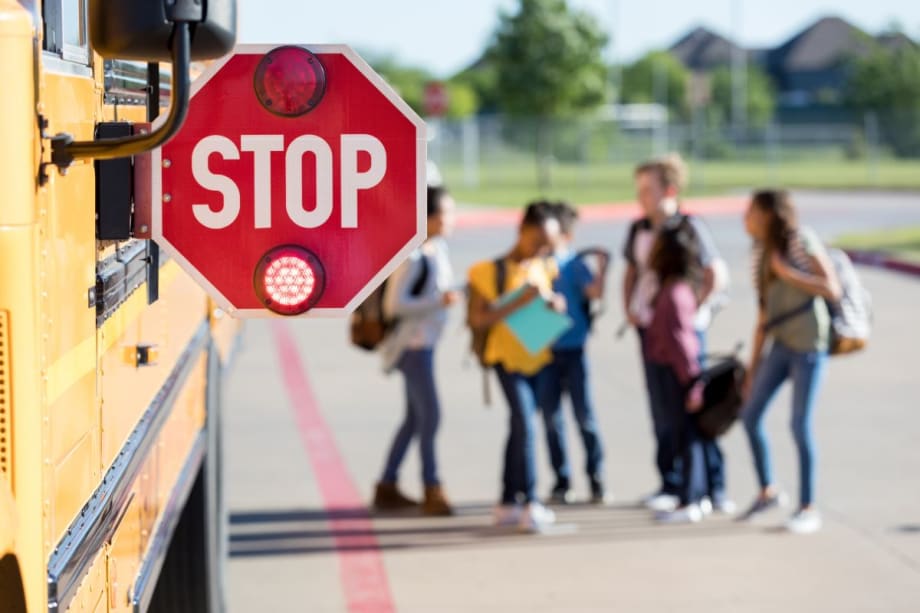
Because most injuries around a school bus occur during boarding and exiting, proper lighting and pedestrian detection systems are paramount to increased safety.
Photo via Getty Images/SDI Productions
The “danger zone” is much more serious than the catchy Kenny Loggins song; the area around a school bus where passengers are most likely to not be seen creates the need for extra visibility around the yellow bus. Thankfully, several products are on the market that illuminate blind spots, alert a driver is children are present, and increase overall safety. And with federal funding on its way to evaluate school bus stop safety technology following the signing of the Infrastructure Bill, the time couldn’t be more right.
Detecting the Danger Zone
Most students’ school-bus related injuries take place before boarding and after exiting the bus, according to Thomas Built Buses.
That’s why the bus manufacturer recently released its Saf-T-Zone pedestrian detection product, which allows the bus to see what the driver cannot. The system can detect objects or people up to 10 feet away from the front, rear, and right side of a bus.
The Saf-T-Zone pedestrian detection system is composed of LED ground lights on the cross-view mirrors, as well as multiple radar units on the 77GHz frequency band. These units are installed on the front, right side, and rear of the school bus, to allow precise detection and measurement — even in the danger zone. A display mounted by the driver sends an alert, and lights illuminate the area near the bumper and on cross-view mirrors, with haptic feedback in the seat, and an audible alarm.
“Although school buses are the safest way to get to and from school, we believe this technology can provide an additional safety system to help bus drivers, school districts, and pedestrians,” says Ken Whisnant, engineering manager for Thomas Built Buses.
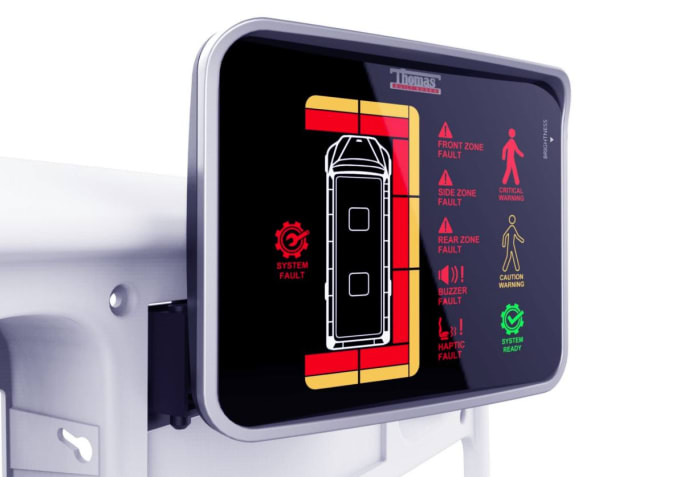
Thomas Built Buses’ new Saf-T-Zone technology was released in November, just months after debuting its Stage 2 Lights safety system, which alerts riders whether it is safe to cross the road.
Photo courtesy of Thomas Built Buses
The company reports that its two pilot programs with large school districts have been successful, and it is actively accepting new orders.
While most technology on the market has only been development in the last five years, it has become more advanced each year and has given schools even more tools to monitor, notify, and record safety events.
While added video cameras won’t prevent an accident, Adam Kahn, president of Netradyne’s commercial fleet team, notes that footage can provide visibility and context into what might have led up to, and what happened after, an event. He says it can also provide frictionless self-coaching that allows the bus driver to adjust their performance for improved results.
Netradyne’s Driveri system is trained to detect objects inside and outside the vehicle. Beyond that, it is equipped with processors that can detect an event, understand the causality, and apply immediate reasoning to what to do with that information.
An example Kahn shares is a school bus that might be following too close to a vehicle on the road. In this case, Driveri recognizes the object and analyzes the distance between the two objects. As the distance is reduced, it analyzes the data and 1) generates an event that is sent to the safety team, and 2) generates an audio message to the driver.
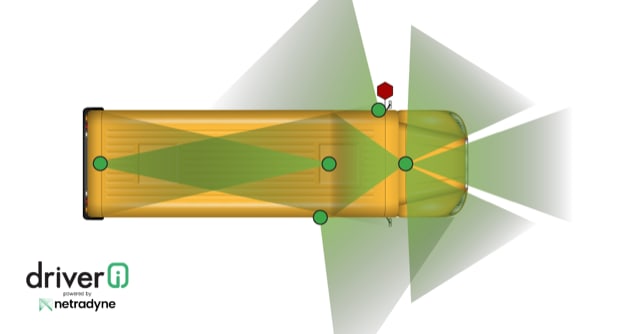
In-cab audio notifications are sent to the driver using Netradyne’s recognition device, increasing awareness of objects outside the vehicle.
Photo courtesy of Netradyne
“This dynamic monitoring of the road takes a proactive approach to ‘teaming’ with the driver versus waiting for events to occur to generate a conversation,” Kahn says.
Another unique trait to the Netradyne system is that it tracks positive driving maneuvers and awards “DriverStars,” which are moments captured where the driver is proactively improving safety around their vehicle.
National School Bus Safety Week Focuses on Danger Zone Awareness
Steve Gardner, a retired fleet mechanic in Ohio, invented his own school bus lighting system about 10 years ago called Gardian Angel. The impetus was a story of a girl killed while trying to catch her bus. His patented system is now used by many school districts across 25 states.
Gardian Angel’s company tagline is that “Students should be seen, not hit.” Therefore, its light automatically turns on when the bus's red lights are activated and turns off when the entrance door of the bus is closed. The LED system is mounted at the location of the bus where the majority of violators pass. The Gardian Angel lights a path 6 to 8 feet wide, with a field of vision from 18 to 20 feet away from the bus. Its lights have a 50,000+ hour life expectancy, which is expected to last the life of the school bus.
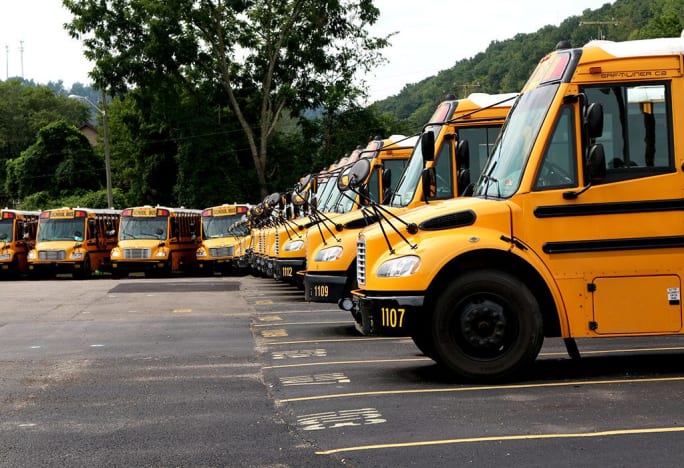
In West Virginia, the Kanawha County Schools transportation director says that the extra lights from a safety system especially come in handy on rural routes.
Photo courtesy of Gardian Angel
Due to recent reports of drivers largely passing on the right side, the company has expanded its product line to create another LED lighting system specifically placed in that area.
“I’m just thankful I’ve found a way to make a difference,” Gardner says. “I want to save lives; that’s important to me.”
Gardner’s system has now made history; the story of both the company and its lighting system are showcased in a digital time capsule at the Smithsonian National Museum of American History.
“Since its invention, now over a decade old, no child has been struck, injured, or killed in darkness with a patented Gardian Angel school bus lighting system installed on it,” Gardner adds. “That’s a record that even the cameras can’t uphold.”
Gardian Angel estimates a price range of $119 to $379 for its product, depending on the kit chosen. It’s even been tested to military specifications.
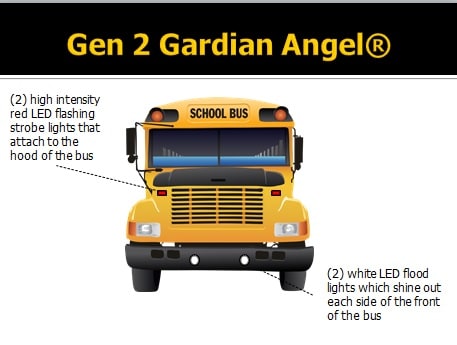
The Gen 2 Gardian Angel system uses dual white lights mounted on the front bumper that shine out each side of the front and red strobes that attach to the hood of the bus.
Photo courtesy of Gardian Angel
Before mounting the systems, Gardian Angel recommends customers check their state requirements for specific mounting locations, as those can vary.
Systems in Use
Netradyne’s product takes less than an hour to install, with updates conducted at off hours, and video footage accessed remotely. In October, the company partnered with First Student for coverage of select school districts.
Thomas Built Buses says that it’s an easy transition for schools to implement the technology, as the company handles installation and the technology itself is intuitive. The system is simple to maintain, with diagnostic checks and pre-trip inspections to verify that everything is working correctly.
One district that has used the Gardian Angel system for four years is the Kanawha County (W.Va.) Schools. “We love Gardian Angel Lights and put it on all our new buses,” says Brette S. Fraley, executive director, transportation. “We use two lights on the front of the bus at the driver’s request as it allows us to cover both sides of the roads, regardless which side the student may have to approach. Many of our routes are in rural areas, and more visibility is just better for everyone.”
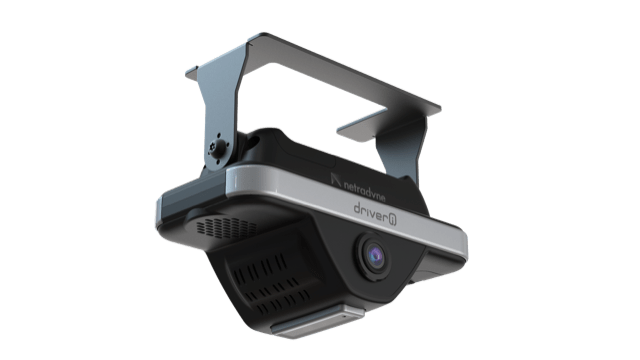
Netradyne’s Driveri system not only monitors outside the bus; it also records risky situations as well as good driving behavior.
Photo courtesy of Netradyne
Another company equipping schools with tools to ramp up student safety is Safety Vision, which in November 2020 was awarded a contract at Kansas City Kansas Public Schools to outfit 200 buses with mobile surveillance camera systems. A press release says that the district was excited about the Video Management System and its features that include redaction/blurring and zoom capabilities, making it much easier to view incidents and protect driver and passenger privacy.
The National Highway Traffic Safety Administration (NHTSA), a federal agency focused on the safety of children and pedestrians on roadways, received funding under the Bipartisan Infrastructure Law. The agency is tasked to initiate a two-year research program to evaluate the effectiveness, cost impacts, and feasibility of various technologies (e.g, cameras, audible warning systems, and enhanced lighting) to enhance school bus loading zone safety.
“Safety is NHTSA’s top priority, and the Bipartisan Infrastructure Law provides NHTSA a historic opportunity to make dramatic improvements in roadway safety — including funding for several activities related to school bus safety,” a NHTSA spokesperson says. “[We] recommend school districts evaluate the effect of additional equipment installed on the school bus on the overall safety of school transportation.”
More Safety

How to Build a Better School Bus Driver Training Program
Is it time to strengthen your driver training? Here’s how to pick the right talent and improve recruitment, retention, and safety. This video is brought to you by IC Bus.
Read More →
Recent School Bus Accidents Leave 2 Dead, 2 Injured
Four school bus crashes in Florida, Illinois, and Georgia highlight risks in transportation lots, at bus stops, and during student loading and unloading.
Read More →
When Every Second Matters, Clarity Keeps Routes Moving
From routine delays to urgent incidents, strong communication practices help drivers, dispatchers, schools, and families respond with confidence.
Read More →

What Happens When a School Bus Catches Fire — and What Can Help
School bus fires are rare but can be devastating. Learn how advances in fire suppression and asset protection help fleets detect fires earlier, reduce damage, and improve safety.
Read More →
Geotab Launches Tool to Help Fleets Investigate Road Incidents
Geotab Investigations combines telematics data, video, documents, and other evidence to help fleets reconstruct incidents, resolve claims, and determine what happened.
Read More →
Texas Sixth Grader Wins 2026 National School Bus Safety Poster Contest
Sai Darshana Yekolu of Moseley Middle School in Prosper, Texas, was named the newest winner for her artwork, bringing the theme of “Safe Rides, Everyday Heroes” to life.
Read More →
Doing More With Less: How Transportation Directors Can Prioritize Safety Amid Budget Uncertainty
With diesel prices soaring and nearly one-third of transportation directors expecting budget cuts, maintaining student safety has never been more challenging. Download this guide to learn how leading districts are prioritizing risk, funding critical safety technology, and building stronger budget cases with data.
Read More →
Walton County Schools Adds Gatekeeper Stop-Arm Enforcement System
The Florida district will deploy Gatekeeper’s updated Student Protector technology, which now incorporates AI to improve video evidence.
Read More →
How To Build a More Secure School Bus Yard During and After Hours
As thefts and overnight security threats continue, school transportation leaders are combining stronger operational practices with AI-enabled surveillance to better protect buses, facilities, and staff.
Read More →
FMCSA Names New Chief Safety Officer: What School Bus Operators Should Know
Steve Dowling is set to lead the federal agency's efforts to advance commercial motor vehicle safety and reduce crashes, fatalities, and injuries on the nation's roadways.
Read More →