




Appropriate touching on the special-needs bus
Any touching related to specific student handling requirements on the special-needs bus is appropriate and should be done in a timely manner.
Any touching related to specific student handling requirements on the special-needs bus is appropriate and should be done in a timely manner. Any touching by the driver team that is not related to those requirements is inappropriate.
Special-needs buses (lift or non-lift) should have video monitoring in place as much to protect the driver team from false accusations of inappropriate touching as to document inappropriate student behavior.
Here are examples of appropriate and inappropriate touching on the special-needs bus.
Touch: Applying first aid or CPR when a child requires it and it is based on the specific training and certifications completed.
Don’t touch: Doing extraordinary measures during first aid or CPR that go beyond specific training. Or, performing any first aid or CPR when your certification has expired. (Read carefully and fully understand the Good Samaritan laws of your state regarding personal liability when using first aid and/or CPR.)
Touch: Applying specific behavior management strategies for which there are written guidelines for the bus that were provided by the IEP committee on a student-specific basis.
Don’t touch: Using specific behavior management strategies for a specific student that were not written as guidelines generated by the IEP committee.
Touch: Any emergency on or near the special-needs bus that clearly warrants student evacuation by the safest bus exit and by the most moderate means possible. Appropriate touching examples are:
Lifting students from wheelchairs.
Lifting students out of child safety seats or lifting child safety seats with children still secured in them.
Unbuckling students from their seat belts by the fastest means possible.
Using a belt cutter as needed.
For special-needs drivers alone — doing a one-person lift of a student, with your arms under child’s arms, by taking firm hold of their forearms and pressing your chest against their back while dragging the student backward down the aisle and out of the bus.
For special-needs driver teams lifting a student from a wheelchair, a child safety seat or a bench seat using the two-person lift — one adult is at the child’s head, and the other adult is at the child’s feet (holding underneath his or her knees) to move the child down the aisle and out the nearest safe bus exit.
Placing a student on an evacuation blanket after they have been lifted by one or two adults and proceeding to the nearest safe bus exit.
If a student has been identified as a “runner” by the IEP committee, the driver team should maintain a hand or body hold of the child during evacuation to keep him or her from running out into traffic or away from the accident scene. Bystanders can be directed to hold the child firmly by the hand or around the waist until relieved by authorities.
Don’t touch: Some of these activities could be inappropriate during an emergency bus evacuation:
Removing a child from their wheelchair when the wheelchair and child could be evacuated using manual operation of the lift platform to safely exit.
[PAGEBREAK]
Cutting seat belts, occupant restraints and wheelchair tiedowns that can easily be released, that are not jammed and, once released, allow the student to exit the bus by walking out.
Lifting students who can walk by themselves to the designated emergency exit.
Allowing students to exit the bus through an exit that harms them more than an available exit that is safer would. For example: Using side windows that swing open to afford an emergency exit may cause more injury to students and adults alike than using another exit. Using a side window exit by going “feet first and belly down” minimizes injury, but, at the same time, exiting there results in falling 7 feet to the ground.
Using roof vents for an emergency exit when the bus is not on its side is dangerous. The roof vent is more than 7 feet above the bus floor. Most students cannot be lifted over an adult’s head to be placed on the outside roof of the bus through the vent exit. Most cannot pull themselves up through the roof vent even with adult help by being boosted underneath. Any student who is unconscious cannot be lifted above the adult’s head and placed on the bus roof through the vent. If a student does make it to the bus roof, there is a sloping surface on each side and a 14-foot fall to the ground.
Touch: Routine greeting of students by the driver or bus monitor outside the bus or at the stairwell must be age appropriate. For instance, kindergarteners and preschoolers are often huggers of everyone. Being hugged by a youngster is appropriate touching so long as the adult does not initiate or request it from the child.
Don’t touch: Being hugged by a fifth-grader or older is not appropriate touching when a handshake and a verbal greeting will do just as well. Middle- or high-school student “huggers” can be politely declined. Turning to the side when the child attempts to hug and indicating that you would rather shake hands leaves most students unoffended and still appropriately greeted at the bus stairwell.
Touch: Adults who do not routinely handle a wheelchair usually do not understand the touching that is required to secure the chair and the student in it. Driver teams may not be able to effectively secure a student in a wheelchair using occupant restraint without also touching the student.
Don’t touch: Any touching by the driver team that is not related to the use of occupant-restraint belts or the securement of the wheelchair using the four-way tiedown system is inappropriate.
Touch: Incidental touching is not inappropriate touching. Non-lift school buses have 14-to-16-inch-wide aisles, which makes it very difficult for the bus monitor to walk up and down the aisle while the bus is moving without brushing up against someone along the way.
Don’t touch: Driver teams sometimes count students on board by lightly touching them on the head with a paper or their hand. This is both demeaning and unnecessary touching that is very inappropriate.
If you don’t have to touch a student on the special-needs bus, then don’t. If you must in order to keep him or her safe, secured and appropriately seated, then touch as needed. Avoid incidental touching as much as possible. Make touching purposeful, task-specific and effective to help students when help is needed.
Dr. Ray Turner is a special-needs transportation expert and author of numerous books and newsletters. For more information, e-mail him at drturner@earthlink.net or visit his Website, www.whitebuffalopress.com.
More Special Needs Transportation
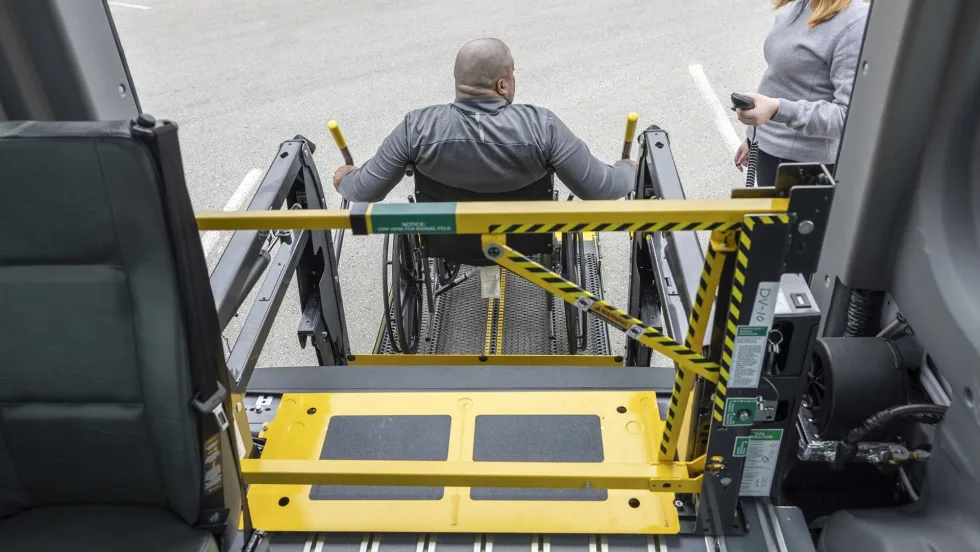
BraunAbility Introduces New Safety Barrier for Wheelchair Lifts
LiftSentinel is designed to add another layer of protection during wheelchair loading and unloading and can be retrofitted to many existing commercial lift installations.
Read More →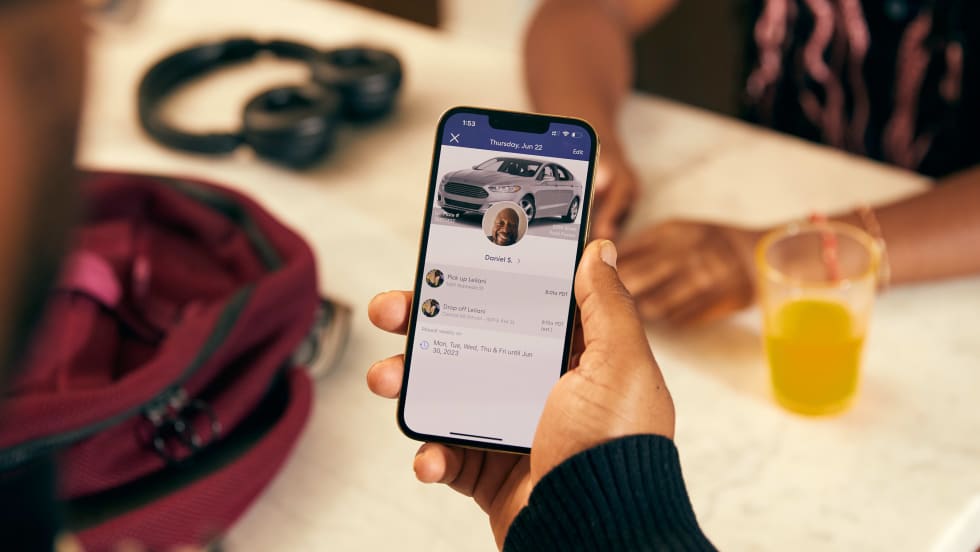
HopSkipDrive Launches New Safety, Driver Consistency Features for 2026-27 School Year
The company’s free ride recording, live ride tracking, and consistent driver assignments aim to improve safety and continuity for diverse student transportation needs.
Read More →
The Most Common Wheelchair Securement Mistakes on School Buses (and How to Fix Them)
Small missteps in wheelchair securement can have serious consequences. Here are 32 tips from experts to reduce risk and increase student safety on the bus.
Read More →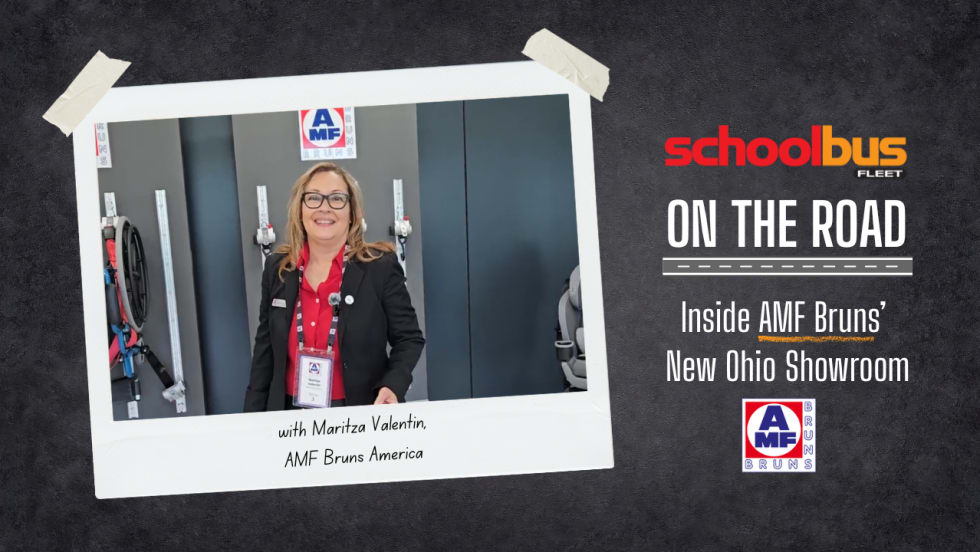
Inside AMF Bruns’ New Showroom: School Bus Securement Solutions Explained
Go inside AMF Bruns America’s new Ohio showroom with Maritza Valentin to see its FutureSafe technology, driver training tools, securement systems, and seating innovations.
Read More →
What AMF Bruns’ New Facility Means for Customers [Video]
Inside AMF Bruns’ new Stow, Ohio, operations: See how expanded space and innovation will enhance customer support and operations.
Read More →
AMF Bruns Expands in Ohio, Investing in Growth and Community
With expanded production space, local investment, and a growing workforce, AMF Bruns is scaling its U.S. presence. Here’s an exclusive first look inside the new Stow, Ohio, HQ.
Read More →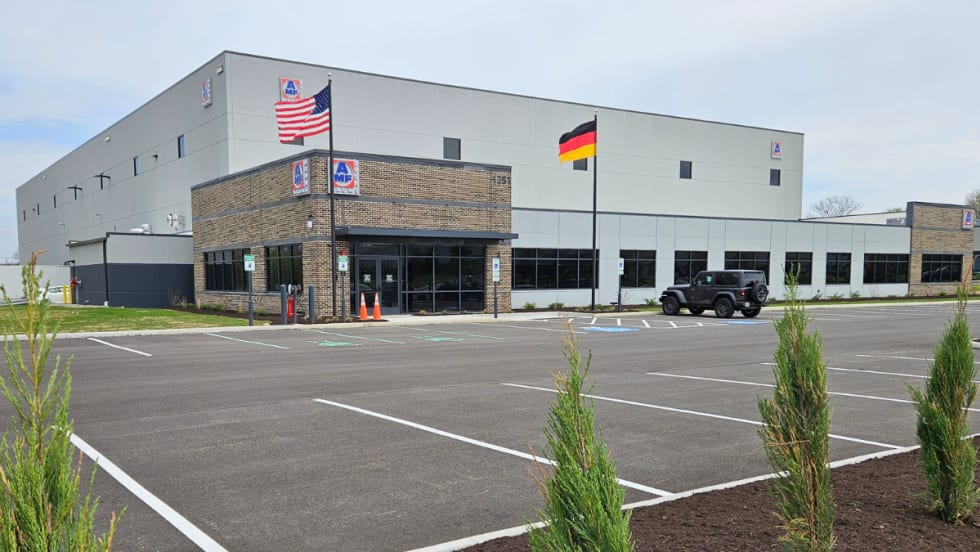
Inside AMF Bruns of America’s New Ohio Manufacturing Facility [Photos]
Take a behind-the-scenes look at AMF Bruns of America’s new 41,000-square-foot Stow, Ohio, headquarters, featuring advanced manufacturing, expanded space, and future-ready mobility solutions.
Read More →
First Student Boosts Student Support in Wichita & Texas
First Student and Wichita Public Schools are using behavioral support strategies to improve student ride experiences, while a separate initiative expands access to after-school programs through a bus donation.
Read More →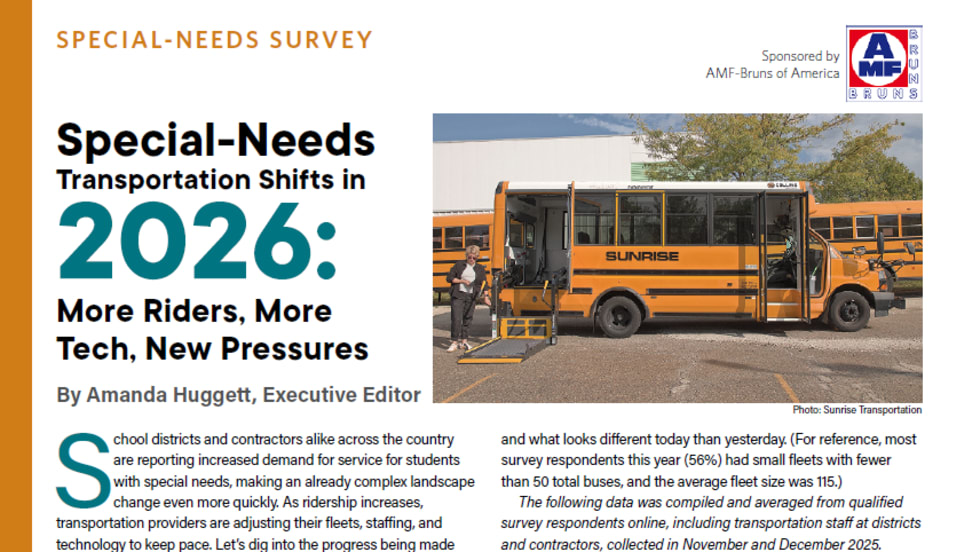
2026 Special-Needs Transportation Survey
What’s changing in special-needs transportation? This year, student transportation operators report a rising need, easing driver shortages, growing tech adoption, and evolving challenges. Sponsored by AMF Bruns of America.
Read More →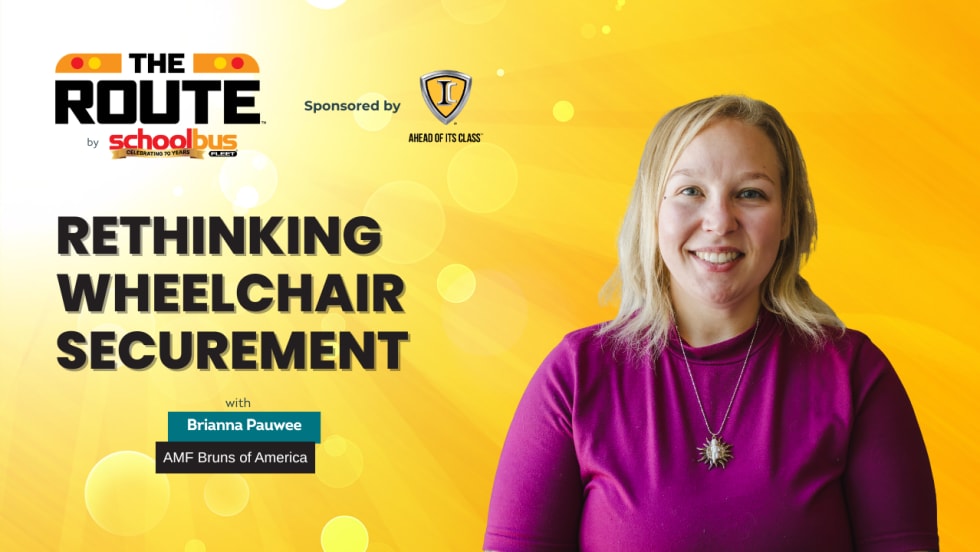
The Lived-Experience Gap in Mobility Tech: An Expert Take on Safe Student Transportation
Brianna Pauwee, a product application specialist at AMF Bruns of America and a wheelchair user, drops in to The Route to share practical securement and training insights, plus the story behind the new “Beyond Mobility” podcast. The Route is sponsored by IC Bus.
Read More →