




Related - NTSB Findings: Technology Just One Way to Boost Safety
Amid Pandemic, Don’t Let Safety Take a Back Seat
Let’s seize the opportunity to improve training for students and drivers and help them understand the entire process of crossing safety, including what to do if the danger signal is sounded.
by Derek Graham
August 24, 2020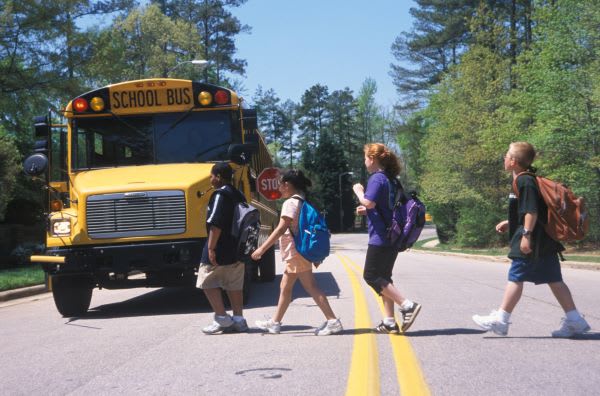
Students must understand the entire process of crossing safety, including stopping to look before stepping into any active lane of traffic and practicing what to do if the danger signal (horn) is sounded.
Photo courtesy North Carolina State University Center for Urban Affairs
4 min to read
On March 31, the National Transportation Safety Board (NTSB) adopted its recommendations related to the sibling fatalities in a Rochester, Ind., crash in October 2018. While no one was surprised by them, the report provided a motivation to redouble our efforts focusing on the three E’s of highway safety: education, engineering, and enforcement. In the pre-COVID world, our industry may have turned its attention to these recommendations as a high – if not top — priority.
Understandably, we have had a lot of other things to deal with. It almost feels like we have had to set aside our focus on safety. As we grapple with the pandemic, one of our most basic tenets — “Every child deserves a ride on a safe, yellow school bus” — has seemingly been devalued by some school districts encouraging parents to transport their own students to school to promote social distancing.
The NTSB report, issued about two weeks after schools nationwide closed for in-person learning, was eclipsed by the necessary attention required by the pandemic. But, let’s not forget about the recommendations to remind students and drivers about safe crossing and the bus horn.
Pedestrian Safety
According to the National Highway Traffic Safety Administration (NHTSA), “At some point in the day, everyone is a pedestrian, and unfortunately pedestrian fatalities remain high. There was a more than 3% increase in the number of pedestrians killed in traffic crashes in 2018, totaling 6,283 deaths — the most deaths since 1990.”
Make no mistake: bus riders are pedestrians, whether they are walking a mile or taking five steps from the end of their driveway to board the bus; walking on a sidewalk; in the street; or through the neighbors’ yards along the roadway, not to mention the pedestrian activity of crossing the street when boarding or exiting the school bus.
For this to be a reasonably safe activity, drivers must be aware of these pedestrians, especially young children who may not be predictable. And most importantly (given what we know about the presence of distracted motorists), the students themselves must be aware. Unfortunately, they are not. With all the talk of distracted driving in highway safety circles, distracted walking can be just as dangerous.
I began tracking student bus stop crossing fatalities in North Carolina in 1998. Unfortunately, there have been enough to count. One striking thing is that, through 2004, the average age of those children was 7 years old. Mostly very young kids that, at ages 5 to 7, are eager to ride the bus to school, and who may not be responsible for their actions in crossing the street. From 2009 to 2018, however, it was predominantly middle and high school students who were killed: 9 students averaging 13 years old. The tragedy is that these were children of an age that they can understand and comprehend the rules of pedestrian safety.
I’ve been studying this long enough to know that we cannot do enough public awareness and education to overcome motorists’ distraction and inattention. So, we must improve education and communication among students and school bus drivers.
Boosting Training
To be safe, students must accept some responsibility. It doesn’t seem that hard, really. You look both ways before you step into an active lane of traffic. But how does this become second nature? It only comes with reminders and practice. It is my opinion that if a child is hit because they did not look both ways as they stepped into the roadway, it is probably not the first time they stepped into that roadway without looking. Parents, drivers, and other students can remind them.
Thus, the need to use a universal crossing signal. The driver and students in Rochester knew this, or at least they knew the first part of the process. From the NTSB report: “Although it appears from the circumstances of the crash that the student pedestrians were aware that they should wait until signaled by the school bus driver to cross the road, it is not clear whether they understood what to do when the driver sounded his horn.”

Derek Graham is an industry consultant. He previously served as North Carolina’s pupil transportation director.
Photo courtesy Derek Graham
The report referenced NHTSA’s school bus driver in-service training series where “NHTSA also suggests that drivers establish a special horn signal to be used to warn of danger and indicate that student pedestrians should ‘return to the side of the road [they] started from–AT ONCE.’ The NHTSA training further states that school bus drivers should ensure that student pedestrians know both the hand signal indicating that it is safe to cross and the horn signal indicating danger.”
The NTSB recommendations to the National Association of State Directors of Pupil Transportation Services, National Association for Pupil Transportation and National School Transportation Association include: “Advise your members to train their school bus drivers and students on crossing procedures, including the crossing hand signal and the danger signal, which are to be used when a student roadway crossing cannot be avoided. (H-20-17)”
So, let’s seize the opportunity to improve training for students and drivers, to help them understand the entire process of crossing safety, including stopping to look before stepping into any active lane of traffic and practicing what to do if the danger signal (horn) is sounded.
Be safe out there!
Subscribe to Our Newsletter
More Safety

How to Build a Better School Bus Driver Training Program
Is it time to strengthen your driver training? Here’s how to pick the right talent and improve recruitment, retention, and safety. This video is brought to you by IC Bus.
Read More →
Recent School Bus Accidents Leave 2 Dead, 2 Injured
Four school bus crashes in Florida, Illinois, and Georgia highlight risks in transportation lots, at bus stops, and during student loading and unloading.
Read More →
Sponsored•September 8, 2026
When Every Second Matters, Clarity Keeps Routes Moving
From routine delays to urgent incidents, strong communication practices help drivers, dispatchers, schools, and families respond with confidence.
Read More →

What Happens When a School Bus Catches Fire — and What Can Help
School bus fires are rare but can be devastating. Learn how advances in fire suppression and asset protection help fleets detect fires earlier, reduce damage, and improve safety.
Read More →
Geotab Launches Tool to Help Fleets Investigate Road Incidents
Geotab Investigations combines telematics data, video, documents, and other evidence to help fleets reconstruct incidents, resolve claims, and determine what happened.
Read More →
Texas Sixth Grader Wins 2026 National School Bus Safety Poster Contest
Sai Darshana Yekolu of Moseley Middle School in Prosper, Texas, was named the newest winner for her artwork, bringing the theme of “Safe Rides, Everyday Heroes” to life.
Read More →
Sponsored•August 27, 2026
Doing More With Less: How Transportation Directors Can Prioritize Safety Amid Budget Uncertainty
With diesel prices soaring and nearly one-third of transportation directors expecting budget cuts, maintaining student safety has never been more challenging. Download this guide to learn how leading districts are prioritizing risk, funding critical safety technology, and building stronger budget cases with data.
Read More →
Walton County Schools Adds Gatekeeper Stop-Arm Enforcement System
The Florida district will deploy Gatekeeper’s updated Student Protector technology, which now incorporates AI to improve video evidence.
Read More →
How To Build a More Secure School Bus Yard During and After Hours
As thefts and overnight security threats continue, school transportation leaders are combining stronger operational practices with AI-enabled surveillance to better protect buses, facilities, and staff.
Read More →
FMCSA Names New Chief Safety Officer: What School Bus Operators Should Know
Steve Dowling is set to lead the federal agency's efforts to advance commercial motor vehicle safety and reduce crashes, fatalities, and injuries on the nation's roadways.
Read More →