




Advantages, challenges of vaunted 42-volt systems
Already being developed for cars and light trucks, 42-volt electrical systems will soon come to heavier-duty vehicles. They will first migrate to ...
Already being developed for cars and light trucks, 42-volt electrical systems will soon come to heavier-duty vehicles. They will first migrate to heavy trucks and then reach the passenger market, probably within the next five years, says Halsey King, a maintenance consultant who is also a member of the Society of Automotive Engineers (SAE) Truck and Bus Council’s board of directors. When they arrive, they will dramatically improve bus electrical safety and operating performance, he predicted. However, like all new technologies in the bus market, 42-volt systems will greatly affect maintenance personnel, and the implications for maintenance must be carefully thought through, King added. Starter, alternator to marry
Through years of meetings in various SAE committees, the automotive industry has reached agreement on standards that will triple existing vehicle voltage for both battery output (12 volts to 36 volts) and generator output (14 volts to 42 volts). It’s a move that’s both dramatic and far-reaching, affecting virtually every area of vehicle supply, assembly, component design and manufacture. One such device enabled by the 42-volt system is something called an integrated starter-alternator (ISA). The ISA is basically what it sounds like: a device that performs the functions of starting the engine and generating juice for other onboard systems. The ISA unit is mounted directly on the crankshaft. It functions initially as a starter as the engine is ignited and then automatically switches over to alternator mode. It can support a variety of functions and technologies, including virtual “stop-and-go” power, which are particularly well suited to school bus applications with frequent stops. With the ISA, there is no need to idle the engine. The engine can be shut off each time the vehicle stops and can be started when the vehicle needs to move. That will result in dramatically reduced emissions due to increased engine speed during starting. Other benefits include instantaneous starting, high electrical power to cope with ever-increasing loads from the growing list of onboard equipment, potential improvement in fuel consumption, high efficiency and minimal space requirements. With weight-saving, enhanced vehicle performance, emission reduction and improved fuel consumption, 42-volt electrical systems are the future. Dudley Wass, strategic business unit director for Visteon Corp.’s Electrical Conversion Systems, says that R&D changes will be sweeping. “The move to 42-volt entails a major redesign and re-think by OEMs as it encompasses everything from light bulbs to total integrated systems,” Wass says. Think through maintenance
These profound changes will most certainly affect the shop floor in an equally dramatic way, says King. “Forty-two volt systems will totally rewrite preventive maintenance programs,” he says. “For one thing, it will probably reduce the list of PM procedures to a single sheet of paper - and that list will get shorter and shorter as vehicle systems are revised to take advantage of 42 volts.” All that, he says, is part of a trend that is arguably as long as the evolution of automotive technology itself. On the one hand, new technologies have improved reliability and made mechanics’ lives simpler. On the other hand, they have significantly increased the demand for better-trained mechanics.
More Maintenance

Cummins on Smarter, Simpler Engine Innovation
Cummins discusses its first-ever gasoline engine for school buses, EPA 2027, and why bus fleets still want durable, simpler internal combustion options.
Read More →
Report: 72% of Diesel School Buses Now Use Advanced Low-Emission Engines
New data shows advanced low-emission diesel technology continues expanding across school bus fleets, even as electric bus adoption gains momentum.
Read More →
Vampire Tools' CAIMAN 7.5-Inch Multi-Purpose Screw Extractor Long-Nose Pliers with Crimper
Vampire Tools introduced the VAMPLIERS Caiman 7.5-inch multi-purpose pliers, combining screw extraction, cutting, crimping, and gripping functions into a single tool designed for fleet maintenance professionals.
Read More →
How Advanced Diagnostics Helps Bus Fleets Stay Ahead of Repairs
Chat with Noregon’s Kevin Smallhorn at ACT Expo about bus diagnostic tools, telematics integration, CNG maintenance support, and strategies to help reduce downtime and improve uptime.
Read More →
How School Bus Fleets are Getting Ahead of Breakdowns
Don’t let bus downtime wear you down. Here’s how bus operators are shifting from manual processes to AI-powered, data-driven maintenance systems for improved reliability and safety.
Read More →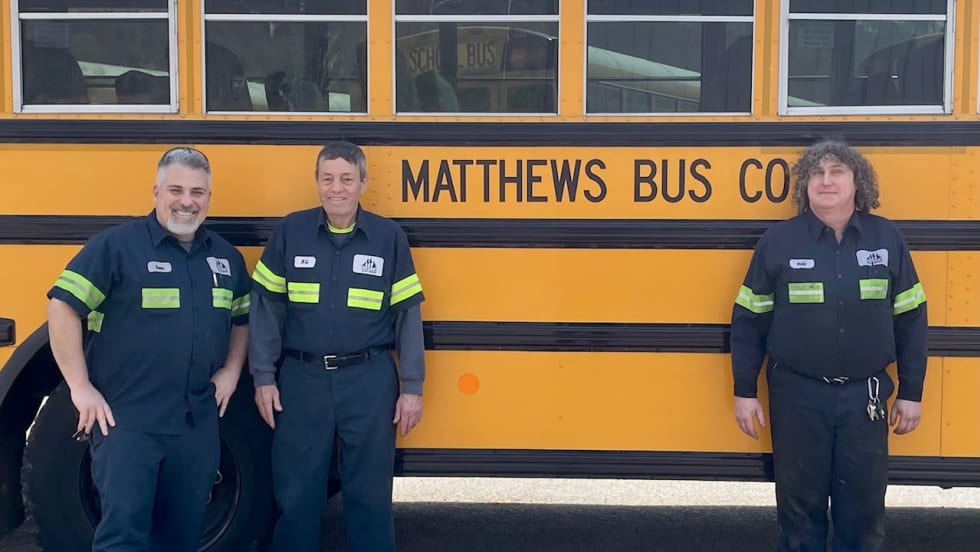
Pennsylvania School Bus Maintenance Team Praised for Dedication to Safety
Matthews Bus Company’s West Jefferson received a letter of commendation from the Pennsylvania State Police for their fleet inspections.
Read More →
From Chaos to Clarity: How School Districts Are Running Leaner Transportation Operations
Covering 38 routes on a Friday afternoon. Buses idling while routes overlap. Parents calling nonstop about late arrivals. Sound familiar? This whitepaper explores how district transportation leaders solved these exact problems — and what measurable results followed.
Read More →
The New Playbook for Safer, Smarter School Bus Maintenance
As school districts juggle aging buses, technician shortages and rising safety expectations, proactive fleet maintenance is becoming essential. This guide explores how telematics, predictive maintenance and real-time vehicle data can help transportation departments reduce breakdowns, extend vehicle life, improve compliance and keep students safer on the road.
Read More →
2026 School Bus Fleet Vendor Directory & Buyer's Guide
Searching for the right equipment, technology, or services for your school transportation program? This industry guide brings together manufacturers and suppliers across the entire school bus market, all in one place. Download it to find the partners who can help move your operation forward.
Read More →
2026 School Bus Maintenance Survey
What top challenges are school bus maintenance teams facing in 2026? Explore new trends from School Bus Fleet’s annual maintenance survey covering fleet composition and age, fuel types, used vs. new purchasing patterns, technician pay and certifications, and the impact of the driver shortage. Survey sponsor: Dayton Parts.
Read More →