




A New Role for Transportation in the Reauthorized IDEA
School bus operators need to consider the 'benefits' of transporting children with disabilities.
Today, transportation personnel are expected to take an active role in planning special-education transportation. This includes serving as a member at the Individualized Education Program Committee (IEPC) meeting. For this reason, it is important that you know the requirements for special-education transportation under the 1997 Individuals with Disabilities Education Act (IDEA) and how you might play an active role in developing and implementing special-education transportation plans. In order to better understand your role in the special-education process, you should first understand that IDEA ’97 defines “related services” as “transportation and such developmental, corrective and other supportive services as are required to assist a child with a disability to benefit from special education. . .”
Higher purpose cited
“Benefit” is a key word in this definition. If taken literally, it means you should be prepared to recommend anything reasonable to allow a special-education student to attend the least restrictive, most appropriate placement as determined by the IEPC. The law not only allows, but also encourages, the involvement of any school personnel who will carry out the provisions of the IEP. This will most certainly include transportation personnel. IDEA ’97 encourages the involvement of parents in the planning process, and you can expect that they will request certain accommodations that will allow their child to ride the regular-education bus. For example, you may be required to provide special training for low-functioning students who need special assistance with learning how to use a bus. Schools should be prepared to offer services such as mobility training to special-education students who are not visually impaired and behavior management training to students who are not emotionally impaired. The list of transportation-related services for any special-education student might include such things as training in travel, behavior management, social skills, community awareness, personal independence and mobility. And, transportation personnel could be the assigned providers for these programs.
What’s your obligation?
If a district provides transportation to and from school for non-disabled students, then it must transport disabled students to special-education programs and to other school-related activities (§§ 300.7 and 300.235). IDEA ’97 says that the education of children with disabilities can be made effective by “supporting high quality, intensive professional development for all personnel who work with disabled children to ensure that they have the skills and knowledge necessary to effectively assist these children to be prepared for employment and independent living.” IDEA ’97 also requires states to describe their needs and the strategies they will use to prepare personnel who provide related services, so that they will have the skills and knowledge necessary to meet the needs of children with disabilities. Door-to-door transportation may be determined necessary and, if written as such in the IEP, is to be interpreted literally (door of house to door of school). If the IEPC decides that special equipment is necessary for a disabled student to benefit from an educational program, it is the transportation department’s responsibility to assure that the equipment is used properly and in a safe environment. Remember, the school district is responsible to provide any equipment needed for transportation, if the parent refuses to purchase the proper equipment. This includes the wheelchairs, padding, belts, etc. If your district provides free transportation to athletic events, then it must also provide free transportation to special-education students attending Special Olympics. Or, if your district provides free transportation to students for attendance of football scrimmages (for the purpose of practice), then you must provide free transportation for Special Olympics practice sessions. The bottom line is that you can’t discriminate against special-education students by focusing on only certain athletic events, which exclude the disabled from participation.
LRE is the key
When preparing an IEP for a student who needs special-education transportation, it is important to remember that you will be expected to transport the student in the least restrictive environment (LRE). As stated in IDEA ’97’s final rules and regulations: “It is assumed that most children with disabilities will receive the same transportation provided to non-disabled children, unless the IEP team determines otherwise. However, for some children with disabilities, integrated transportation may not be achieved unless needed accommodations are provided to address each child’s unique needs. “If the IEP team determines that a disabled child requires transportation as a related service in order to receive FAPE (free and appropriate education), or requires accommodations or modifications to participate in integrated transportation with non-disabled children, the child must receive the necessary transportation or accommodations at no cost.” The U.S. Office of Civil Rights has taken a strong stand on LRE, based on research that shows that disabled individuals do better both academically and socially when placed in an environment with regular-education students. It has also held that a district needs a very strong argument to prove that a disabled student must be separated from the regular-education environment. Districts have been required to provide such things as lifts, nurses and transportation aides on regular-education buses in order to accomplish the least restrictive environment. It is not uncommon to find IEPC’d behavior management plans that are implemented by the driver. Air-conditioned coaches, special seating arrangements and use of special harness equipment on a regular-education bus are also covered in the LRE provisions in §§ 300.550-300.556. Several court decisions have established that schools are responsible for providing any reasonable service, piece of equipment or assistance that may be required for the disabled student to benefit from a special-education program. For example, it is the school’s responsibility to obtain access to the driveway of a home when door-to-door transportation is written into the IEP (Smith, EHLR 211; 191: Sara S (MA), EHLR 507:308), or to provide an aide to assist a student in a wheelchair from the curb to the door: (Lisa T. (CT), EHLR 502:230.)
What this means
It is going to require your time and effort to become involved as a planner. You must insist on being involved at the evaluation stage for referral of students who will likely need special transportation. Transportation directors and drivers need to learn about special education and disabilities so they know what questions to ask and who could best provide the answers. Here are some questions you should ask when you are involved in the evaluation of a student who may need special-education transportation as a related service:
What is the suspected disability?
How might this disability affect the student’s ability to ride on a regular-education bus?
Is it likely that this student might need to attend a program outside of our district?
What does the parent think this student will need in order to successfully ride the regular-education bus?
What does the staff feel this student will need in order to successfully ride the regular-education bus?
What does our district already have available that could satisfy these needs?
What kind of training would our staff need in order to accommodate these needs?
Level of involvement
How will you be asked to be involved? You will probably be asked to assess the transportation needs of certain students. You may be asked to help develop a plan to allow the student to be transported on a regular-education bus. You may be asked to properly train your staff to actually implement part of an instructional plan that will occur on the bus. You will likely have to assist in the preparation of written IEP goals and objectives that detail the type of special equipment, special procedures or instructional techniques that will be the responsibility of transportation personnel.
Changes are afoot
One thing is certain, transportation directors and special-education directors are going to be working much closer at the beginning of the referral process than ever before. IDEA ’97 now expects transportation personnel to play an active role in the planning process and take responsibility for the development of the transportation IEP objectives. And, transportation is expected to provide services the student needs in order to “benefit” from an education program.
Author Robert J. Cross is an education professor at Grand Valley State University in Grand Rapids, Mich.
More Special Needs Transportation
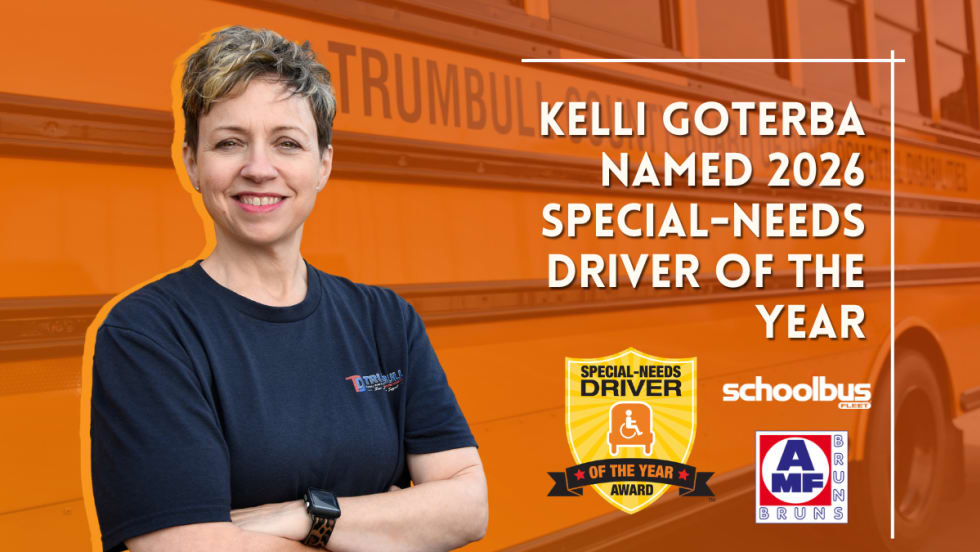
Kelli Goterba Named 2026 Special-Needs School Bus Driver of the Year
Through building trust with students and strengthening her transportation team, Goterba exemplifies the impact special-needs drivers can make.
Read More →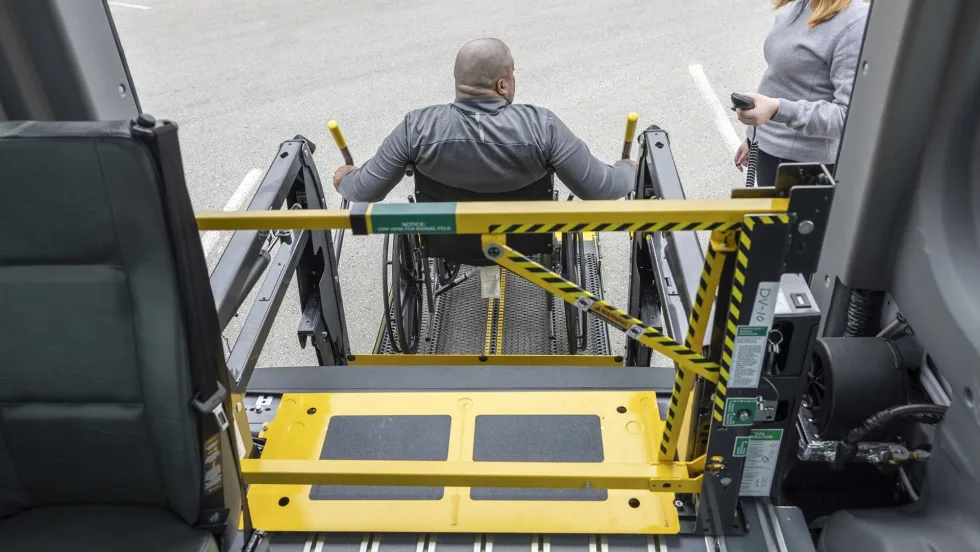
BraunAbility Introduces New Safety Barrier for Wheelchair Lifts
LiftSentinel is designed to add another layer of protection during wheelchair loading and unloading and can be retrofitted to many existing commercial lift installations.
Read More →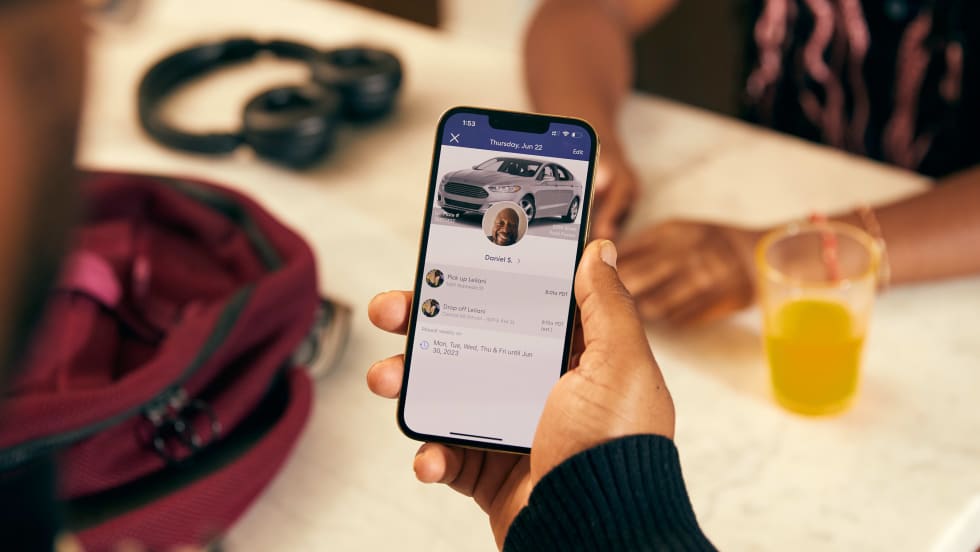
HopSkipDrive Launches New Safety, Driver Consistency Features for 2026-27 School Year
The company’s free ride recording, live ride tracking, and consistent driver assignments aim to improve safety and continuity for diverse student transportation needs.
Read More →
The Most Common Wheelchair Securement Mistakes on School Buses (and How to Fix Them)
Small missteps in wheelchair securement can have serious consequences. Here are 32 tips from experts to reduce risk and increase student safety on the bus.
Read More →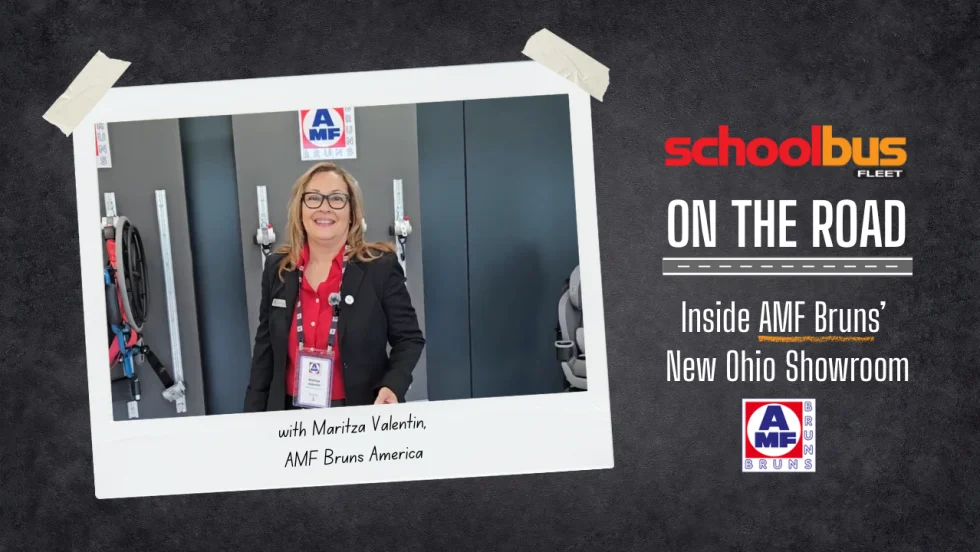
Inside AMF Bruns’ New Showroom: School Bus Securement Solutions Explained
Go inside AMF Bruns America’s new Ohio showroom with Maritza Valentin to see its FutureSafe technology, driver training tools, securement systems, and seating innovations.
Read More →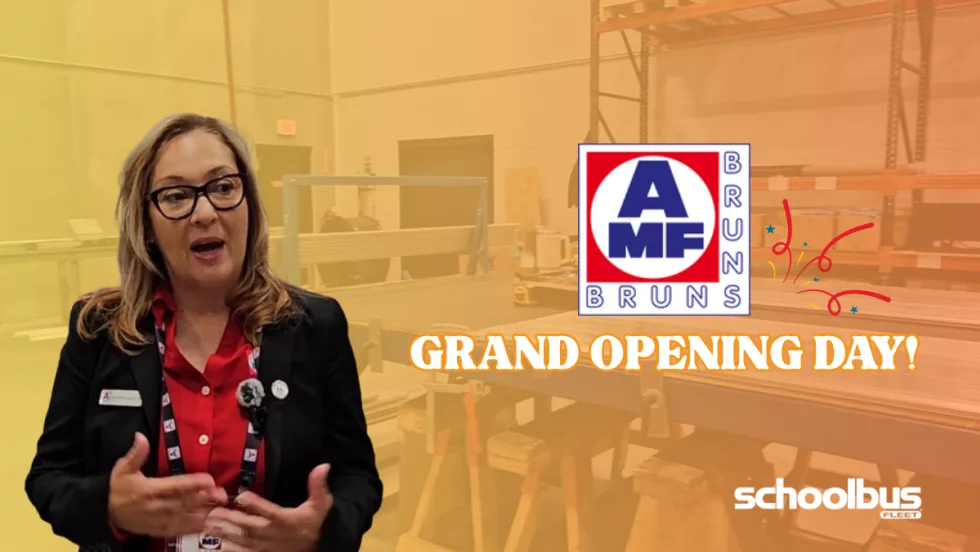
What AMF Bruns’ New Facility Means for Customers [Video]
Inside AMF Bruns’ new Stow, Ohio, operations: See how expanded space and innovation will enhance customer support and operations.
Read More →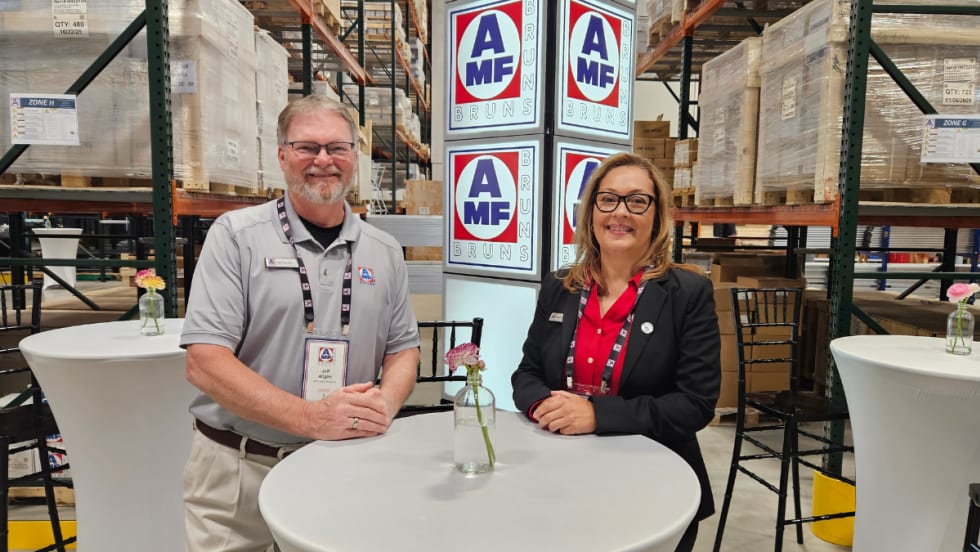
AMF Bruns Expands in Ohio, Investing in Growth and Community
With expanded production space, local investment, and a growing workforce, AMF Bruns is scaling its U.S. presence. Here’s an exclusive first look inside the new Stow, Ohio, HQ.
Read More →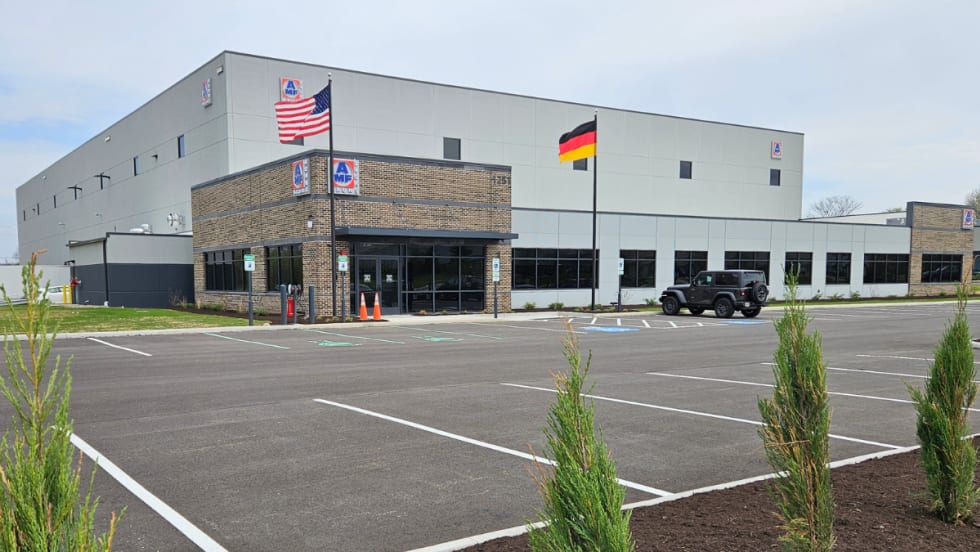
Inside AMF Bruns of America’s New Ohio Manufacturing Facility [Photos]
Take a behind-the-scenes look at AMF Bruns of America’s new 41,000-square-foot Stow, Ohio, headquarters, featuring advanced manufacturing, expanded space, and future-ready mobility solutions.
Read More →
First Student Boosts Student Support in Wichita & Texas
First Student and Wichita Public Schools are using behavioral support strategies to improve student ride experiences, while a separate initiative expands access to after-school programs through a bus donation.
Read More →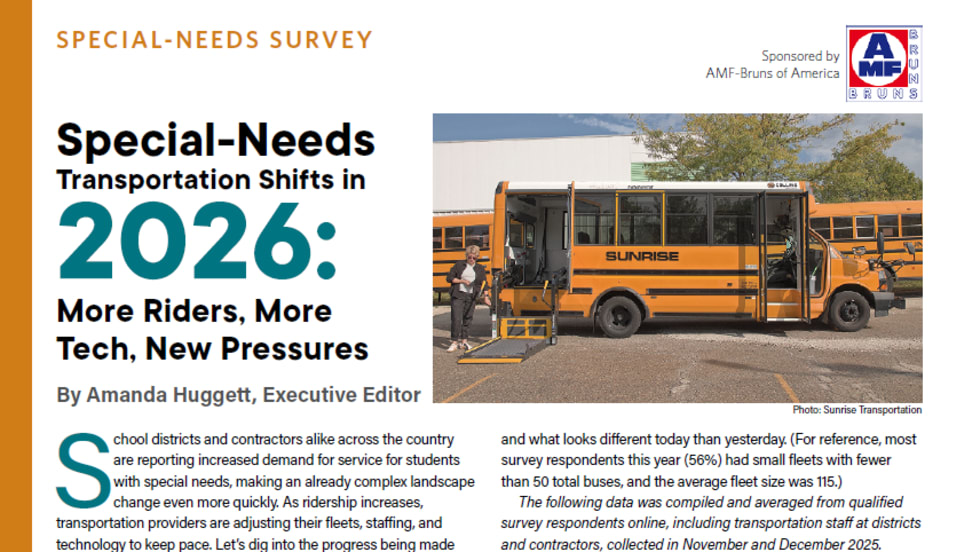
2026 Special-Needs Transportation Survey
What’s changing in special-needs transportation? This year, student transportation operators report a rising need, easing driver shortages, growing tech adoption, and evolving challenges. Sponsored by AMF Bruns of America.
Read More →