




6 tips for directors coming aboard a new district
When taking on a new position at a different district, assessing and getting used to new people and procedures can be a challenge. Transportation directors who have successfully made the transition share advice on how to implement changes and get to know new employees and peers.

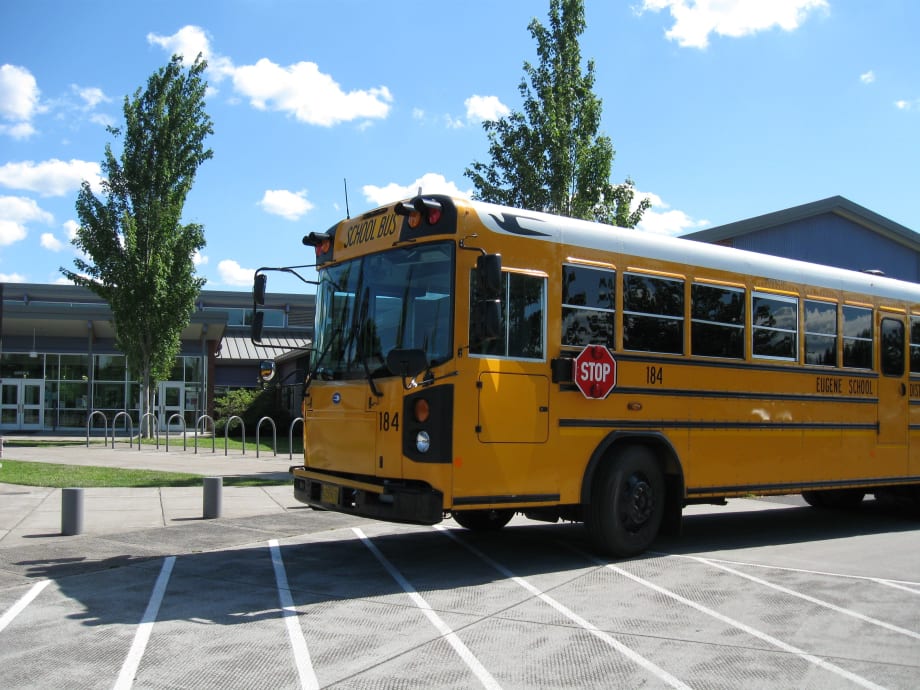
Chris Ellison, transportation manager, Eugene School District 4J, was able to accomplish his goal of getting to know all of the approximately 130 employees when he first started at Eugene by walking around the facility, sitting in the driver’s room and riding bus routes.
Starting a new job can be exciting and overwhelming. In addition to adjusting to a new place and people, there is the task of adapting to a different workplace culture and procedures. This can present challenges to transportation directors when they seek to make improvements. SBF spoke with several transportation directors who have moved to new districts about these challenges and how they overcame them. They shared these tips on how they sought research, support from longtime staff members and clear communication with employers, and how they started building relationships with employees and their peers.
1. Ask for an operation study for a roadmap
One difference a director who is starting in a new operation has to assess and adjust to is the workplace culture. What helps, says Michael Dallessandro, shared transportation director for New York’s Geneseo and Livonia central school districts and previously the transportation director at Niagara Wheatfield Central School District in Niagara Falls, N.Y., is a commissioned study of or report on the operation to use as a roadmap.
There are times when a supervisor begins work at a district with deep-seated cultural issues that he or she needs to identify and change. However, the staff may perceive a new person coming in as not knowing what he or she is doing, and suggestions for improvements may not be well-received.
If the district hires a consultant to conduct a study of the district, it will provide the incoming director with a roadmap for suggested changes or adjustments. Getting the study or report just before starting the job can prevent the new director from having to take the lumps for any changes, because the suggestions are coming from a third party.
“The last thing you want [after making] changes is your employees or colleagues saying, ‘What did you bring in this new guy for? He’s changing everything. We don’t like this,’” Dallesandro says. “If the consultants were [behind] the changes that the incoming director is making, it takes a lot of the pressure off.”
2. Give everyone a clean slate
A new director shouldn’t make up his or her mind about an employee because the director was told that person is “a problem.” Dallessandro advises starting out by giving every staff member a clean slate, even those whose personnel files indicate disciplinary issues or underperforming.
“Every new [director] needs to make their own assessment of all the employees in the department and try to build bridges with people right from the start,” he says. “Problem employees will show their colors every time. If someone is a poor performer, they’re going to do it on your watch, too, and you can make your own decision about the individual.”
Given a chance, hopefully the employee will correct the problem behavior, even if it is often difficult for adult employees to make changes, he adds.
Chris Ellison, transportation manager, Eugene (Ore.) School District 4J, who previously worked at Greater Albany (Ore.) Public Schools as director of transportation, agrees.
[PAGEBREAK]“If you have a problem employee, it’s just going to be a matter of time before they show themselves out the door, either voluntarily or not.”
However, Ellison adds that when a discipline issue persists, the challenge is finding out the employee’s history if information wasn’t properly documented. Often, there is only a written record, and in some cases, not even that. Some of the history may be lost with the previous manager.
“Getting back to square one with the potential problem employee can be frustrating,” Ellison says. To solve the problem, he advises “talking to anybody in the know,” such as assistants or human resources staff. If at that point no documentation exists, do your due diligence to document accordingly.
3. Communicate clearly on financial hurdles
Any director taking on a new position at a district with budget challenges needs to know up front the level of commitment they have from their supervisors to address the issue, Dallessandro says.
“They need to be able to make hard decisions for cuts,” he adds. “If not, the relationship between the director and administration or central office will not be smooth. If they want the same level of service but don’t have the funding stream [for it], nobody’s going to be able to achieve any goals.”
Sometimes an incoming director will find support from the principal and district, but longtime or union employees may stand in the way of budgetary changes and complain about them in the district office, community and drivers’ room. Overcoming such a challenge takes a superintendent, district office and board of education that want change in their operation and strongly back the transportation director, Dallessandro says.
Conversely, without support from the powers-that-be, the drivers and other employees will learn that they have a direct link to the central office or board of education, and the transportation director will have trouble making progress. If the complaints are referred back to the transportation director, eventually employees learn that they have to follow the director’s goals and objectives, he adds.
4. Seek out experienced staff for guidance
New directors can benefit from the experience of longtime employees. When Kevin Neafie, director of transportation at Lafayette, Ind.’s Tippecanoe School Corp., came on board three years ago, the operations director at the time was very helpful. He had been with the district about 16 years and had previously worked at the sheriff’s department, so he knew the geographically diverse county very well.
“He was a great help for me as a newbie,” Neafie says. “His background and knowledge of [the area] helped.”
[PAGEBREAK]Meanwhile, when Ellison came back to Eugene as the transportation manager, one complication was the fiscal differences between the two districts. Eugene is a larger district than Albany, and the budget is set up differently.
As he was starting, he was expected to build the budget for fiscal year 2013-14.The budget in Albany is created by the business manager, with some input from the transportation director. The budget at Eugene is solely managed at the director level.
He turned to his recently retired predecessor, who helped with the transition period.
“Some of the way they did accounting and budgeting changed in that time, so it was kind of the blind leading the blind, but we were able to get it done,” Ellison recalls.

When Kevin Neafie, director of transportation at Lafayette, Ind.’s Tippecanoe School Corp., came on board three years ago, he sought the help of the operations director to learn more about the geographically diverse county. The operations director had been with the district about 16 years.
5. Manage 'by walking around'
Ellison is a big proponent of a strategy known as “management by walking around.” He was able to accomplish his goal of getting to know all of the approximately 130 employees, particularly the drivers, when he started at Eugene by simply walking around the facility and sitting in the driver’s room, interacting with employees and riding bus routes.
Being with employees one-on-one, a manager can build rapport, trust and respect. And, Ellison adds, that goes both ways.
“If you show your employees that you trust and respect them, you get that back. That’s one of the things I firmly believe.”
6. Ask key questions to get to know each employee
Ellison calls every driver into his office and asks them a few simple questions: Who are you? How long have you been here? What position are you in? What is one thing that you like about transportation? What keeps you coming back, besides the paycheck? If you could change one or two things here, what would they be?
“That [response tells] me if there are any underlying issues that I might not be aware of that some of the other managers in our department also don’t know about,” he says.
More Management

Logan Bus Company Rolls Out AI Phone System for NYC School Bus Families
A summer pilot found that AI agents could handle most routine calls, freeing up time for customer service staff to focus on emergencies and complex family concerns.
Read More →
From Intent to Impact: What I Learned About Leadership from TAPT
A Texas transportation supervisor shares lessons on self-awareness, accountability, managing stress and building trust — and why investing in leadership development matters at every stage of your career.
Read More →
NAPT Names 2026 Award Recipients
Who earned national recognition for their work in student transportation? This year, NAPT named five recipients of its 2026 awards for service, safety, and leadership.
Read More →


2026 State of Student Transportation Report
Driver shortages. Rising costs. Growing safety expectations. More data, but not enough time to act on it. The 2026 State of Student Transportation Report reveals what transportation leaders say is putting the most pressure on their operations—and where they’re investing next. See how your priorities compare.
Read More →
How to De-Escalate an Angry Person: 5 Steps for Handling Workplace Conflict
What makes emotions run high, and how should you handle an angry colleague or parent? Follow these steps for staying calm, listening, showing empathy, and resolving conflict.
Read More →
What Readiness Looks Like This School Year
Learn about the challenges shaping the 2026–2027 school year, from persistent driver shortages and budget pressure to technology and readiness gaps. See how school districts are responding and adapting in Zonar’s 2026 Back-to-School Readiness Report.
Read More →
Changing Lanes: Executive Moves at Summit School Services, Zum, STA, Cummins, Transit Technologies, Driventic, & Cadex
See who's been hired, promoted, and appointed to leadership positions at various school transportation industry suppliers and private contractors.
Read More →
Industry Moves: Companies Expand Fleet Service & EV Infrastructure Footprints
The new facilities and regional hubs could mean faster access to shop equipment, charging support, and transportation technology for fleet operators.
Read More →
Doing More With Less: How Transportation Directors Can Prioritize Safety Amid Budget Uncertainty
With diesel prices soaring and nearly one-third of transportation directors expecting budget cuts, maintaining student safety has never been more challenging. Download this guide to learn how leading districts are prioritizing risk, funding critical safety technology, and building stronger budget cases with data.
Read More →
Zum Reaches 19 States With New York Expansion
The addition of the Empire State to the student transportation company's roster marks a growing expansion in the Northeast as it scales its tech and school bus services.
Read More →