




6 keys to success in leadership development
No organization excels with only one leader. Developing a team of leaders is essential for future growth and sustainability.

Who knows your job? Who have you mentored? Who are you currently mentoring?
If you are mentoring, are you doing it in a selfless manner? Are you preparing younger people for future leadership roles? Are you paying it forward?
If you are in a leadership position, then let us take an analogy journey together.
Game plan
Imagine that you are the coach or general manager of a baseball team (if you don’t like baseball, pick another sport). It is time for spring training.
You are to observe and analyze and then determine who the best prospects for the season are. You want to win. You have a game plan/philosophy for the season on how you want things to play out.
In order to have a winning season, you need players with certain talents in certain positions. You must ensure that your veterans are in shape and have not lost any of their previous level of play. Their attitude must be in sync as a team — ready and willing to do what it takes to win.
They must play by the rules. Cutting corners and using other methods to enhance performance may yield short-term gains, but they will hurt the team in the long run.
You must have depth and contingency plans, because someone’s going to have an injury, someone’s going to lose a loved one, someone’s going to be in a traffic accident, etc.
Vital training
You begin your spring training with the basics, the fundamentals, conditioning. Few like the mundane routine of preparing and repeating such fundamental exercises and drills. But you know the payoff of a team that is prepared, that grunts it out, that sees the big picture. When the game goes into extra innings, the better conditioned team is usually the team that comes out on top.
You lay out your season’s schedule and practice routines to focus on those areas that will allow your team to be prepared for those tactics and strategies. Each facet of your team has coaches with specialties to address those specific skill areas.
You are constantly offering encouragement and affirmations when players excel. You respectfully correct problems. You take necessary actions when a player is not following instruction and direction.
You match younger, less experienced players with more seasoned players so the mature player assists and mentors the rookie.
At team dinners, you reinforce and call attention to those members who have exceeded expectations. You may have to counsel some of the young players who are making poor choices. You may even have to do the same with your seasoned veterans.
You cannot turn your head nor ignore behavior that is inconsistent with the values of the team. If a team member is not willing to do the right things, to pay the price, to put in the time to practice, to raise the bar, to improve his or her game, then he or she may not have a place on the team. You ask yourself when the right time is to provide positive-growth leadership to ensure long-term success.
[PAGEBREAK]
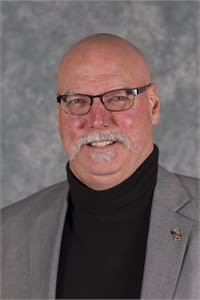
Michael Shields is director of transportation and auxiliary services at Salem-Keizer Public Schools in Salem, Ore. He is also a member of SBF’s editorial advisory board.
Start early
A recent white paper from the Center for Creative Leadership in Greensboro, N.C., indicates that leadership development cannot start too early.
Stephen Covey endorsed the “Leader in Me” program for teaching leadership development in elementary and high schools. It’s never too early!
The “Leader in Me” program is proving successful in several learning institutions in the U.S. At present, elementary schools in the Mukilteo (Wash.) School District are teaching leadership principles as early as the fifth grade.
Teams are a mixture of skills, expertise, professionalism, motivation, initiative and enthusiasm. The challenge for leadership is to meld these characteristics into a smooth-operating force. As outlined above, there are several key leadership elements required to develop people not only for the present, but also — and more importantly — for future growth and sustainability.
Here are some of the more important elements of leadership development:
1. Create an organizational or team vision toward which objectives and goals are directed. A team can have exceptional skills and expertise, but without a vision, they will never perform to higher levels of achievement.
2. Empower other leaders to mentor, counsel and teach new and younger team members. No organization excels with only one leader. It takes a team of leaders with the same vision and ideals to form the complete team. These leaders need to be empowered to be proactive in their realm of authority to mentor and teach.
3. Recognize and affirm superior or outstanding performances. Everyone needs affirmation about their contribution to the organization. It builds confidence, it enhances self-esteem and it motivates to further success.
4. Motivate with action-based encouragement — both positive and negative. Overlooking minor performance errors sends the wrong message. Leaders need to be action oriented to provide encouragement and mentoring at the time of the behavior, especially when corrective action is necessary for optimum performance.
5. Model high moral and ethical standards. Leaders must “walk the talk” to build trust and respect. Organizational legacy is affirmed by maintaining morally and ethically acceptable standards of behavior.

David McCuistion of Vanguard Organizational Leadership is a retired naval officer. His 29-year naval career included several leadership and management positions as well as instructing courses in leadership, team building and goal setting.
6. Teach leadership skills and practices, and empower others to do so also. Every organization must be a “learning organization,” which includes five phases of growth:
• standards,
• instruction,
• practice (even with non-sports entities),
• feedback that ensures clarity of instruction and understanding that is essential for continual and sustainable growth,
• and, lastly, release, which empowers everyone to perform without having to ask for permission to proceed.
Continual leadership development is crucial to building team legacy and long-term, sustainable success. Leaders must empower other leaders with focused, from-the-heart leadership development.
More Management

STA Acquires Sunrise Transportation
Student Transportation of America expands in Illinois and Connecticut through Sunrise's fleet of nearly 1,000 vehicles.
Read More →
EPA Opens $180M DERA Funding Round for Diesel Upgrades
The 2026 Diesel Emissions Reduction Act program seeks applications from eligible organizations to accelerate the retirement of legacy diesel vehicles.
Read More →
HopSkipDrive’s CareEngine Targets the ‘Exceptions’ in Student Transportation
The new platform works alongside districts’ existing transportation management systems to coordinate specialized rides, automate last-minute changes, and turn ride data into operational improvements.
Read More →


The Right Ride for Every Student: Navigating the New Student Transportation Ecosystem
How should districts blend school buses with small-vehicle transportation and other options? EverDriven CEO Mitch Bowling discusses safety, costs, partnerships, and strategy.
Read More →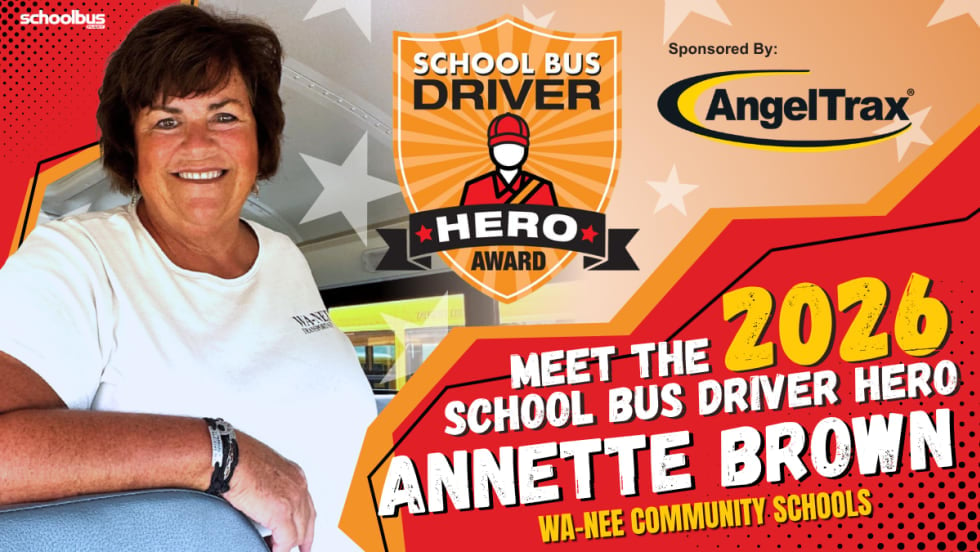
Annette Brown Always Takes the Extra Time: Meet Our 2026 School Bus Driver Hero
For more than 30 years, the Wa-Nee Community Schools driver has treated students like family, combining safety, compassion, and servant leadership to make a lasting difference on and beyond the school bus.
Read More →
How to Build a Better Driver Training Program
Ready to boost up your school bus instructor training? Here’s how to pick the right talent and improve recruitment, retention, and safety.
Read More →
CALSTART and Forth Combine to Form Catalyst Mobility
The new name represents a renewed vision for the nonprofit focused on advancing clean, equitable, and affordable transportation solutions that move people and goods.
Read More →
What Makes a Great School Bus Driver Trainer?
Choosing the right school bus driver trainer takes more than experience. Learn six keys to selecting and developing trainers and evaluating program effectiveness.
Read More →
School Bus Contractors Expand Through New Deals, Acquisitions & Partnerships
STA's Canadian division acquires Ontario-based G&L Stevenson Transport; Durham School Services adds a new district in California; First Student expands in New Jersey; and Minnesota Coaches rebrands and acquires Halo Transportation.
Read More →
Logan Bus Company Rolls Out AI Phone System for NYC School Bus Families
A summer pilot found that AI agents could handle most routine calls, freeing up time for customer service staff to focus on emergencies and complex family concerns.
Read More →