




50 years after <i>Brown</i>
The United States recently observed the 50th anniversary of the U.S. Supreme Court’s landmark decision in Brown vs. the Board of Education. ...
The United States recently observed the 50th anniversary of the U.S. Supreme Court’s landmark decision in Brown vs. the Board of Education
.
It was on May 17, 1954, that the high court unanimously overturned the “separate but equal” policy in public schools that had existed since 1896.
The anniversary was marked by media coverage presenting divergent opinions on the success of this mandate. Some civil rights advocates contend that the U.S. still has a long way to go to bring about true equality in the educational arena. In fact, some argue that many urban areas of the country have returned to segregated schools.
If, in fact, resegregation has taken place, that goes against the wishes of most Americans, who believe that integration has improved the quality of education for blacks and whites. The increasing ethnic diversity of this country requires that we take all the necessary steps to encourage integration.
Buses drawn into the controversy
Without a doubt, school buses have played a critical role in bringing about the racial integration demanded by the Supreme Court. But it took time.
Although the court ordered in 1954 that desegregation be eliminated “with all deliberate speed,” it was several years before busing became the tool that would help to actually bring about desegregation.
It was in the early 1970s that court-ordered busing first began to make national headlines, drawing transportation departments into the fray. Eventually, hundreds of school districts became involved in desegregation busing.
During this period, the yellow school bus became a symbol of the psychic divide between those who favored desegregation busing and those who were adamantly opposed. It could be seen in photos in Boston in 1973, with young black faces peering from the windows as helmeted police stood guard.
In the wake of those turbulent years, the school bus has distanced itself from those incendiary images. In many cities where desegregation busing is still in place, the program is voluntary, and the school bus is perceived as a bridge between diverse neighborhoods, helping to promote educational equity.
Challenges still remain
Cross-town busing, as it’s often known, has presented logistical challenges for school bus fleets. But transportation supervisors have managed to make this difficult task seem easy. We know that it’s not. The additional resources needed to transport students to schools outside their neighborhoods cannot be underestimated.
Handling the additional routes created by desegregation busing programs often requires more buses, more drivers and more maintenance technicians. Controlling costs becomes a top priority under these circumstances.
Over the past decade, many school districts have been declared “unitary” and released from mandatory court-ordered busing programs. Many of these school districts have embraced “controlled choice” as a means to continue desegregation policies. This strategy, whether it’s embodied by magnet schools or school choice, presents its own set of challenges, of which I’m sure you’re aware.
School bus fleets will continue to play a role in remedying inequities in educational opportunity. You should be proud of the role that school transportation has played in this movement over the past 50 years. Keep up the good work!
More Management

EverDriven Launches Route Consolidation Calculator to Estimate Diesel Savings
As diesel prices hit record highs, the largest alternative transportation provider says a 10% route consolidation could save a 120-route district more than $78,000 a year in fuel alone.
Read More →
Zum Secures Continued Financing Support for School Bus Expansion
Generate Private Credit has financed approximately $75 million in school bus deployments across three states, supporting more than 500 buses as Zum expands across the county.
Read More →
Beyond Discipline: A Different Approach to Student Behavior on the Bus
After implementing a dean of students program in Oregon, North Clackamas is seeing positive improvements. Here’s how it worked. The Route is brought to you by IC Bus.
Read More →
A Dean of Transportation's Different Approach to Student Behavior on the School Bus
After implementing a dean of students program in Oregon, North Clackamas is seeing positive improvements on the bus. Here’s how it worked.
Read More →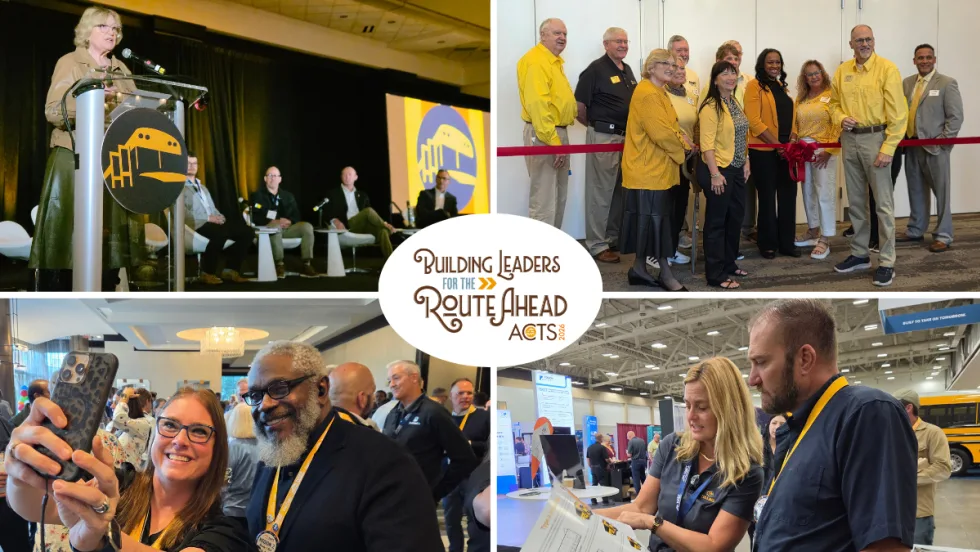
Inside NAPT ACTS 2026: Highlights from Louisville
From federal updates and student behavior strategies to new school bus technology and industry awards, see highlights from NAPT ACTS 2026 in Louisville.
Read More →
Meet the 2025 School Bus Driver Hero Winner: Annette Brown
We caught up with Wa-Nee Community Schools' Annette Brown on site at SBFX, where she was named the 2026 School Bus Driver Hero Award winner. Hear about her reaction, what she loves most about being a school bus driver, and more!
Read More →
Predictability Is Like Ketchup (According to 6-Year-Olds)
To students, a different school bus can feel like a full-blown crisis. One driver reflects on why familiar routines, showing up on time, and being reliably boring matter more than we think.
Read More →
Samsara Launches Free Driver Rewards Program
The new Driver Perks program gives eligible professional drivers access to discounts and offers without adding a cost for participating fleets.
Read More →
How Tax-Exempt Municipal Leases Can Help Finance School Buses
Let’s explore school bus financing options, including municipal leases, vendor payable accounts, and balloon payments, and how they can help stretch fleet budgets.
Read More →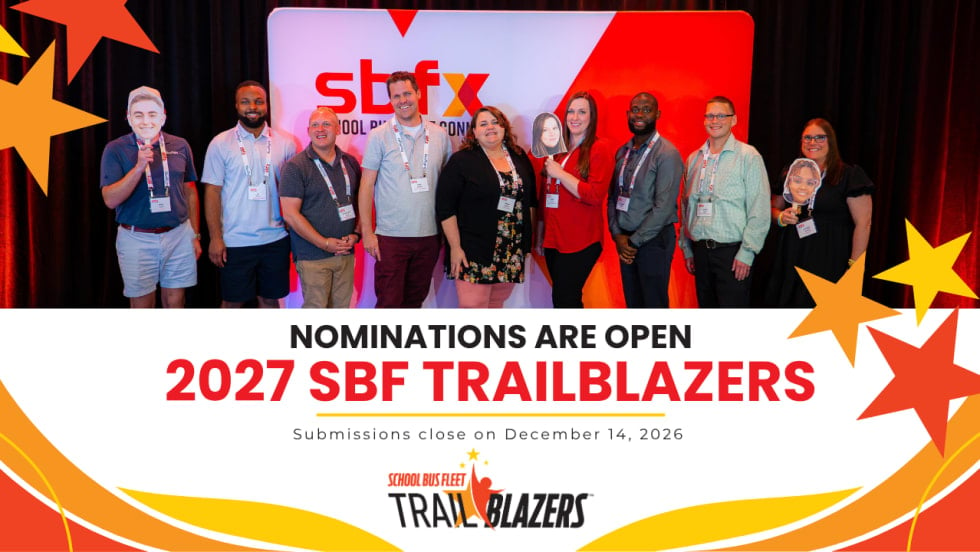
Nominate Rising School Transportation Pros Under 40!
We’re searching for the next generation of leaders making an impact across the K-12 student transportation industry to recognize as SBF’s 2027 Trailblazers. Nominations are open now!
Read More →