




5 Questions: Cheryl Fisher on Teamwork, Driver Shortage
Fisher discusses her love of an unpredictable workday, legislation to combat driver shortage, and taking the helm at the Virginia Association for Pupil Transportation.


Cheryl Fisher says that she hadn’t considered a career transporting students growing up, but adds “I cannot imagine my life now without pupil transportation.”

Cheryl Fisher says that she hadn’t considered a career transporting students growing up, but adds “I cannot imagine my life now without pupil transportation.”
If you had asked her when she was younger what she wanted to be “when she grew up,” Cheryl Fisher, the director of transportation services for Fauquier County Public Schools and president of the Virginia Association for Pupil Transportation (VAPT), would not have thought of a career in pupil transportation. Yet over the last 30-plus years, that is exactly the livelihood she has chosen and loved. Initially a mechanic in the air force, she needed to supplement her income after leaving the military. She found a job as a school bus driver, and never looked back.
In this interview with School Bus Fleet, Fisher discusses her love of an unpredictable workday, legislation to combat driver shortage, and taking the helm at VAPT.
1. How did you get your start in pupil transportation?
I have been in transportation in one form or another for over 30 years. When I got out of the air force — I was a mechanic on the flight line — I was looking to bring in extra income and not spend it all on day care. Driving a school bus was perfect for me. I drove for 10 years before I began working my way up the ladder. I worked in safety, training, and dispatch, became an area coordinator, and then moved up to assistant director and director.
If you had asked me what I wanted to be when I grew up, this profession would not have entered my head. But I cannot imagine my life now without pupil transportation.
2. What do you like most about working in pupil transportation?
My days are never the same. I make big plans for each day, but they very rarely come to fruition. I love that about this job. The constantly changing schedule makes the day go by quickly.
I have never worked with such an amazing team of people; everyone pulls together and faces each new situation head on. We have a driver that will be celebrating her 60th year driving in May. That is the perfect example of the dedication and caring of people in transportation.
3. What are some of your responsibilities as the president of VAPT?
I am honored to have been working with VAPT for many years now, in many capacities. Being the president is a true learning experience. My favorite part of this position is meeting all the people that make VAPT work, including regional directors, vendors, and members from all over Virginia. (My least favorite duty is reviewing contracts.)
As the president, I oversee board meetings, review and sign contracts for venues we use for our annual conferences, and do my best to keep up with new legislation related to school buses. We fully support professional development training and put a lot into the planning of our annual conference. The conference includes an amazing trade show, several breakout sessions with expert speakers, and National Association for Pupil Transportation professional development courses. Lately we have held live demonstrations on topics such as how to deal with a bus accident.
4. Virginia lawmakers recently proposed legislation that would allow retired drivers to drive school buses while still collecting their retiree pay. Can you describe the degree of school bus driver shortage in the state and how this legislation may help alleviate the shortage?
SB324/HB351 permits any school bus driver in any geographic area or school division in which a critical shortage of school bus drivers has been identified to continue to receive a service retirement allowance if the driver meets certain conditions. VAPT has stood behind and written a resolution in support of SB324/HB351.
We sent out a survey last year to all the transportation directors in Virginia, for a total of 133 school districts, and received 62 responses. Forty-nine (or 79% of) districts are short on drivers. It was interesting to see that all the larger districts surveyed (those with over 200 buses) reported critical shortages.
When districts are so short on drivers, we are forced to have them either double up on already crowded buses or return to school for second loads. We have also used office staff, mechanics, and even supervisors to cover runs. These [fixes] are inefficient and, more importantly, [present] safety concerns.
5. What was the highlight of 2019 for you?
I love technology and the use of it in pupil transportation. We have had GPS for many years which, along with our routing software, has allowed us to transition from paper timesheets to electronic pay. Last year we added stop-arm cameras, backup cameras, and 360-degree cameras to some of our buses. It is an exciting time; improving the safety of our students is what we are all here for.
More Management

How to Build a Better Driver Training Program
Ready to boost up your school bus instructor training? Here’s how to pick the right talent and improve recruitment, retention, and safety.
Read More →
CALSTART and Forth Combine to Form Catalyst Mobility
The new name represents a renewed vision for the nonprofit focused on advancing clean, equitable, and affordable transportation solutions that move people and goods.
Read More →
What Makes a Great School Bus Driver Trainer?
Choosing the right school bus driver trainer takes more than experience. Learn six keys to selecting and developing trainers and evaluating program effectiveness.
Read More →


School Bus Contractors Expand Through New Deals, Acquisitions & Partnerships
STA's Canadian division acquires Ontario-based G&L Stevenson Transport while Durham School Services adds a new district contract in California, First Student adds a New Jersey contract, and Minnesota Coaches acquires Halo Transportation.
Read More →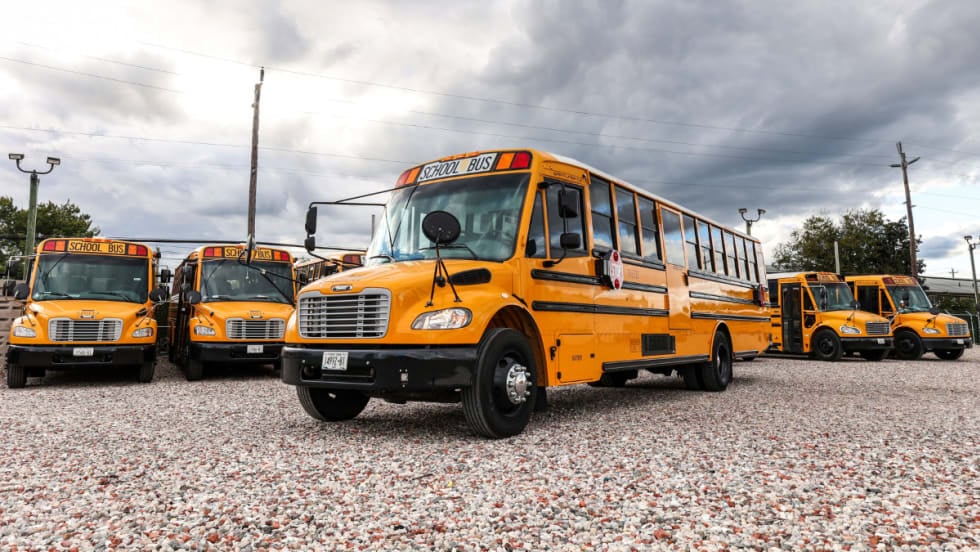
Logan Bus Company Rolls Out AI Phone System for NYC School Bus Families
A summer pilot found that AI agents could handle most routine calls, freeing up time for customer service staff to focus on emergencies and complex family concerns.
Read More →
From Intent to Impact: What I Learned About Leadership from TAPT
A Texas transportation supervisor shares lessons on self-awareness, accountability, managing stress and building trust — and why investing in leadership development matters at every stage of your career.
Read More →
NAPT Names 2026 Award Recipients, Hall of Fame Inductee
Who earned national recognition for their work in student transportation? This year, NAPT named five recipients of its 2026 awards for service, safety, and leadership, plus its newest Hall of Famer.
Read More →
2026 State of Student Transportation Report
Driver shortages. Rising costs. Growing safety expectations. More data, but not enough time to act on it. The 2026 State of Student Transportation Report reveals what transportation leaders say is putting the most pressure on their operations—and where they’re investing next. See how your priorities compare.
Read More →
How to De-Escalate an Angry Person: 5 Steps for Handling Workplace Conflict
What makes emotions run high, and how should you handle an angry colleague or parent? Follow these steps for staying calm, listening, showing empathy, and resolving conflict.
Read More →
What Readiness Looks Like This School Year
Learn about the challenges shaping the 2026–2027 school year, from persistent driver shortages and budget pressure to technology and readiness gaps. See how school districts are responding and adapting in Zonar’s 2026 Back-to-School Readiness Report.
Read More →