




10 Keys to Success in School Transportation Budgeting
Understanding different budgeting concepts, assessing district growth, and forecasting fuel use are some of the essential steps in developing and maintaining a sound budget.


Forecasting and cost analysis are key concepts to use when budgeting.
School Bus Fleet
“Budget” is a powerful word.
It can essentially dictate how we manage our transportation operations on a day-to-day basis. It can hamper our goals for our operations. Or it can be the key to progress by facilitating system or equipment improvements.
Whether you are a numbers person or not, the reality is that sound budget planning, regular monitoring and the ability to execute strong financial controls are vital skills that any transportation leader has to have to remain valued in years to come.
Here are 10 tips for successful budgeting.
1. Expect constant budget interaction
There was a period when budget time was an annual occurrence — much like a holiday, but not as much fun. You would develop your budget, or in some cases be shown the budget you were being assigned, and as long as you worked within those numbers, you heard little feedback from your accounting or finance departments.
That is not the case today. We live in a world where some type of budget interaction occurs on a daily basis. There are few conversations we have regarding our operations or the service it provides in which there is not a cost involved, either directly or indirectly, so budget always comes into play.
2. An approved budget is a spending plan
Let’s take a moment to clear up some myths about budgets that I have heard over the years.
First of all, an approved budget is a spending plan — not a final authorization to spend. Even if you put a dollar figure in a budget for a piece of equipment or a new position, unless you are the sole decision maker in your organization, you may still need to follow your organization’s normal approval process for expenditures. This means that on rare occurrences they can be delayed or denied due to unexpected issues, policy or staff changes, or changes in vision — even if they were in fact budgeted.
3. Budget as close to actual needs as possible
Then there is the old “spend it or lose it” myth. While some can argue against me on this based on their own experiences, I believe that your budget should be planned to be as close to actual spending needs and trends as possible.
If you develop a sound budget, identify goals and execute it properly, you should have budget support for lines that may go up or down each year. The only time I have seen budget lines get cut when a department didn’t spend down a line is when for a period of consecutive years certain lines have been left with a pot of unspent cash at budget end. This sends a message to our finance departments or business offices that we are either padding budget lines or may simply be throwing numbers at lines during budget development time.
A good manager will be watching budget trending throughout the year, so you should have a good handle on what lines may be heading to the finish line with unspent cash, and you should know the reason for that. If this is more than a one-time anomaly with a certain budget line, you should definitely evaluate how you are going to prevent having a “cash fat line” in future years.
4. Use year-end funds for next year
With that said, if you do have one of those years in which you end up with some funds left in a line, you may be able to get a jump start on the next year’s operational goals or needs with those year-end funds.
For example, if you know you will be using a certain number of tires or oil filters, you may be able to place a bulk order with year-end funds, thereby helping your bottom line next year and potentially taking advantage of any quantity purchase price reduction.
Also, a one-time capital purchase could be completed at this time. Examples might include video surveillance systems to retrofit buses that do not yet have them, two-way radio equipment or office furniture. These are a few candidates for purchasing with year-end funds, subject to proper approval and planning.
At budget time, I have always asked my superintendent or district office whether we are growing our business, holding the line or making some reductions in service.
5. Understand budgeting concepts
To ensure budget development success, you should also understand what type of budgeting concept your school district or company uses.
Some organizations prefer zero-based budgeting. This is where every line at the start of new budget development is sent to zero, and the budget is then developed from the ground up. This means that every single dollar you place in each line needs to have justification as to how it benefits your operation or helps your organization reach its goals.
A roll-ahead budget, which seems to be more common, is a budget process that basically establishes the current level of operation as the baseline or minimum level of service and programs that stakeholders expect, and then builds the budget from there. With roll-ahead budgets, there is still the need for justifying budget lines, but it is not as detailed as a zero-based budget.
Regardless of which budget development concept your district or company uses, it is critical to have a clear understanding of your organization’s goals and educational initiatives so you can build a budget that supports programs for kids. You should be in direct contact with district offices and curriculum departments.
6. Consider enrollment, new schools
I have always said that the buses sitting in the yard are your fixed costs. Acquisition, insurance and some basic maintenance are easily identifiable costs. But when the “wheels start to turn,” you start burning cash through driver/attendant salaries, fuel, and wear and tear. Every program added ultimately costs real dollars.
When building your budget, you must consider enrollment and service demands, such as trips, late programs, new schools or new housing tracts. At budget time, I have always asked my superintendent or district office whether we are growing our business, holding the line or making some reductions in service. That is a direct and helpful question to be asked up front.
7. Evaluate new equipment rollouts
Other key items to consider when developing your budget are any department-level initiatives. There is a great deal of talk about GPS and stop-arm cameras in the school transportation business. If your organization is considering these initiatives, you must evaluate the cost of a fleet-wide rollout or a rollout with new buses at the time of purchase — and the impact these would have on your budget goals.
8. Factor in recruiting, training costs
Also consider the budget impact of staffing and driver recruitment, training and the need for additional full- or part-time positions. Often you build a salary line based on current staffing and any contractual raises and/or bonuses required through collective bargaining, only to underestimate how much it will cost you to bring new drivers on board. This is especially true if your recruits are being paid hourly while training. If you hire 25 new people, for example, there are costs involved for each of them from hire to CDL.
9. Identify “parts”
What goes in the parts line of the budget also requires careful consideration. Many operations break out tires and lubricants to their own separate lines, which I support. Generally, I consider “parts” the day-to-day items that go on your buses and come in a small- or medium-size box.
As a rule of thumb, you should place $1,800 to $2,000 per bus in a parts budget line. Your newer vehicles that are under warranty should consume very little of those funds, while your oldest units will consume more than their share. In most cases, this equals out.
10. Forecast fuel use
Keep in mind that petroleum-based fuels and fluids, as well as some other products made with petroleum, are volatile due to world markets and politics. But in most cases, your fuel budget lines — be they gasoline, diesel or alternative fuels — will be easy to forecast.
You can obtain data from your fuel vendor for total amounts purchased/delivered for previous years and make your projections based on that, factoring in any planned growth or service reductions. This total gallon number is then multiplied by the highest per-gallon rate paid in the previous year or two, which will then give you the dollar figure to use in your fuel line.
Most finance departments understand the unpredictability of fuel, so they will work with you to arrive at a budget figure that takes all of the previously listed factors into consideration.
Primed for budget success
I hope that this basic budget primer will provide you with helpful guidance — whether you are developing your first budget or your 20th budget.
I welcome your feedback, comments or constructive criticism, and I’m happy to provide advice via email at MPDBUS1@aol.com.
More Management

How to Build a Better Driver Training Program
Ready to boost up your school bus instructor training? Here’s how to pick the right talent and improve recruitment, retention, and safety.
Read More →
CALSTART and Forth Combine to Form Catalyst Mobility
The new name represents a renewed vision for the nonprofit focused on advancing clean, equitable, and affordable transportation solutions that move people and goods.
Read More →
What Makes a Great School Bus Driver Trainer?
Choosing the right school bus driver trainer takes more than experience. Learn six keys to selecting and developing trainers and evaluating program effectiveness.
Read More →


School Bus Contractors Expand Through New Deals, Acquisitions & Partnerships
STA's Canadian division acquires Ontario-based G&L Stevenson Transport while Durham School Services adds a new district contract in California, First Student adds a New Jersey contract, and Minnesota Coaches acquires Halo Transportation.
Read More →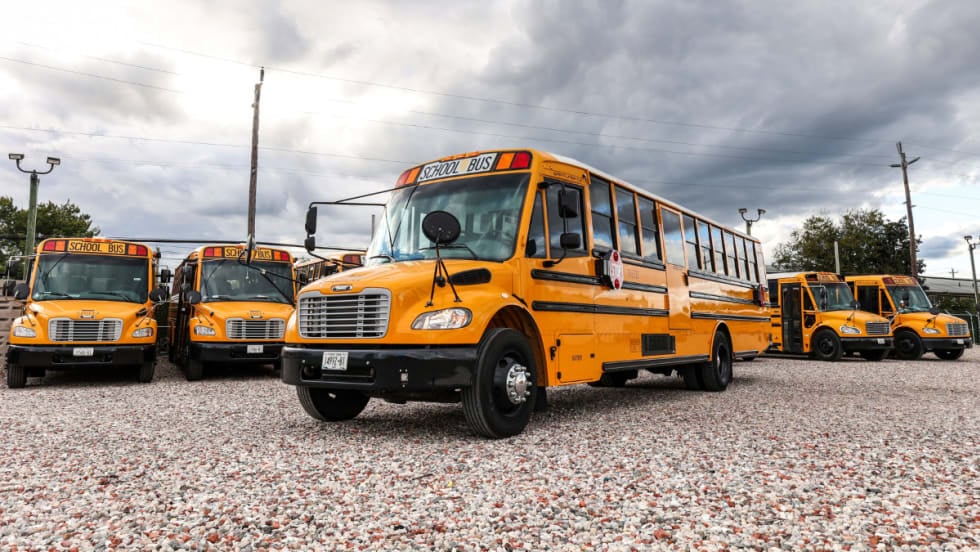
Logan Bus Company Rolls Out AI Phone System for NYC School Bus Families
A summer pilot found that AI agents could handle most routine calls, freeing up time for customer service staff to focus on emergencies and complex family concerns.
Read More →
From Intent to Impact: What I Learned About Leadership from TAPT
A Texas transportation supervisor shares lessons on self-awareness, accountability, managing stress and building trust — and why investing in leadership development matters at every stage of your career.
Read More →
NAPT Names 2026 Award Recipients, Hall of Fame Inductee
Who earned national recognition for their work in student transportation? This year, NAPT named five recipients of its 2026 awards for service, safety, and leadership, plus its newest Hall of Famer.
Read More →
2026 State of Student Transportation Report
Driver shortages. Rising costs. Growing safety expectations. More data, but not enough time to act on it. The 2026 State of Student Transportation Report reveals what transportation leaders say is putting the most pressure on their operations—and where they’re investing next. See how your priorities compare.
Read More →
How to De-Escalate an Angry Person: 5 Steps for Handling Workplace Conflict
What makes emotions run high, and how should you handle an angry colleague or parent? Follow these steps for staying calm, listening, showing empathy, and resolving conflict.
Read More →
What Readiness Looks Like This School Year
Learn about the challenges shaping the 2026–2027 school year, from persistent driver shortages and budget pressure to technology and readiness gaps. See how school districts are responding and adapting in Zonar’s 2026 Back-to-School Readiness Report.
Read More →