




Mechanic or Technician: Which are You?
The benefits of becoming certified are pride, higher pay, respect, confidence, increased knowledge and skills, employment opportunities, legal backing by your employer, and less liability for your employer.
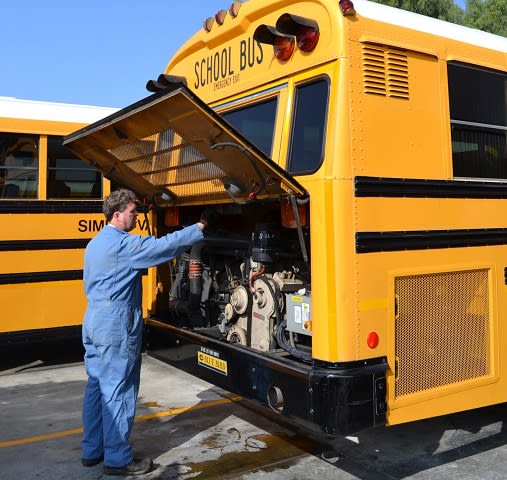
File photo courtesy Thomas McMahon
File photo courtesy Thomas McMahon
So, you are a school bus mechanic. Now what? Is this going to be your career? Do you want to become more than just a mechanic? Wouldn’t you rather be able to say “I am a certified Master School Bus Technician?” Instantly, your persona changes in that statement, and you are now a professional in your position.
What is the cost of becoming a technician? If you have performed your duties as a school bus mechanic for more than two years, have broad experience in all phases of mechanical repair, and want to become more than you are today, you are qualified to take tests to obtain that level of integrity and become a certified technician.
Having been certified since the early 1990s, I can tell you firsthand of the career benefits and doors that are opened for you. All it takes is effort and a small out-of-pocket expense on your part to become an ASE certified Master School Bus Technician.
ASE (short for National Institute of Automotive Service Excellence) is the leading nonprofit testing organization available to you. To become certified as a Master School Bus Technician, you will have to pass six test areas. They are: S1-Body Systems and Special Equipment, S2-Diesel Engines, S3-Drive Train, S4-Brakes, S5-Suspension and Steering, S6-Electrical/Electronic Systems, and S7-Air Conditioning Systems and Controls. S1 through S6 are required for Master Certification; S7 is optional. One that I like to include in my certification is L2-Electronic Diesel Engine Diagnosis Specialist for the icing on the cake.
So, what does it cost? ASE breaks down the testing year into four testing sessions. By checking online at ASE.com, you can obtain the current testing schedule. Each test session is broken down by seasons — summer, fall, winter, and spring — but the length of time of each session may vary by a few weeks. Register to start testing at the beginning of a test session. (The registration fee is $36.) The fee is good for that entire testing session, and if planned properly, allows you ample time to study and test — one test at a time if needed — with a goal of completing all tests by the end of the test session.
The benefits of becoming certified are pride, higher pay, respect, confidence, increased knowledge and skills, employment opportunities, legal backing by your employer, and less liability for your employer.
Each certification test has an individual cost of $43, so two would cost $86, plus the one time (per test session) registration fee of $36, for a total of $122. (The L2 test has a fee of $86.) The cost to complete the Master Certification in one test session is $294.
You can take as long as you like in the testing process, but each certification is only valid for five years. To avoid having to test constantly for the rest of your career, I recommend preparing to take at least two tests a month, which should allow you time to complete all tests in one session. Then, you are done for five years.

Brad Barker is a veteran shop manager and technician.
Recertifying becomes easier and less costly when the certifications expire every five years. The number of test questions is reduced substantially, and the fees top out at $129. With this in mind and for the recertification process, I recommend taking all six tests at once to recertify. If your employer offers incentive pay, be sure to recertify before the expiration date so that you maintain your certification.
The benefits of becoming certified are pride, higher pay, respect, confidence, increased knowledge and skills, employment opportunities, legal backing by your employer, and less liability for your employer. Is it worth it? Absolutely!
Brad Barker has more than 40 years of experience in school bus maintenance as a shop manager and technician. He has written numerous articles for SBF. He can be reached at schoolbuspm@outlook.com.
More Management

How to Build a Better Driver Training Program
Ready to boost up your school bus instructor training? Here’s how to pick the right talent and improve recruitment, retention, and safety.
Read More →
CALSTART and Forth Combine to Form Catalyst Mobility
The new name represents a renewed vision for the nonprofit focused on advancing clean, equitable, and affordable transportation solutions that move people and goods.
Read More →
What Makes a Great School Bus Driver Trainer?
Choosing the right school bus driver trainer takes more than experience. Learn six keys to selecting and developing trainers and evaluating program effectiveness.
Read More →


School Bus Contractors Expand Through New Deals, Acquisitions & Partnerships
STA's Canadian division acquires Ontario-based G&L Stevenson Transport while Durham School Services adds a new district contract in California, First Student adds a New Jersey contract, and Minnesota Coaches acquires Halo Transportation.
Read More →
Logan Bus Company Rolls Out AI Phone System for NYC School Bus Families
A summer pilot found that AI agents could handle most routine calls, freeing up time for customer service staff to focus on emergencies and complex family concerns.
Read More →
From Intent to Impact: What I Learned About Leadership from TAPT
A Texas transportation supervisor shares lessons on self-awareness, accountability, managing stress and building trust — and why investing in leadership development matters at every stage of your career.
Read More →
NAPT Names 2026 Award Recipients, Hall of Fame Inductee
Who earned national recognition for their work in student transportation? This year, NAPT named five recipients of its 2026 awards for service, safety, and leadership, plus its newest Hall of Famer.
Read More →
2026 State of Student Transportation Report
Driver shortages. Rising costs. Growing safety expectations. More data, but not enough time to act on it. The 2026 State of Student Transportation Report reveals what transportation leaders say is putting the most pressure on their operations—and where they’re investing next. See how your priorities compare.
Read More →
How to De-Escalate an Angry Person: 5 Steps for Handling Workplace Conflict
What makes emotions run high, and how should you handle an angry colleague or parent? Follow these steps for staying calm, listening, showing empathy, and resolving conflict.
Read More →
What Readiness Looks Like This School Year
Learn about the challenges shaping the 2026–2027 school year, from persistent driver shortages and budget pressure to technology and readiness gaps. See how school districts are responding and adapting in Zonar’s 2026 Back-to-School Readiness Report.
Read More →