




5 Questions: Jason Johnson Talks Tech Training, Troubleshooting
Johnson talks about helping mechanics troubleshoot problems together, working to mitigate a mechanic shortage statewide, and the team effort involved in running the association.

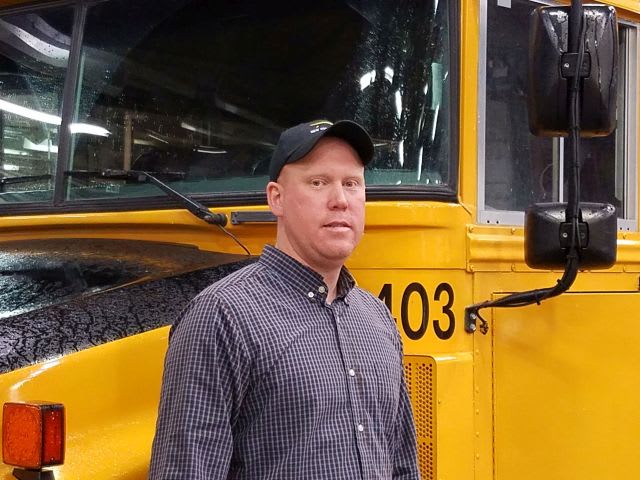
Jason Johnson says that the shortage of people qualified to work as technicians makes the need for training all the more urgent. “We want to make sure all new mechanics in the state have training at their fingertips.”
Jason Johnson says that the shortage of people qualified to work as technicians makes the need for training all the more urgent. “We want to make sure all new mechanics in the state have training at their fingertips.”
For Jason Johnson, president of the New York Head Mechanics Association and equipment service manager at Horseheads (N.Y.) Central School District, his work for more than a decade on school buses has been driven by the satisfaction he gets from knowing he is helping children get to and from school safely. Having led the association for the last six years, he is also passionate about helping the state’s mechanics access the training they need as technology rapidly evolves.
In this interview with SBF, Johnson talks about helping mechanics troubleshoot problems together, working to mitigate a mechanic shortage statewide, and the team effort involved in running the association.
1. How did you get your start in student transportation?
I started my career at Alfred State College with a degree in Diesel Mechanics and went to work as a diesel mechanic at Ryder Transportation Services after that. Then, one day I was asked if I was interested in a job at a local school district. Since then, I have worked for three school districts, moving up [each time]. I am on my 15th year working on buses. It is still a very satisfying job, knowing I am a part of keeping children safe day in and day out on a school bus. I can proudly say I bleed yellow.
2. As president of the New York Head Mechanics Association, what are your plans for the association and the upcoming annual training seminar in July?
Plans consist of bringing key classes to our seminar that pertain to issues that our great mechanics have to deal with day in, day out. This industry seems to change with technology at a very fast rate. It is very important to me to make sure we are on top of any changes and ready for what the future may bring us.
Our association also holds monthly meetings throughout the state so that all mechanics can meet and talk about issues in the field and problem-solve with each other.
I am grateful to have the backing of my school district to let me reach out to other schools and get them answers to their questions. A group of head mechanics on the board helps me accomplish these tasks. The local chapter presidents of our organization need to be commended. They put local meetings together and do a tremendous job. I’m very proud of all the people who help make our organization as strong as it is.
3. Recent reports indicate that there is a growing technician staffing shortage. Are you seeing the effects of this at your district? If so, how are you dealing with it?
We are experiencing this throughout the state. As retirements hit us in stages, we find it hard to replace [technicians]. Districts have gone above and beyond in trying to hire the right people for the job — putting banners on buses, and using the internet and local newspapers to get new people. There is a shortage of qualified people, but that is another reason we want to make sure all new mechanics in the state have training at their fingertips. We are fortunate that all bus manufacturers provide us with any training we need. The hard part is getting the new hire in the door. Pay, of course, is another issue, but districts see this and are working to help make it easier for us to hire the right person for the job.
4. What do you see as the biggest issues facing the student transportation industry?
Ever-changing technology is our biggest battle. Keeping ahead of the curve on multiplex wiring, new types of brakes, and software configurations. Buses every year seem to be safer, but with that comes more work when these products break down. The mindset of just changing the part is not where we are at. There are numerous things we have to do before we change anything.
We use computers to solve problems many times a day. We now connect to buses with computers and diagnose issues with ease. Test lights [for measuring electrical currents] seem to be a thing of the past as we move to multi-meters [which can measure voltage and detect faults].
5. What do you like most about working in student transportation?
To be a part of keeping children safe every day is the reason I stay in this field. I have always told mechanics all over the state that whenever you work on a bus, keep in mind that someone’s most prized possessions are on that bus. It is a great accomplishment when you see something done safe and right.
More Maintenance
The Essential Guide to School Bus Maintenance and Student Safety
Your district's buses carry students to school every day. This guide shows how predictive maintenance powered by fleet data helps keep buses reliable, drivers accountable and students safer from the first bell to the last stop.
Read More →
Kerry Brothers Grows Michigan School Bus Repair Network
The acquisition of Downriver Truck and Bus expands Kerry Brothers’ school bus maintenance footprint across southeast Michigan, adding repair capacity, diagnostic resources, and state inspection support.
Read More →
Noregon Introduces CAN Bus Diagnostic Tool, Expands JPRO Features
CAN Mentor and the latest JPRO update aim to simplify vehicle network diagnostics and improve repair efficiency for technicians of all experience levels.
Read More →
Cummins on Smarter, Simpler Engine Innovation
Cummins discusses its first-ever gasoline engine for school buses, EPA 2027, and why bus fleets still want durable, simpler internal combustion options.
Read More →
Report: 72% of Diesel School Buses Now Use Advanced Low-Emission Engines
New data shows advanced low-emission diesel technology continues expanding across school bus fleets, even as electric bus adoption gains momentum.
Read More →
Vampire Tools' CAIMAN 7.5-Inch Multi-Purpose Screw Extractor Long-Nose Pliers with Crimper
Vampire Tools introduced the VAMPLIERS Caiman 7.5-inch multi-purpose pliers, combining screw extraction, cutting, crimping, and gripping functions into a single tool designed for fleet maintenance professionals.
Read More →
How Advanced Diagnostics Helps Bus Fleets Stay Ahead of Repairs
Chat with Noregon’s Kevin Smallhorn at ACT Expo about bus diagnostic tools, telematics integration, CNG maintenance support, and strategies to help reduce downtime and improve uptime.
Read More →
How School Bus Fleets are Getting Ahead of Breakdowns
Don’t let bus downtime wear you down. Here’s how bus operators are shifting from manual processes to AI-powered, data-driven maintenance systems for improved reliability and safety.
Read More →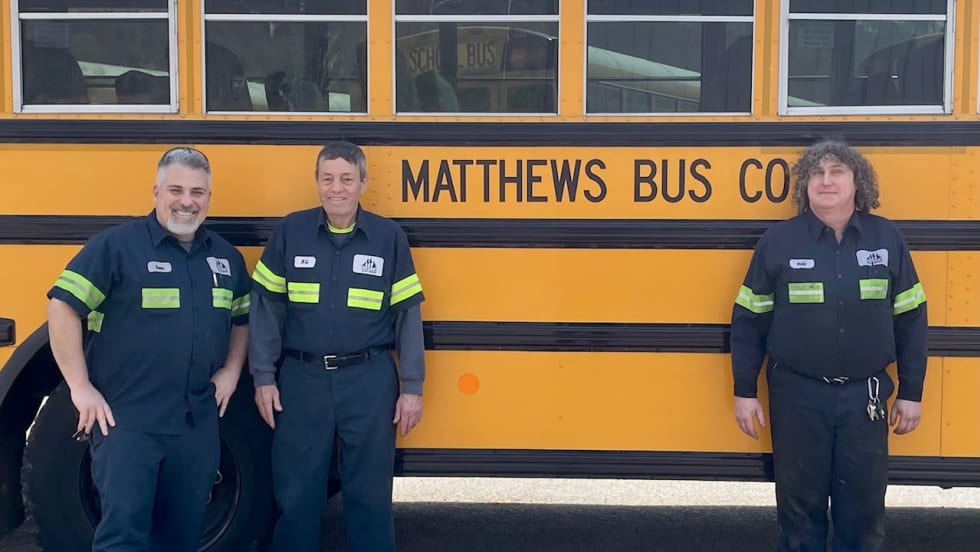
Pennsylvania School Bus Maintenance Team Praised for Dedication to Safety
Matthews Bus Company’s West Jefferson received a letter of commendation from the Pennsylvania State Police for their fleet inspections.
Read More →
From Chaos to Clarity: How School Districts Are Running Leaner Transportation Operations
Covering 38 routes on a Friday afternoon. Buses idling while routes overlap. Parents calling nonstop about late arrivals. Sound familiar? This whitepaper explores how district transportation leaders solved these exact problems — and what measurable results followed.
Read More →