




School Bus Driver Seats Adjust to a Variety of Needs
In addition to safety and durability, driver seats offer various options for height and comfort.
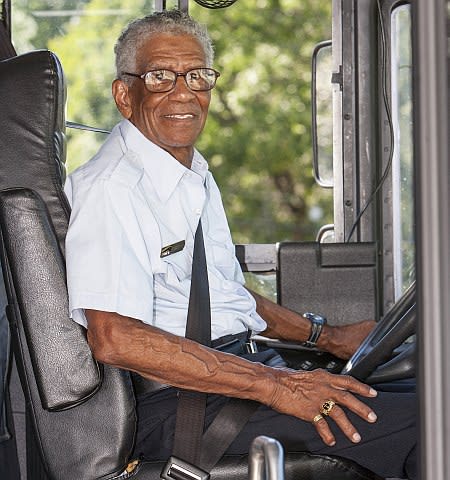
Photo courtesy National Highway Traffic Safety Administration
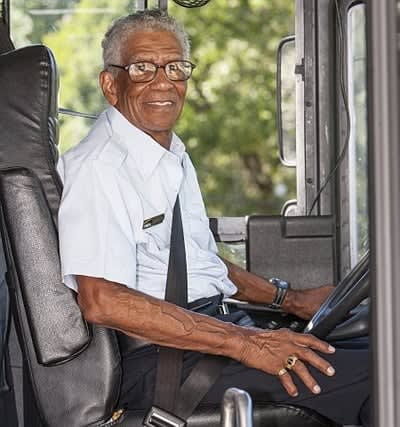
Photo courtesy National Highway Traffic Safety Administration
The comfort and quality of a school bus driver seat is essential to the success of drivers and students alike. The seat’s features must be extremely safe, as well as adjust to the diverse needs of individual drivers. Commercial Vehicle Group (CVG) is one company that understands this, says Bud Prenatt, the company’s product marketing manager.
“Once you’re in that seat, you’re often there until the job is done, so we utilize feedback to ensure the highest level of comfort, durability, safety, and adjustability,” Prenatt says. “Drivers are essentially living in their seat.”
Dealers like to have options customers can add, Prenatt says, so CVG offers a basic seat with options such as arm rests and seat heaters.
Additionally, the requirements for school bus driver seats vary from place to place, so it’s important to offer an adaptable seat that can conform to different mandates and specifications. For example, armrest requirements are not consistent from OEM to OEM.
“Some bus manufacturers require that there is no left armrest because there is an interference with the console, so we offer all of these options to meet the specific needs of the industry,” Prenatt explains.
Height adjustment
One of the most important features of school bus driver seats is independent height adjustment. The school bus industry is composed of 64% female drivers and 36% male drivers, compared to the truck industry, which is 94% male, according to Seats Inc. Sales Manager Josh Justman. That means there is a wide range in drivers’ heights.
“We provide a product with independent height adjustment so it can fit someone in the 5-foot range, all the way to the 6-foot 7-inch range, and provide maximum comfort for those different heights,” Justman says.
Height adjustment is important because drivers need to be able to securely reach the pedal. CVG works to ensure the safety of drivers by increasing their track travel from 7 inches to almost 9 inches in some models to allow the seat to move 2 inches closer to the pedal.
“We improved the length of the track because we’re listening to the voice of the customer to identify what the problems are in the industry,” Prenatt says. “We’re developing our aftermarket seats that are available [as a] direct-to-dealer purchase to help resolve any issues.”
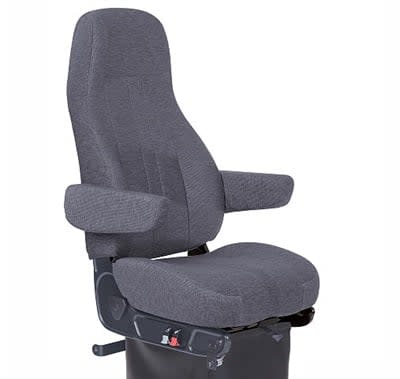
CVG’s Routemaster 350 Mordura cloth seat features a five-way adjustable seat cushion and adjustable air lumbar support.
Suspension
Seats Inc. offers two suspension seats: the Magnum 100 (air suspension) and the Magnum 200 (mechanical suspension). Both of these seats are designed to significantly reduce the vertical movement that can occur when maneuvering a large vehicle, Justman says.
“Instead of the whole seat bouncing up and down, our knee-action style suspension seats pivot in the front, so only the back of the seat actually moves,” he explains. The driver’s feet maintain control of the pedal because although their body is moving, their knee is at pivot point.
“So from your knee down, you are always maintaining control,” Justman adds. “We like to say, ‘Safety begins with the driver,’ so that’s the safety opportunity and benefit that the Magnum seats provide.”
Additionally, Justman says the Magnum 100 and 200 seats offer a wider suspension, at 13.5 inches wide versus the industry standard of 8.5 inches.
“Our wider seats provide more stability and durability for a full range of driver sizes,” he says.
CVG’s seats come in three different styles, which Prenatt calls “good, better, and best.” The Routemaster 310, Routemaster 350, and Routemaster 640 all have 21-inch-wide cushions and two additional inches of cushion adjustment.
The Routemaster 310 has what is called a pedestal seat with a 6-inch height adjuster. This feature is necessary for some municipalities that require non-suspension seats, Prenatt explains. The 310 features a durable vinyl material with an ergonomic cushion and bolster support. It has 7 inches of forward and backward seat adjustment capabilities, and drivers are able to move the cushion forward and backward an additional 2 inches.
The Routemaster 350 has a 6-inch air-ride suspension with dual shock, durable Mordura cloth, five-way adjustable seat cushion, and adjustable air lumbar support. There are also 7 inches of forward and backward seat adjustment.
The Routemaster 640, the highest quality of the seats, is also the most versatile, with a 6-inch premium performance air-ride suspension with dual shock. Other features of the seat include Modura cloth seat covers, a six-way adjustable seat cushion, and 8.8 inches of forward and backward seat adjustment, as well as other optional features.
“All three of our models meet or exceed the industry standards and specifications,” Prenatt says. “And all of our seats are available with customized options, such as choosing the seat’s material.”
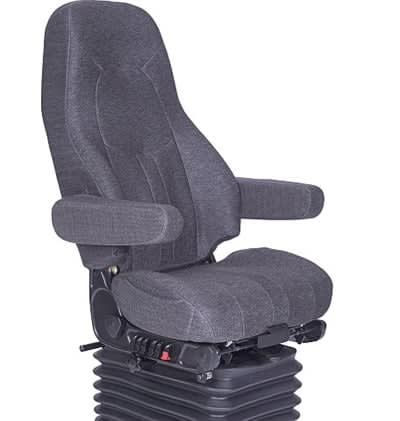
CVG’s Routemaster 640 is its most premium seat and has air-ride suspension with dual shock.
Seat materials
CVG offers seating in vinyl, which is easier to clean, while cloth offerings are a little softer to the touch, Prenatt says. All of CVG’s seats are modular by design, with cut and sew covers created to help municipalities keep their long-term maintenance costs low, according to Prenatt. He adds that dealers often stock seat components to make them easily accessible for maintenance or exchanges.
Seats Inc. uses Tufftex brand material, which is extremely durable, Justman says.
“You can literally stab it with a screwdriver, and the material will not tear. It will rebound back to its position,” he says. “Not that anyone is going to do that, but it shows the wearability.”
Both companies offer add-on features, such as armrests, color variations, and seat warmers, and all the stand-alone seats are compatible with federal motor vehicle safety standards as required by law.
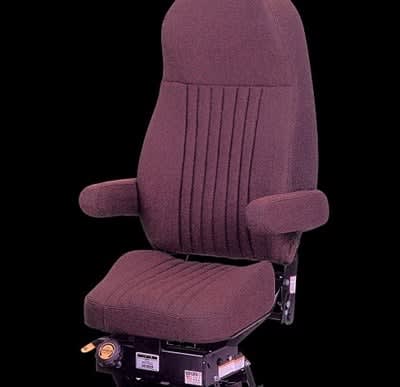
The Seats Inc. Magnum 100 and 200 seats utilize what the company calls “knee-action” style suspension to ensure comfort by reducing the vertical motion of the seat.
“We offer the option for add-ons like heat warmers because someone in Florida isn’t going to need that or want that,” Prenatt says. “Dealers must order an optional heater in the seat assembly but can stock replacement or optional items such as cushions, various covers, or armrests to have on hand when they are needed.”
One customer of Seats Inc. is National Express LLC, the parent company of Durham School Services, Stock Transportation, and Petermann Bus, which operates 23,000 buses. Keshav Ragunathan, senior director of asset management for National Express, says in an email that Seats Inc. sent the company a sample seat, and based on positive feedback from drivers on the ease of adjustment and the reliable suspension, the company began purchasing them in 2014.
More Maintenance
The Essential Guide to School Bus Maintenance and Student Safety
Your district's buses carry students to school every day. This guide shows how predictive maintenance powered by fleet data helps keep buses reliable, drivers accountable and students safer from the first bell to the last stop.
Read More →
Kerry Brothers Grows Michigan School Bus Repair Network
The acquisition of Downriver Truck and Bus expands Kerry Brothers’ school bus maintenance footprint across southeast Michigan, adding repair capacity, diagnostic resources, and state inspection support.
Read More →
Noregon Introduces CAN Bus Diagnostic Tool, Expands JPRO Features
CAN Mentor and the latest JPRO update aim to simplify vehicle network diagnostics and improve repair efficiency for technicians of all experience levels.
Read More →
Cummins on Smarter, Simpler Engine Innovation
Cummins discusses its first-ever gasoline engine for school buses, EPA 2027, and why bus fleets still want durable, simpler internal combustion options.
Read More →
Report: 72% of Diesel School Buses Now Use Advanced Low-Emission Engines
New data shows advanced low-emission diesel technology continues expanding across school bus fleets, even as electric bus adoption gains momentum.
Read More →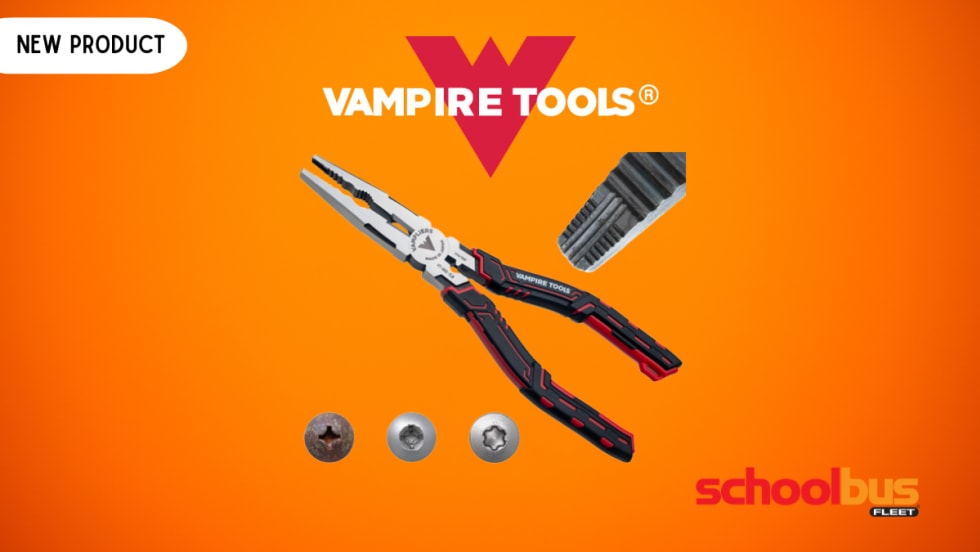
Vampire Tools' CAIMAN 7.5-Inch Multi-Purpose Screw Extractor Long-Nose Pliers with Crimper
Vampire Tools introduced the VAMPLIERS Caiman 7.5-inch multi-purpose pliers, combining screw extraction, cutting, crimping, and gripping functions into a single tool designed for fleet maintenance professionals.
Read More →
How Advanced Diagnostics Helps Bus Fleets Stay Ahead of Repairs
Chat with Noregon’s Kevin Smallhorn at ACT Expo about bus diagnostic tools, telematics integration, CNG maintenance support, and strategies to help reduce downtime and improve uptime.
Read More →
How School Bus Fleets are Getting Ahead of Breakdowns
Don’t let bus downtime wear you down. Here’s how bus operators are shifting from manual processes to AI-powered, data-driven maintenance systems for improved reliability and safety.
Read More →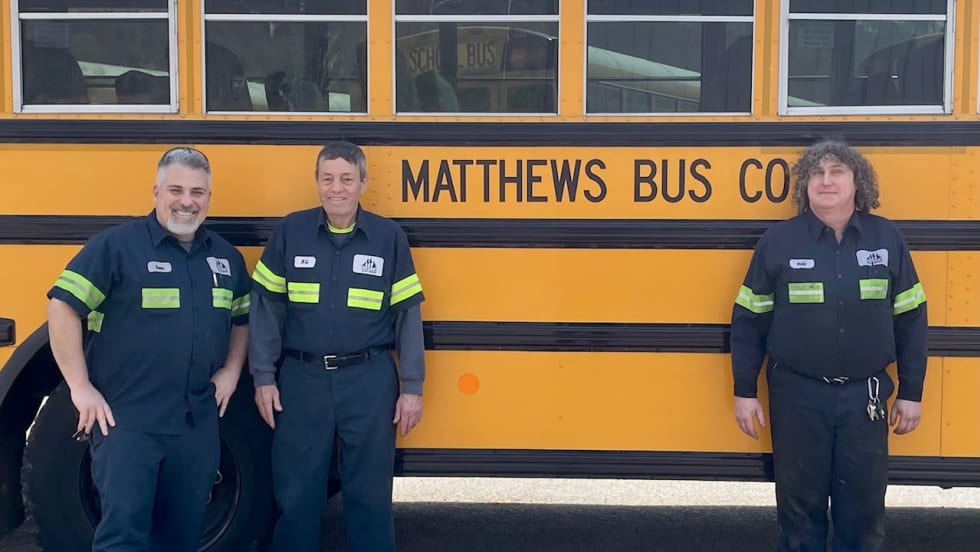
Pennsylvania School Bus Maintenance Team Praised for Dedication to Safety
Matthews Bus Company’s West Jefferson received a letter of commendation from the Pennsylvania State Police for their fleet inspections.
Read More →
From Chaos to Clarity: How School Districts Are Running Leaner Transportation Operations
Covering 38 routes on a Friday afternoon. Buses idling while routes overlap. Parents calling nonstop about late arrivals. Sound familiar? This whitepaper explores how district transportation leaders solved these exact problems — and what measurable results followed.
Read More →