




The Science Behind Improving Student Behavior on the School Bus
Managing Bad Behavior on the School Bus
How can school transportation providers manage challenging student behavior? Get key guidance for IEPs, discipline, and de-escalation here.
by Matthew Jandrisavitz, Esq., RC Kelly Law Associates
September 17, 2025
To maintain control and peace on the school bus, define clear rules of student conduct on the bus and procedures for disciplinary action when necessary, and be familiar with the laws in your state.
Photo: School Bus Fleet
6 min to read
As we move forward in the new school year, there is no question that school transportation providers will face new behavioral challenges from students on the school bus.
Although some behavioral issues may be resolved with ease, others may warrant disciplinary action. Transportation providers can manage behavior issues on the bus using standard disciplinary procedures; however, there are additional considerations that come into play when a student has an Individualized Education Program (IEP).
Let’s discuss key considerations for managing student behavior on the school bus, including general discipline protocols and procedural safeguards for students with disabilities.
Discipline on the School Bus
Transportation providers must have a clear framework for disciplining bad behavior on the school bus. This starts with establishing clearly written policies that outline student conduct expectations on the school bus, as well as procedures for addressing disciplinary issues on the bus.
For bus contractors, any matter that warrants discipline should be brought to the attention of the school district. Transportation providers should ensure that they adopt policies that include a formal process for drivers to document any incidents of bad behavior to the school district and, if applicable, the student transportation contractor.
In some cases, unresolved bad behavior and behavior that threatens the health or safety of others on the school bus may warrant suspension from student transportation. Therefore, policies should define the process for removing a student from the school bus.
Typically, suspension from school transportation is not considered the same as a suspension from school and may not trigger the same due process protections. However, these rules can vary by state, so transportation providers should review applicable state and local laws.
In any event, to help limit inappropriate behavior on the bus, bus drivers should review bus rules and student conduct expectations with riders at the start of the school year, and as needed thereafter.
Special Considerations for Students with IEPs
While school districts can impose a broad range of discipline for bad behavior for most students, there are special considerations for students with IEPs.
To recap, the Individuals with Disabilities Education Act (IDEA) is the primary federal law that ensures students with disabilities receive an education designed to meet their individual needs. Under IDEA, school districts are required to develop an IEP for each eligible student receiving special education services.
IEPs outline a student’s educational goals and often include related services, such as specialized transportation to and from school. It is critical for school districts to share IEP information with bus drivers and third-party transportation contractors if the IEP contains information relevant to the transportation of such students. Accordingly, school districts should maintain a consistent line of communication with their bus drivers and any third-party transportation contractors to ensure that the driver has the most accurate and up-to-date information necessary to manage the student's transportation or otherwise provide for the student's safe transportation.
If a student with special needs is behaving inappropriately on a school bus, the transportation provider should follow the same or similar procedures regarding write-ups for bad behavior and reporting to the school district as they would for general education students.
There may be instances where a student with an IEP engages in serious or continued misconduct on the school bus that poses a safety risk to others, in which case a suspension from transportation may be necessary. It is important to understand that IDEA places certain limits on how school districts can discipline students with disabilities.
Under federal law, a student with an IEP cannot be suspended for more than 10 consecutive school days, or 10 cumulative school days if the suspensions constitute a pattern, for violating a code of conduct without this suspension being considered a change in placement. Honig v. Doe 484 U.S 305, 328-329 (1988); 34 CFR §§300.530(b),(e); 300.536.(a)(2). In some circumstances, a longer suspension may be desired, but if it has been determined that the behavior arises from the student’s disability, then this change in placement is not permitted. 34 C.F.R. §300.530(f).
Notably, if a behavior is not found to have manifested from the student’s disability, discipline can continue provided that the school would similarly discipline non-disabled students. One exception to these general principles, however, is if a student brings a weapon to school, is selling drugs, or causes serious bodily harm to another. Then, a suspension of up to 45 school days may be imposed by the school district without regard to whether the behavior manifested from the student’s disability. 34 C.F.R. § 300.530(g).
Transportation providers should keep in mind that while these are the general principles of discipline for special needs students under federal law, some states may have enacted their own laws that further expand protection for special needs students. So, transportation providers should familiarize themselves with the laws of the states in which they operate.
De-Escalation on the School Bus
Over the past few years, transportation providers have noted an increase in disciplinary challenges on the school bus, including fights between students.
As discussed above, transportation providers are encouraged to develop clear policies regarding school bus rules and student conduct, and to communicate these rules to students at the start of the school year, and throughout the school year as needed.
Despite clear communication of the rules, conflicts on the bus still occur. School bus drivers should be prepared to de-escalate verbal conflicts between students and calmly intervene to prevent the situation from arising to a physical altercation. In the event of a physical altercation, drivers should be reminded that their primary goal is to maintain the safety of all students on the vehicle.
If a physical fight occurs on the school bus, drivers should notify dispatch and find a safe location off the roadway to pull over. Driver intervention in physical altercations is not encouraged, but, in the event of a serious health and safety risk to the driver or other students, drivers may consider using reasonable force to protect themselves and prevent harm to others.
In any event, given the rise of behavioral incidents on the school bus, transportation providers should adopt their own policies on driver conflict intervention and resolution, and be proactive rather than reactive. If students are not getting along on a school bus, transportation providers can reassign the student to a different seat or different route, or put an aide or monitor on the school bus to help maintain order.
Key Takeaways for Transportation Providers
Transportation providers should develop policies and procedures regarding student conduct and discipline for poor behavior on the school bus. These should be clearly communicated with not just drivers, but also the students.
Remember that the extent of discipline for bad behavior on the school bus may depend on whether the student has special needs and could potentially be limited further by applicable state law. School districts are encouraged to share relevant IEP information with their own school bus drivers and third-party contractors so that all parties can appropriately address the student’s needs.
Furthermore, transportation providers should ensure that their drivers are equipped to de-escalate altercations on the school bus and should take proactive steps to help foster a safer ride to and from school for students.
If you have any questions on how to effectively manage student behavior on the school bus or anything else discussed in this article, you can contact us at 215-896-3846 or help@rckelly.com.
Subscribe to Our Newsletter
More Safety

How to Build a Better School Bus Driver Training Program
Is it time to strengthen your driver training? Here’s how to pick the right talent and improve recruitment, retention, and safety. This video is brought to you by IC Bus.
Read More →
Recent School Bus Accidents Leave 2 Dead, 2 Injured
Four school bus crashes in Florida, Illinois, and Georgia highlight risks in transportation lots, at bus stops, and during student loading and unloading.
Read More →
Sponsored•September 8, 2026
When Every Second Matters, Clarity Keeps Routes Moving
From routine delays to urgent incidents, strong communication practices help drivers, dispatchers, schools, and families respond with confidence.
Read More →

What Happens When a School Bus Catches Fire — and What Can Help
School bus fires are rare but can be devastating. Learn how advances in fire suppression and asset protection help fleets detect fires earlier, reduce damage, and improve safety.
Read More →
Geotab Launches Tool to Help Fleets Investigate Road Incidents
Geotab Investigations combines telematics data, video, documents, and other evidence to help fleets reconstruct incidents, resolve claims, and determine what happened.
Read More →
Texas Sixth Grader Wins 2026 National School Bus Safety Poster Contest
Sai Darshana Yekolu of Moseley Middle School in Prosper, Texas, was named the newest winner for her artwork, bringing the theme of “Safe Rides, Everyday Heroes” to life.
Read More →
Sponsored•August 27, 2026
Doing More With Less: How Transportation Directors Can Prioritize Safety Amid Budget Uncertainty
With diesel prices soaring and nearly one-third of transportation directors expecting budget cuts, maintaining student safety has never been more challenging. Download this guide to learn how leading districts are prioritizing risk, funding critical safety technology, and building stronger budget cases with data.
Read More →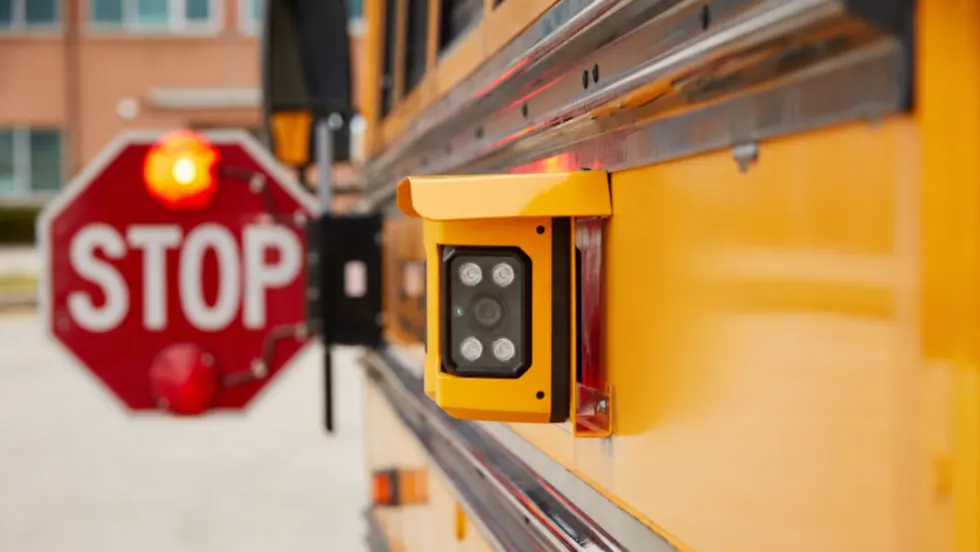
Walton County Schools Adds Gatekeeper Stop-Arm Enforcement System
The Florida district will deploy Gatekeeper’s updated Student Protector technology, which now incorporates AI to improve video evidence.
Read More →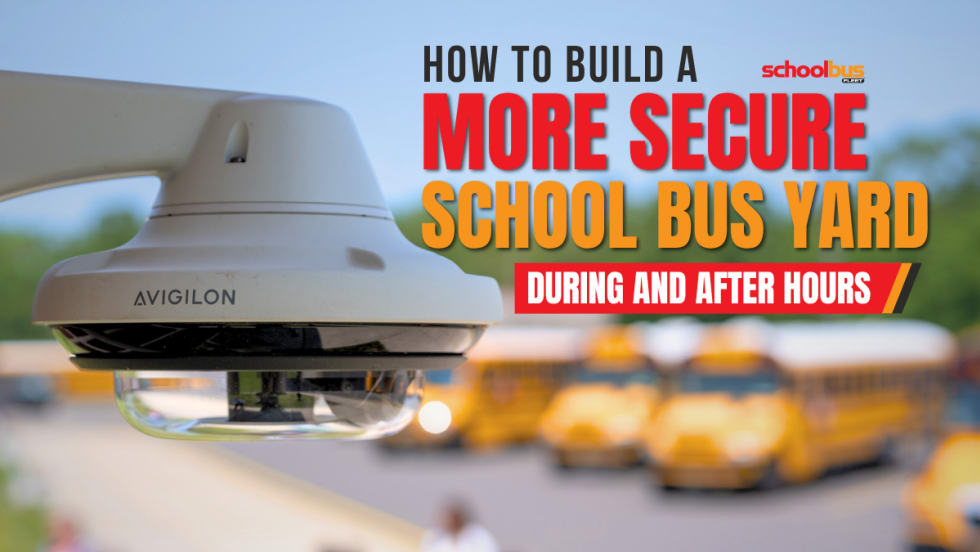
How To Build a More Secure School Bus Yard During and After Hours
As thefts and overnight security threats continue, school transportation leaders are combining stronger operational practices with AI-enabled surveillance to better protect buses, facilities, and staff.
Read More →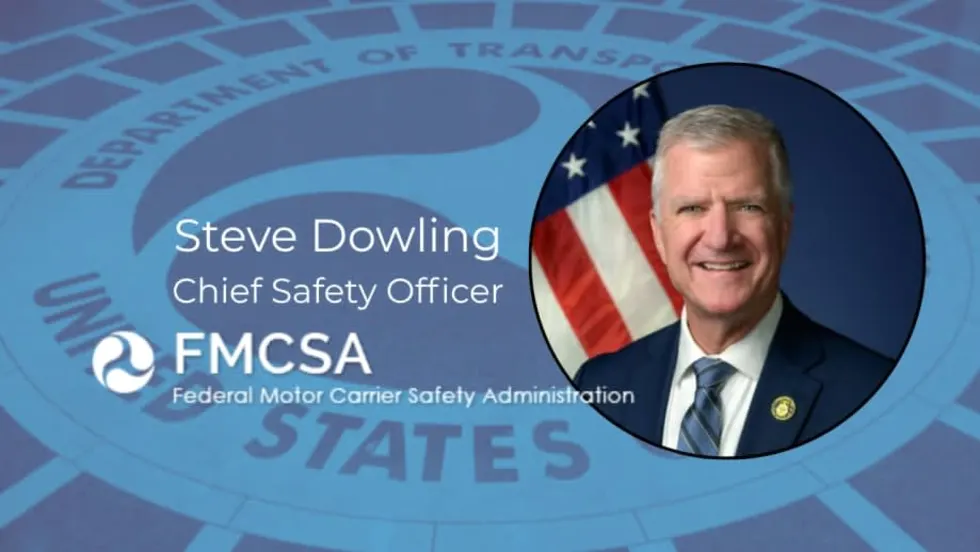
FMCSA Names New Chief Safety Officer: What School Bus Operators Should Know
Steve Dowling is set to lead the federal agency's efforts to advance commercial motor vehicle safety and reduce crashes, fatalities, and injuries on the nation's roadways.
Read More →