




Previous Blog: Annual NSTA Bus-In Produces Two Bill Introductions
Inside the Process: School Bus Safety Subcommittee's Review of FMCSA Proposals
New FMCSA proposals could reshape school bus operations. Here’s how the national contractor’s association is responding to possible changes on railroad crossings and inspection and medical reports.
by Dan Kobussen, NTSA President
July 25, 2025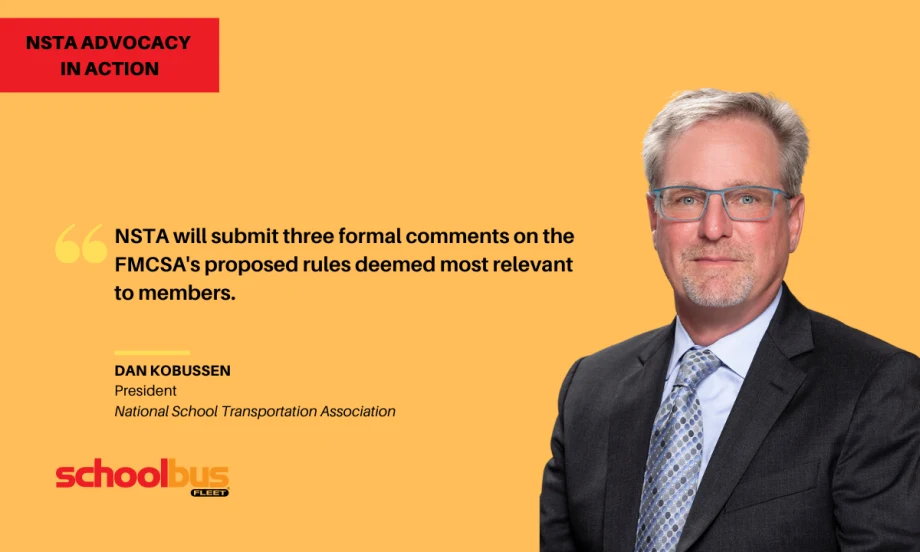
The NSTA safety subcommittee breaks down three FMCSA changes that matter most for school transportation leaders.
Photo: School Bus Fleet
3 min to read
In late May, the Federal Motor Carrier Safety Administration (FMCSA) published a list of 20 Notices of Proposed Rulemakings (NPRM), and two final rules. Amongst the list, three particular notices were flagged and brought to the attention of NSTA’s School Bus Safety Subcommittee.
With this, the School Bus Safety Subcommittee recently undertook a comprehensive review of the May regulatory activity from the FMCSA. Each proposal was evaluated for its relevance to school transportation safety, operational feasibility, and consistency with best practices across districts and contractors. Subcommittee members reviewed proposed changes to longstanding rules, assessed practical considerations raised by each, and determined where follow-up would be appropriate. The result of these deliberations ultimately informs NSTA’s formal engagement with FMCSA, including potential submission of public comments. Following the subcommittee’s discussions, NSTA will be submitting three formal comments on the proposed rules that were deemed most relevant to its members.
The first NPRM (Docket No. FMCSA-2021-0550) the subcommittee reviewed pertains to railroad-grade crossings. Specifically, the FMCSA is proposing to allow an exception to the current requirement that Commercial Motor Vehicles (CMV), including school buses, stop at certain railroad crossings. This exception would apply when the crossing is specifically equipped with an active warning device that is not activated. Meaning, the warning device indicates that a train is not approaching.
Subcommittee members raised the importance of ensuring that any regulatory shift is accompanied by a robust communication strategy. The conversation emphasized the critical role of clear communication in implementing federal rules, regardless of their content. Several subcommittee members emphasized the importance of outlining which entity would be responsible for communicating changes, how the information would be disseminated, and what tools would be available to assist local, county, and state authorities in interpreting and enforcing the regulations.
The FMCSA’s proposal to promote the use of electronic Driver Vehicle Inspection Reports (eDVIRs) was also reviewed (Docket No. FMCSA-2025-0115). Subcommittee members expressed support for modernizing inspection reporting systems while maintaining an appreciation for the diverse needs of school bus operators. The conversation acknowledged the potential benefits of eDVIRs in improving recordkeeping and efficiency, but also considered how such a transition would play out in varied operational contexts, particularly among smaller or rural providers. Members discussed the importance of ensuring flexibility and accessibility across different types of fleets.
Another significant portion of the meeting was dedicated to the FMCSA’s proposed revision to the definition of “medical treatment” in the context of accident reporting (Docket No. FMCSA-2025-0121). The subcommittee discussed how changes to this definition could affect the way incidents are classified and reported. Several members raised concerns about the implications of interpreting medical treatment, specifically when ambulance transport may be involved, but treatment is not clearly documented. The subcommittee discussed the ongoing challenges of verifying whether treatment was actually rendered, the potential consequences for DOT compliance records, and the need for consistent reporting practices across jurisdictions. These discussions included suggestions to explore mechanisms that might improve transparency and the potential to file for reconsideration of a post-accident report.
Across all notices of proposed rulemakings, the subcommittee reaffirmed its commitment to providing informed and practical feedback. The meeting also served as a broader effort by NSTA to assess potential impacts on school transportation safety and operations. This group continues to monitor developments and coordinate responses that reflect the diverse operational realities of the student transportation industry.
While the content of NSTA’s formal comments is being carefully developed outside the meeting, these discussions provide the analytical foundation for meaningful engagement within the regulatory process, and I appreciate the efforts of the subcommittee members to use their valuable time to support this important effort.
My role at NSTA is coming to a close, but if you have thoughts on potential NSTA priorities over the next couple of weeks, please drop me a line at president@yellowbuses.org. And remember, with NSTA, you never travel alone.
Subscribe to Our Newsletter
More Blog Posts

Student Transportation Leaders Gather at NSTA Annual Meeting & Convention
Patrick Dean recaps key moments from NSTA’s 2026 Annual Meeting & Convention, including advocacy efforts, AI discussions, OEM insights, and federal policy updates.
Read More →
School Bus Contractor Association Brings Key Policy Issues to FMCSA
Federal policy, CDL testing, insurance, and compliance were among the key topics as NSTA leaders met with FMCSA to advance priorities for school bus contractors.
Read More →
NSTA Engages School Boards on Outsourcing Student Transportation Services at COSSBA Conference
What benefits does using contracted providers bring to districts and students? That’s what NSTA shared at a recent conference for education leaders. Here are the highlights.
Read More →
NSTA Advances Legislative Priorities During 2026 Capitol Hill Bus-In
Members of the industry’s contractor’s association traveled to Washington, D.C. to advocate for two key initiatives during congressional meetings.
Read More →
NSTA Emphasizes School Transportation at the Midwest Commercial Vehicle Safety Summit
From NHTSA safety data to NCST standards and stop-arm passing prevention, NSTA reinforces the role of school buses in protecting students and improving traffic safety.
Read More →
NSTA Participates in National School Bus Safety Week Event with Pennsylvania Congressman
The industry's contractor association and Rep. Brian Fitzpatrick spotlight rising dangers from illegal school bus passings and outline new legislative efforts.
Read More →
Senate Introduction of Brake for Kids Act Marks School Bus Safety Milestone
The legislation seeks to launch a national awareness campaign reminding motorists to stop for school buses. With millions of violations each year, it’s time to make school bus safety a national priority.
Read More →
From Steel to Semiconductors: How Tariff Policy May Impact School Transportation
Tariffs may feel far from the yellow bus, but they affect costs, supply chains, and technology in student transportation. Here’s what you need to know.
Read More →
Building the Future of Student Transportation: Highlights from NSTA’s 2025 Annual Meeting and Convention
From drivers to contractor-member companies, NSTA’s 2025 Annual Meeting in Boston celebrated school bus excellence while spotlighting trends shaping student transportation.
Read More →
Annual NSTA Bus-In Produces Two Bill Introductions
Association members hit the Hill in force — 65 people, 153 meetings, two bills, and a shared mission to advance student transportation safety.
Read More →