




Metal Strike, Crisis Averted: One Bus Driver’s Calm Response Under Pressure
A projectile on the road, a bus with students, and a heroic driver — hear Stewart O’Leary, a school bus driver in Washington, recount a terrifying hit from a piece of metal while driving.

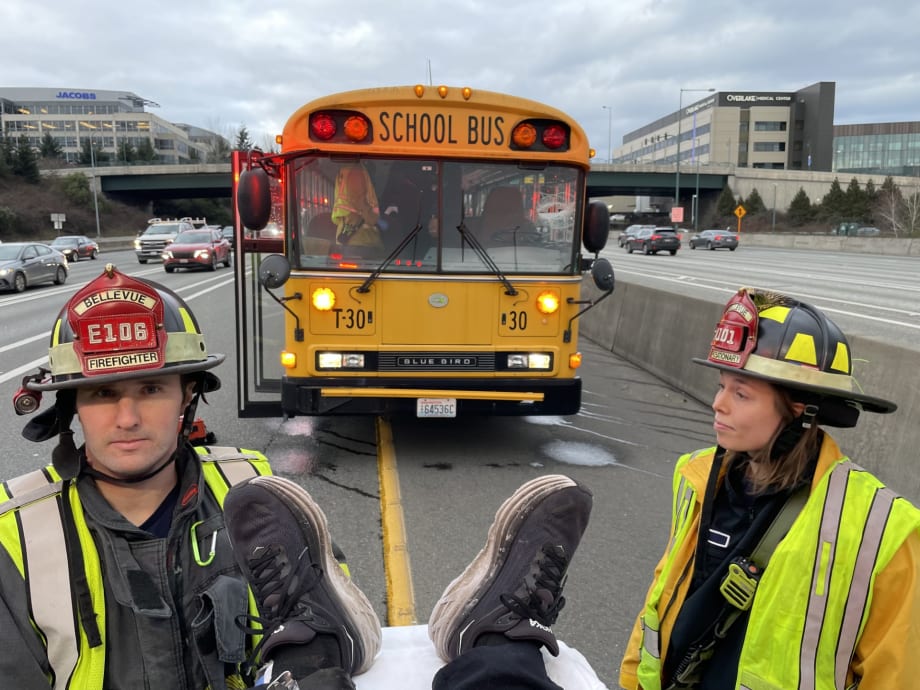
O’Leary snapped this photo from the gurney with the fire fighters who came to his aid.
Photo: Stewart O'Leary/Northshore SD
February 7 started as a typical day for Northshore School District permanent substitute bus driver Stewart O’Leary but quickly took a turn for the worse.
On an afternoon trip for a North Creek High School varsity girls' basketball game going over 60 mph on an interstate, a piece of metal about a foot long and inch thick flew through the bus’s windshield and hit O’Leary in the chest. It stunned him, but O’Leary remained as calm as he could, never losing control.
“It was quite impactful,” he recalled, pun quite possibly intended. “It was violent, instantaneous. It knocked the wind out of me. I could feel something heavy in my lap. I took my foot off the throttle and let it ease. The two coaches gave me a hand.”
The two coaches, Calvin McHenry and Chris Pinder, were on board the bus at the time with the players, and rushed to his aid when they heard him yelp in pain.
O’Leary was able to ease on the brakes, turn on the flashers, and pull over on the shoulder with help from McHenry while Pinder called 911 for help. “Once we secured the bus, there was a bunch of chatter on the radio, so I used the cell phone to call dispatchers,” he said, arranging a tow truck and another bus to finish bringing the students to the game. (They made it to the game but unfortunately didn’t win.)
When emergency response arrived, O’Leary was brought to a nearby hospital, where he was treated for a serious bruise on his shoulder and cuts on his face from the glass breaking (he also noted that there was blood on his face as the shards also damaged his glasses).
“Due to Mr. O'Leary's training and dedication to our students, no other passengers onboard were injured except for the driver,” Sabrina Warren, the district’s transportation director, told SBF.
O’Leary’s calm response is being praised nationwide, even landing recognition on Good Morning America and Inside Edition.
Getting national media attention was odd, he said, but he wanted to use the opportunity to champion what bus drivers do every day.
“We’re out there transporting children every day, and doing it safely,” he told SBF.
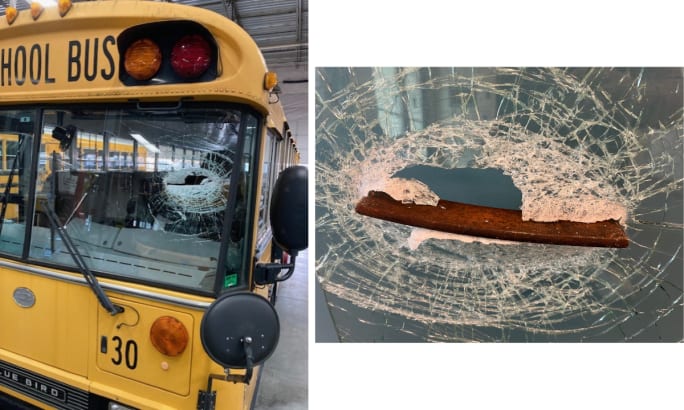
The bus window shattered as what they believe was a leaf spring went through the windshield at 60 MPH and hit O’Leary in the chest.
Photo: Northshore School District
He’s been a bus driver since 2016 after retiring from a career in the computer industry. There, he had to deal with a lot of people upset about equipment not working, and did various role-playing exercises to understand all sides. He says this proactive thinking about assessing his response in various situations helped him stay calm. That, and he’s a “pretty chill” individual to start with.
“I think I handled this OK, no one got hurt, and I’m happy about that,” he said. “I told the girls, ‘I’d take that thit all day long to keep you safe.’”
And it didn’t take him long to want to return to the job.
“Put me in, coach,” O’Leary texted his dispatcher just two days later, according to a news story. In fact, he was back behind the wheel less than a week later. Voluntarily, he emphasizes; O’Leary did a self assessment and said he wouldn’t have gone back if he wasn’t confident he could do it successfully.
O’Leary gives kudos to the district staff for their support. “I can’t say enough nice things about them,” he said. “Everybody was reaching out, making sure I’m ok. It touched me how much they were concerned.”
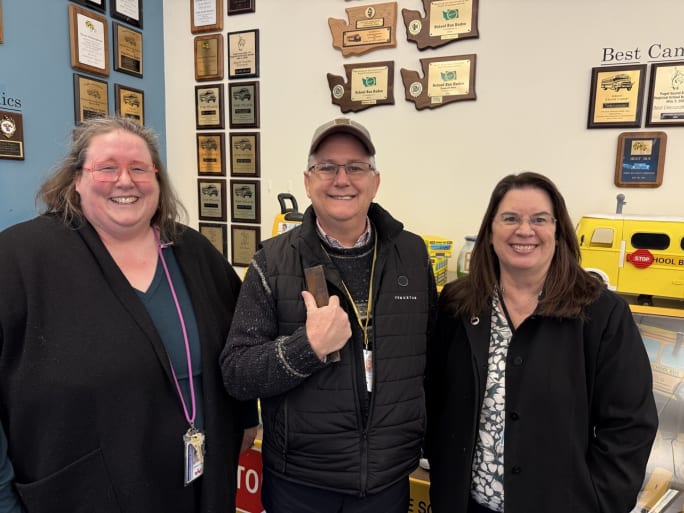
O’Leary stands with Dri Ralph, executive director of support services, and JoLynn Berge deputy superintendent, at Northshore School District in Bothell, Washington.
Photo: Northshore School District
Turns out this was not O’Leary’s first time saving the day; he recalls a few years ago when he spotted another bus driver who had slid across the road in unusually snowy weather. He pulled his bus up next to hers to provide a blockade from others hitting them while the other driver carried a bucket of sand over to gain some traction. Panic set in when his bus began to slide, too, but thankfully stopped before it hit nearby trees. Nobody was hurt then, either, as he recounts “pulling her out of a pickle.”
The broken windshield from this incident is still on display at the district’s bus office, and O’Leary plans to keep the piece of metal as a reminder of what happened. Authorities are not yet sure what caused the projectile piece of metal.
This is just another example of many of the heroism that school bus drivers show every day.
More Safety

How to Build a Better School Bus Driver Training Program
Is it time to strengthen your driver training? Here’s how to pick the right talent and improve recruitment, retention, and safety. This video is brought to you by IC Bus.
Read More →
Recent School Bus Accidents Leave 2 Dead, 2 Injured
Four school bus crashes in Florida, Illinois, and Georgia highlight risks in transportation lots, at bus stops, and during student loading and unloading.
Read More →
When Every Second Matters, Clarity Keeps Routes Moving
From routine delays to urgent incidents, strong communication practices help drivers, dispatchers, schools, and families respond with confidence.
Read More →

What Happens When a School Bus Catches Fire — and What Can Help
School bus fires are rare but can be devastating. Learn how advances in fire suppression and asset protection help fleets detect fires earlier, reduce damage, and improve safety.
Read More →
Geotab Launches Tool to Help Fleets Investigate Road Incidents
Geotab Investigations combines telematics data, video, documents, and other evidence to help fleets reconstruct incidents, resolve claims, and determine what happened.
Read More →
Texas Sixth Grader Wins 2026 National School Bus Safety Poster Contest
Sai Darshana Yekolu of Moseley Middle School in Prosper, Texas, was named the newest winner for her artwork, bringing the theme of “Safe Rides, Everyday Heroes” to life.
Read More →
Doing More With Less: How Transportation Directors Can Prioritize Safety Amid Budget Uncertainty
With diesel prices soaring and nearly one-third of transportation directors expecting budget cuts, maintaining student safety has never been more challenging. Download this guide to learn how leading districts are prioritizing risk, funding critical safety technology, and building stronger budget cases with data.
Read More →
Walton County Schools Adds Gatekeeper Stop-Arm Enforcement System
The Florida district will deploy Gatekeeper’s updated Student Protector technology, which now incorporates AI to improve video evidence.
Read More →
How To Build a More Secure School Bus Yard During and After Hours
As thefts and overnight security threats continue, school transportation leaders are combining stronger operational practices with AI-enabled surveillance to better protect buses, facilities, and staff.
Read More →
FMCSA Names New Chief Safety Officer: What School Bus Operators Should Know
Steve Dowling is set to lead the federal agency's efforts to advance commercial motor vehicle safety and reduce crashes, fatalities, and injuries on the nation's roadways.
Read More →