




School Buses Against Trafficking: How to Protect Students from Exploitation
Human trafficking is closer than you think. What role do school bus drivers and administrators have in curbing this practice to help protect children?
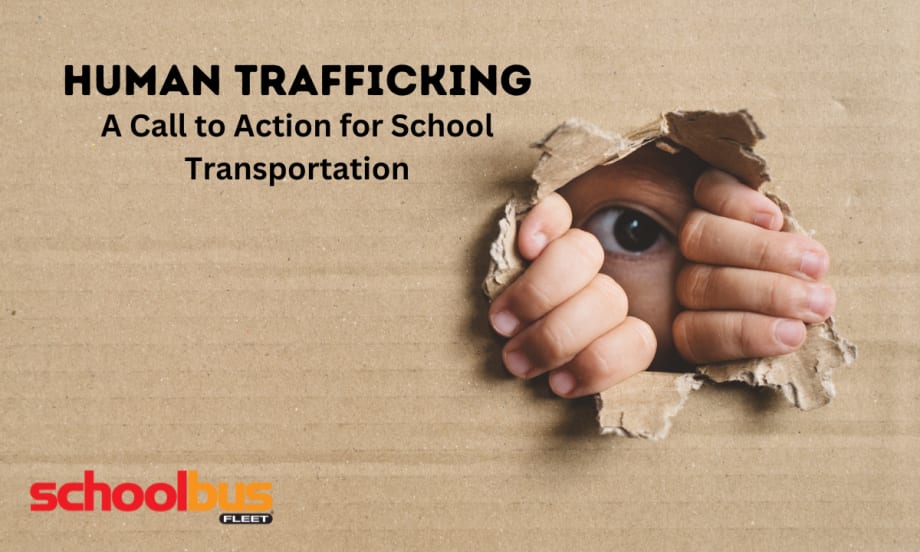
January 11 is human trafficking awareness day in the United States. TAT asks you to join the over 115,000 school transportation professionals who have completed their free online training to help protect more children.
Photo: SBF/Canva
January is National Slavery and Human Trafficking Prevention Month in the United States, and January 11 is National Human Trafficking Awareness Day. Your initial reaction to that might be,
‘What does this have to do with school transportation?’ The truth is, school transportation professionals can be uniquely positioned to combat human trafficking in the course of their everyday jobs.
Human trafficking – or modern-day slavery – is a global crime in which people are bought and sold for forced labor or commercial sex. Traffickers use violence, manipulation, and false promises of work opportunities or romance to lure, control, and exploit their victims.
Of the estimated 50 million victims worldwide, thousands of school-aged children in the United States are vulnerable to being trafficked, and many young victims will continue attending school during the day — and riding the school bus — even while they are being trafficked or groomed behind the scenes.
When people first hear that Truckers Against Trafficking (TAT)’s mission includes working with school transportation, they are often surprised. That’s because the vision most of us have in our heads of what human trafficking looks like isn’t necessarily the reality of what it looks like here in North America. The truth is, human trafficking happens every day in plain sight. It’s happening in rural, suburban, and urban neighborhoods. And, it’s very possible that it’s happening to someone in your community.
It might be the straight A student who believes that education is the only way to a better future for her and her family. She’s desperate to go to college, but doesn’t have a way to pay for tuition. Perhaps she meets a man who shows her how she can make money by “just hanging out” with his friends. Then, when she wants to stop, he threatens to tell her family. She feels trapped, and her grades begin to suffer.
It might be the kid who’s run away from home because he doesn’t feel safe there. Now he’s out on the street trying to fend for himself, and a stranger steps in to offer food, shelter, safety. But now this stranger is saying it’s time to pay them back for the kindness they’ve shown, and that’s how they coerce the child into commercial sex. They start missing school more and more, without an explanation.
It might be the boy who’s moved here from another country. He’s in a new, unfamiliar place where he doesn’t know the language or the customs, and doesn’t have anyone to turn to. His family thought they were doing the best thing for him when they sent him here for an education, but the new family he’s been placed with expects him to “earn his keep” by working at the family business. At school, he can barely stay awake due to the long hours he has to work.
It could be the middle school girl, who’s yearning to feel pretty, accepted, wanted. When an older man approaches her and tells her she’s pretty and he wants to take her out, it makes her feel cool, like an adult. Now, her new boyfriend sends cars to pick her up at all hours of the night, even sometimes during school. When asked where she’s going, she never gives a straight answer.
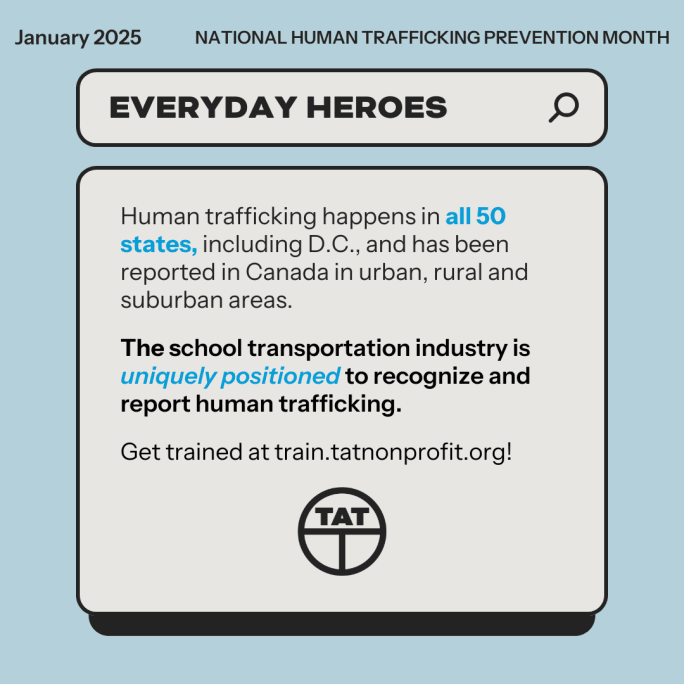
Photo: TAT
All of these are realistic trafficking scenarios that could be happening in any community across the country. And, all of these situations involve young people who continue to go to school while being groomed and/or trafficked behind the scenes.
This is why TAT is on a mission to educate every school transportation professional across North America about human trafficking and how to spot and report it. School transportation professionals may observe red flags that a child on their bus is being exploited or can even play a preventative role by noticing signs that a child is being groomed for trafficking.
In fact, in a survey conducted by TAT in 2023, one in three school transportation professionals had suspected that a student on their bus was at risk of being abused, groomed, or trafficked. In addition, 60% had observed at least one of the red flags that TAT includes in its indicators of human trafficking. (While this doesn’t mean that each of those cases was human trafficking, it does illustrate the fact that school transportation professionals are perfectly positioned to recognize signs of trafficking and, with the proper training, take action to address it.)
As Greg Jackson, SBF editorial advisory board member and former executive director of transportation and fleet services at Jefferson County Schools, says in TAT’s training video for school transportation, “A topic like this, this is about student safety.”
Iowa Pupil Transportation Leader Awarded for Fight Against Human Trafficking
To date, over 115,000 school transportation professionals have completed TAT training, joining a mobile army of over 2 million members of the transportation industry who are committed to standing up against human trafficking. This January, TAT is asking every transportation director, trainer, school bus driver, monitor, and aide to consider how they can continue to play a role in protecting the students they transport every day from this heinous crime.
Here are three ways you can get involved this month:
Learn more. TAT’s free online course for school transportation can be completed in just 30 minutes, and offers an overview of the issue and steps school transportation staff can take to play a role in fighting this heinous crime.
Implement training. TAT also provides free, industry-specific training materials that can be used for in-service and safety meetings to educate staff on the issue of human trafficking.
Start the conversation. Beyond what you can do in your professional role, consider what you can be doing at home. Start by talking to your kids about human trafficking and how they can keep themselves and their friends safe.
If every school transportation employee — bus driver, monitor, aide, etc. — could be trained to identify the signs of human trafficking and how to report it effectively, imagine how many victims could be recovered and, potentially, how many traffickers could be arrested, and how many young people we could prevent from being exploited in the first place.

Lexi presents at a TAT event in Cleveland.
Photo: TAT
About the Author: Lexi Higgins is TAT’s director of industry engagement. Her work focuses on equipping and empowering members of the bus industry to combat human trafficking in the course of their everyday jobs. Lexi holds a Master of Public Administration from the University of Washington, with a concentration in Nonprofit Management. Past experience includes positions with the Association of Junior Leagues International, the University of Washington Women’s Center, and in Guatemala as a Peace Corps volunteer.
Editor's Note: Another Vital Role Emerges for School Bus Drivers
More Safety

How to Build a Better School Bus Driver Training Program
Is it time to strengthen your driver training? Here’s how to pick the right talent and improve recruitment, retention, and safety. This video is brought to you by IC Bus.
Read More →
Recent School Bus Accidents Leave 2 Dead, 2 Injured
Four school bus crashes in Florida, Illinois, and Georgia highlight risks in transportation lots, at bus stops, and during student loading and unloading.
Read More →
When Every Second Matters, Clarity Keeps Routes Moving
From routine delays to urgent incidents, strong communication practices help drivers, dispatchers, schools, and families respond with confidence.
Read More →

What Happens When a School Bus Catches Fire — and What Can Help
School bus fires are rare but can be devastating. Learn how advances in fire suppression and asset protection help fleets detect fires earlier, reduce damage, and improve safety.
Read More →
Geotab Launches Tool to Help Fleets Investigate Road Incidents
Geotab Investigations combines telematics data, video, documents, and other evidence to help fleets reconstruct incidents, resolve claims, and determine what happened.
Read More →
Texas Sixth Grader Wins 2026 National School Bus Safety Poster Contest
Sai Darshana Yekolu of Moseley Middle School in Prosper, Texas, was named the newest winner for her artwork, bringing the theme of “Safe Rides, Everyday Heroes” to life.
Read More →
Doing More With Less: How Transportation Directors Can Prioritize Safety Amid Budget Uncertainty
With diesel prices soaring and nearly one-third of transportation directors expecting budget cuts, maintaining student safety has never been more challenging. Download this guide to learn how leading districts are prioritizing risk, funding critical safety technology, and building stronger budget cases with data.
Read More →
Walton County Schools Adds Gatekeeper Stop-Arm Enforcement System
The Florida district will deploy Gatekeeper’s updated Student Protector technology, which now incorporates AI to improve video evidence.
Read More →
How To Build a More Secure School Bus Yard During and After Hours
As thefts and overnight security threats continue, school transportation leaders are combining stronger operational practices with AI-enabled surveillance to better protect buses, facilities, and staff.
Read More →
FMCSA Names New Chief Safety Officer: What School Bus Operators Should Know
Steve Dowling is set to lead the federal agency's efforts to advance commercial motor vehicle safety and reduce crashes, fatalities, and injuries on the nation's roadways.
Read More →