





Don't Miss: Behind the Wheel of Children's Safety Aboard the School Bus
New York City Rolls Out Plan for School Bus Speed Assistance Tech
The first-in-the-nation plan follows a city fleet pilot program and redesign of more than 1,000 intersections.
January 19, 2024

Besides speed limiters, the New York City plan includes strategies for audible turn alerts, telematics reporting, and safety score cards.
Image: Canva
3 min to read
The new School Bus Safe Fleet Transition Plan unveiled by New York City Department of Citywide Administrative Services and New York City Public Schools aims to keep students safe through training and technology, including intelligent speed assistance on school buses.
“As New York City continues to utilize innovative technology to make our city smarter and safer, putting these tools to work for our students is a no-brainer,” said Mayor Eric Adams. “The School Bus Safe Fleet Transition Plan focuses on keeping kids safe by making buses safer with cameras, audible turn alerts, and updated driver safety training – all with the goal of eliminating traffic deaths and injuries.”
Intelligent Speed Assistance Implementation and Bus Fleet Impact
The city installed intelligent speed assistance technology on 300 vehicles – including 50 school buses – to limit speeding. On Dec. 19, 2023, Adams announced that New York received a U.S. Department of Transportation grant to expand the ISA program to 2,000 city fleet vehicles.
“The expanded school bus safety pilot plan is an example of federal and local government collaborating and using every tool in our toolbox to keep our streets safe,” said Sheena Wright, New York City’s first deputy mayor. “These buses equipped with intelligent safety technology demonstrate this administration’s steadfast commitment to implementing both scalable and innovative solutions across city government. Our first-in-the-country initiative serves as a national model for deploying cutting-edge technology with the power of government to create safer streets.”
Since the ISA pilot launched in about 50 city vehicles in August 2022, hard braking events are down 33%. The city also found that fleet operators traveled within speed limit parameters 99% of the time. The active ISA program, part of the city fleet, prevents a vehicle from further accelerating once the vehicle reaches the speed limit. It then adapts through live telematics, tracking to the local speed limit where the vehicle is operating.
Innovating Safety Strategies on NYC School Buses
“By issuing the first ever School Bus Safe Fleet Transition Plan, we are reimagining and reassessing safety for some of our city’s most vulnerable passengers – students,” said DCAS Commissioner Dawn M. Pinnock. “Every day, parents and families entrust our city to transport their children to and from school safely, and by enacting these new initiatives we are reaffirming our commitment to make this a reality.”
Said Schools Chancellor David C. Banks: “Our primary responsibility as a community and a school system is to ensure the safety and well-being of our youngest New Yorkers, not only when they are in class but also as they are transitioning to and from their schools. The rollout of these safety strategies designed to protect our school bus riders will give our families peace of mind that their babies are safe.”
Strategies under development in tandem with the city’s Office of Pupil Transportation include:
Audible turn alerts to protect pedestrians and other vulnerable road users.
Telematics reporting, including real-time alerts, speed and collision alert monitoring, and monthly safety score cards to track risk for each school bus across all school bus companies serving New York City.
Mitigating blind zones.
Mandatory driver safety training for urban safety and defensive driving.
The plan was produced through a partnership between the city agencies and the U.S. DOT’s Volpe Center.
More Safety
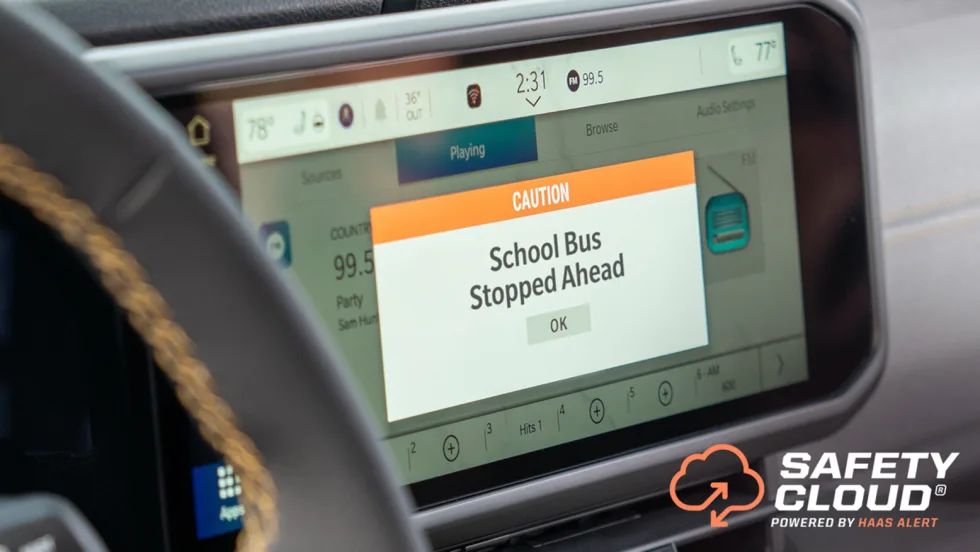
HAAS Alert’s Safety Cloud Warns Motorists of Stopped School Buses
Through a transponder or Samsara connection, the product lets school bus fleets send advance warnings to approaching drivers through in-vehicle alerts.
Read More →
HopSkipDrive Reports Progress on Safety Advisory Council
More than a year after forming the council, independent safety experts have helped shape new rider-safety features and policy progress, with a new goal to address rider behavior.
Read More →
What the 2026 National School Bus Safety Month Resolution Means for Student Transportation
The bipartisan resolution highlights illegal school bus passing, student safety during loading and unloading, and the need for driver training and public education.
Read More →
School Bus Stop-Arm Violations Decline 53% Across Verra Mobility Programs
Verra Mobility shares how school bus stop-arm cameras and school zone safety programs are changing driver behavior, reducing violations, and protecting students.
Read More →
Most Bus Crashes Aren’t Your Fault. Here’s How to Prove It.
A guide for what to do in between a school bus crash and a claim: what to preserve, who to notify, and how to keep the facts available when they matter.
Read More →
National School Bus Safety Week 2026: Tips, Toolkits & Resources to Keep Students Safe
School bus safety takes more than awareness. Explore expert tips, enforcement strategies, and free resources to help protect students on every ride.
Read More →
2 Killed, Dozens Injured in Florida School Bus Crash
A multi-vehicle collision caused a Polk County school bus carrying 37 students to overturn on its way to Winter Haven High School.
Read More →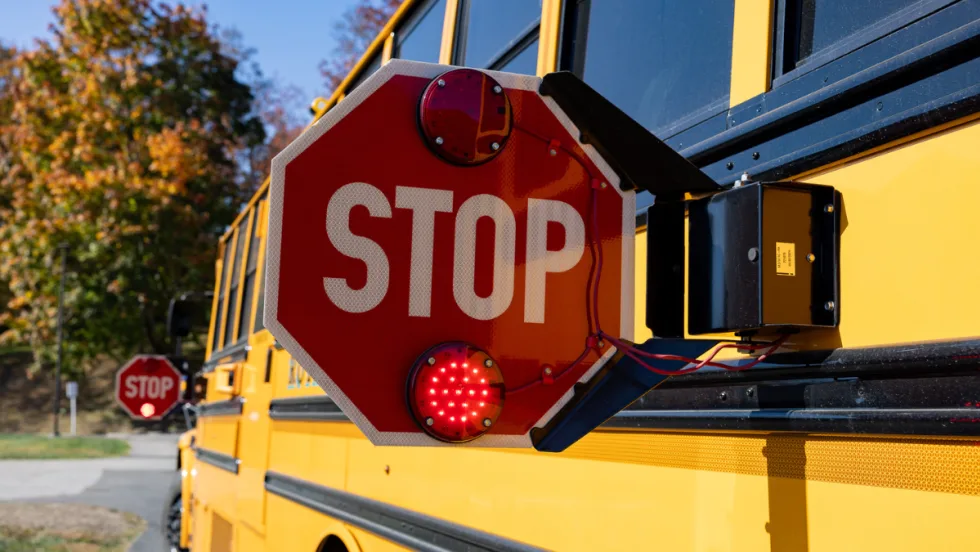
Illegal School Bus Passing Drops 24% in New York Districts
With fewer than 5% of citations involving repeat offenders, Westchester County officials said enforcement, education, and community partnerships are helping change driver behavior.
Read More →
School's Back. Here's What Happened to Traffic, Speeding & Distraction
What happens to traffic when school resumes? New data analysis examines changes in distracted driving, congestion, and speeding around schools.
Read More →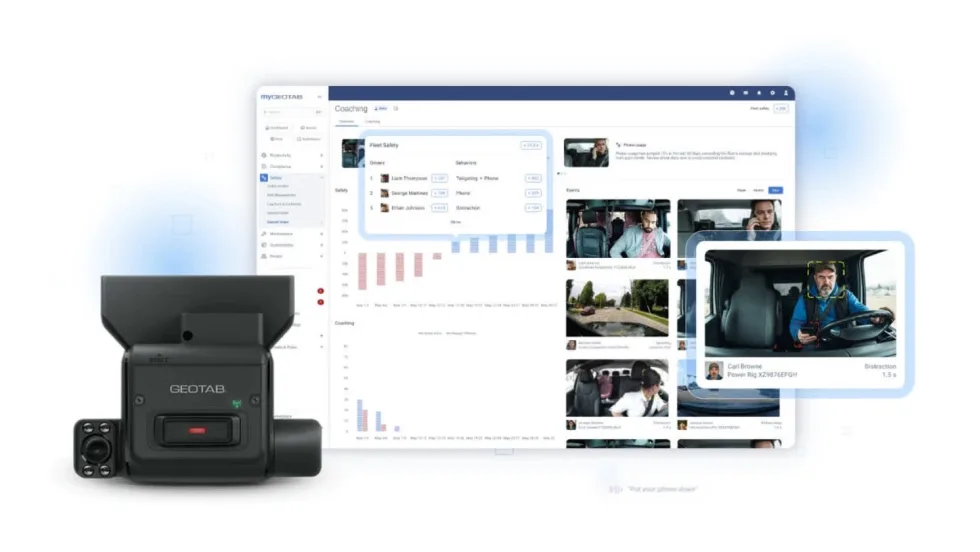
Geotab Expands Fleet Safety Tools With Video Coaching, Risk Insights
New safety and video capabilities aim to help fleet managers assess risk, support drivers, and take targeted action through video coaching, red-light violation detection, and more.
Read More →