





Don't Miss: First Student Partners with National Safety Council to Research Electric School Bus Safety
Kempower’s U.S. Plant Prepares for Production Start
The new facility in North Carolina will produce the company’s modular and scalable satellite charging system.
November 9, 2023
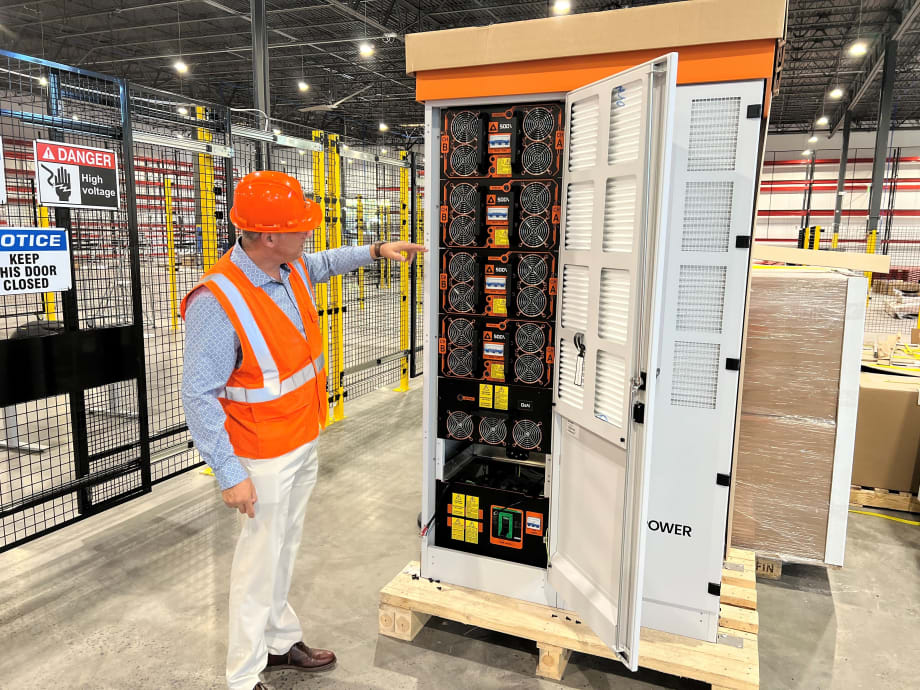
Jed Routh, director of markets for Kempower's United States operation, demonstrates how the company's modular charging system functions.
Photo: Wes Platt
2 min to read
Kempower, a fast-charging solutions provider that got its start in Finland, is weeks away from opening its first U.S. production facility in a North Carolina industrial park.
The company, part of the Kemppi Group, is putting the final touches on its 170,000-square-foot plant where it will build and test its modular and scalable Kempower Satellite charging system.
Kempower leased its three buildings in Durham this summer and could start producing fleet electrification equipment by the end of the year. It has all come together pretty quickly.
“It’s pretty neat,” said Tim Joyce, president of Kempower North America, as he led a hard-hat tour of the facility. “But I think that’s a microcosm of what our company is all about. We’ve grown very rapidly in a very short period of time, and have had a lot of success based upon how we’ve handled things. And the stress of setting up a place like this, it’s just pretty much normal operating procedure for us. So, not that anyone ever gets used to it, but it’s part of the culture of the company.”
The DC fast-charging system provided by Kempower includes a centralized power unit that can yield up to 600kW DC power, which can be dynamically distributed between up to eight charging inputs via charging satellites.
Kempower’s solutions are geared toward public charging, marine, and fleets – including the school bus market, which has seen growing interest in electrification thanks in large part to the U.S. Environmental Protection Agency’s Clean School Bus Program.
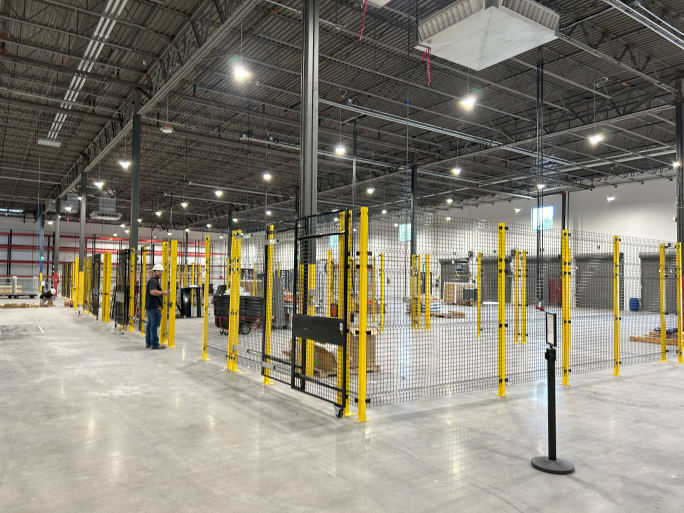
Kempower's new 170,000-square-foot facility consists of three buildings where its charging solutions can be produced and tested.
Photo: Kempower
Jed Routh, direct of markets for Kempower, considers his company’s product “a really nice solution” for school districts and other student transportation providers because it offers the option for low power, long dwell time charging as well as quick charging for field trips.
“Our product allows you to do everything with one product,” Routh said. He also noted that the system’s cost benefit works out to be relatively inexpensive, which is critical for many districts.
Of further interest, he said, is the flexible fixability of the charging cabinet. When a module fails, it can be removed and replaced without disabling the entire system.
“We want to take that fear away from the transportation director and say, ‘We’ve got something that’s going to work for you in a pinch,” Routh said.
More Alternative Fuels

CALSTART and Forth Combine to Form Catalyst Mobility
The new name represents a renewed vision for the nonprofit focused on advancing clean, equitable, and affordable transportation solutions that move people and goods.
Read More →
Alt-Fuel Moves: New Buses, Charging Hubs & Real-World EV Testing
Propane and electric school bus deployments continue to grow as districts add new vehicles, expand charging infrastructure, and gather more real-world operating data.
Read More →
Fewer Electric School Bus Models Reshape the U.S. Market
WRI’s latest buyer’s guide points to a consolidating electric school bus market, but fewer options may reflect a maturing industry rather than fewer meaningful choices for school bus operators.
Read More →
The Fuel Budget You Can Actually Predict: How Propane Autogas Keeps Money in the Classroom
Learn how propane autogas helps school districts manage fuel costs with predictable pricing, lower maintenance, and reduced emissions from former transportation director Joel Stutheit.
Read More →
Hendrickson, Driventic Introduce New Electric Powertrain for School Buses
ELECTRAAX, the electrified, lightweight drive axle offers integrated ePowertrain efficiency and modular flexibility for Class 6–7 school bus use.
Read More →
The Mobility House Joins PowerFlex in Fleet Electrification Deal
The acquisition combines intelligent charging software, bidirectional charging expertise, and fleet electrification services to support the growing adoption of electric school buses across North America.
Read More →
Alt-Fuel Moves: Electric School Bus Investments Hit the Road
See which districts across the U.S. are putting electric school buses into service, expanding charging infrastructure, and planning the next phase of fleet electrification.
Read More →
With Fuel Volatility Ahead, School Districts Turn to Propane
While diesel prices peaked above $5 this spring, districts with propane autogas-powered fleets paid under $2 per gallon, according to PERC.
Read More →
EPA Unveils Proposed Changes to 2027 Heavy-Duty Engine Rules
The federal agency has proposed changes to next year’s targets that would eliminate DEF derates, ease warranty requirements, and retain current NOx emissions standards.
Read More →
Alt-Fuel Moves: EV Charging & Infrastructure Projects Gain Momentum
The latest developments include new funding, charging infrastructure, utility investments, and fleet technologies designed to support the transition to electric school buses nationwide.
Read More →