





Did You Miss: Powering the Grid through V2G Tech
Nuvve Receives $1.9M Grant for Vehicle-to-Microgrid Project
The RESCHOOL project is expected to demonstrate how two San Diego electric school bus fleets provide grid resiliency and could serve as a roadmap for other school districts to follow.
October 9, 2023
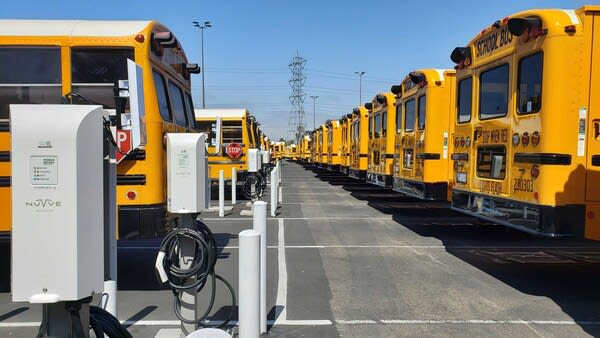
The project is starting with school districts in Cajon Valley and San Diego, but could expand during a second phase to other districts in the state.
Photo: Nuvve Holding Corp.
2 min to read
Nuvve Holding Corp., developer of vehicle-to-grid technology and deployments, has received a proposed award of $1,910,703 by the California Energy Commission (CEC) under the CEC's Electric School Bus Bi-Directional Infrastructure funding opportunity.
The grant will fund Nuvve's groundbreaking project, RESCHOOL: Resilient Energy Solutions for Schools, which is intended to showcase the transformative potential of electric school buses (ESBs) and bi-directional charging infrastructure to enhance the resilience of California's power grid. The initial project phase includes plans to produce a scalable model for other California school districts to implement their own zero-emission and bi-directional infrastructure.
The RESCHOOL project will enhance existing electric school bus and bi-directional charging infrastructure deployments with battery energy storage, microgrid, and islanding capabilities to demonstrate how ESBs play a vital role in bolstering the reliability of California's power grid, particularly during extreme weather events and emergency situations. By integrating bi-directional electric school buses and their charging infrastructure into resilient microgrids, the project aims to reduce the cost of clean transportation systems while optimizing energy availability during power outages.
Initially, the project will benefit two participating San Diego County school districts already equipped with Nuvve's bidirectional chargers and its V2G GIVe platform: Cajon Valley Union School District and San Diego Unified.
"The project builds on our long experience aggregating electric school bus battery storage to discharge energy to the grid and further enhance resiliency through microgrid capabilities," said Nuvve CEO Gregory Poilasne. "It also underscores Nuvve's commitment to advancing clean energy solutions and reducing costs while strengthening the resilience of California's power infrastructure."
"As a proponent and early adopter of clean transportation solutions, we look forward to continuing our efforts to support the health of our students, our community and our planet. Cajon Valley is grateful for Nuvve's support in securing these much-needed funds," said Scott Buxbaum, assistant superintendent for Cajon Valley Union School District.
"This CEC grant will ultimately improve air quality, provide revenue for additional student programing and will help us support the power grid to reduce outages during emergency situations. We see this as a win for the district, for students and teachers and for the environment as a whole," said John Burciaga, fleet maintenance manager for San Diego Unified School District.
The Phase 1 grant award is pending approval of the schools' respective projects at a publicly noticed CEC business meeting and execution of a grant agreement. Phase 2 will allow project teams awarded in Phase 1 to use the bi-directional charging infrastructure blueprints to replicate the initial projects in additional California school districts.
More Alternative Fuels

CALSTART and Forth Combine to Form Catalyst Mobility
The new name represents a renewed vision for the nonprofit focused on advancing clean, equitable, and affordable transportation solutions that move people and goods.
Read More →
Alt-Fuel Moves: New Buses, Charging Hubs & Real-World EV Testing
Propane and electric school bus deployments continue to grow as districts add new vehicles, expand charging infrastructure, and gather more real-world operating data.
Read More →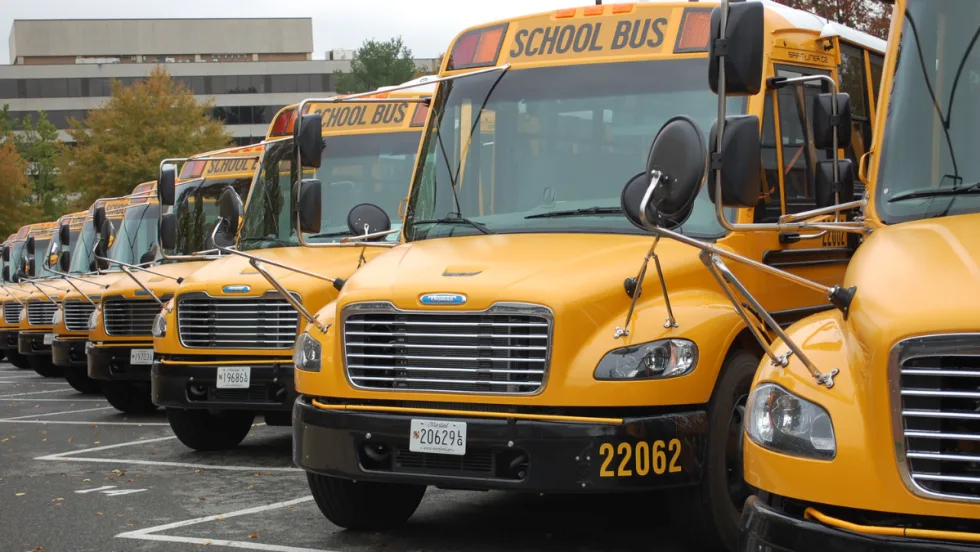
Fewer Electric School Bus Models Reshape the U.S. Market
WRI’s latest buyer’s guide points to a consolidating electric school bus market, but fewer options may reflect a maturing industry rather than fewer meaningful choices for school bus operators.
Read More →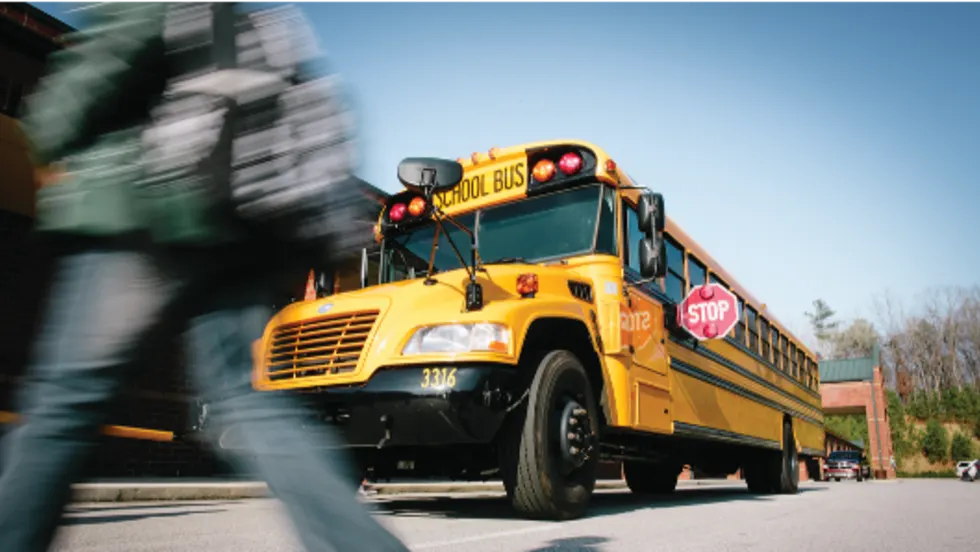
The Fuel Budget You Can Actually Predict: How Propane Autogas Keeps Money in the Classroom
Learn how propane autogas helps school districts manage fuel costs with predictable pricing, lower maintenance, and reduced emissions from former transportation director Joel Stutheit.
Read More →
Hendrickson, Driventic Introduce New Electric Powertrain for School Buses
ELECTRAAX, the electrified, lightweight drive axle offers integrated ePowertrain efficiency and modular flexibility for Class 6–7 school bus use.
Read More →
The Mobility House Joins PowerFlex in Fleet Electrification Deal
The acquisition combines intelligent charging software, bidirectional charging expertise, and fleet electrification services to support the growing adoption of electric school buses across North America.
Read More →
Alt-Fuel Moves: Electric School Bus Investments Hit the Road
See which districts across the U.S. are putting electric school buses into service, expanding charging infrastructure, and planning the next phase of fleet electrification.
Read More →
With Fuel Volatility Ahead, School Districts Turn to Propane
While diesel prices peaked above $5 this spring, districts with propane autogas-powered fleets paid under $2 per gallon, according to PERC.
Read More →
EPA Unveils Proposed Changes to 2027 Heavy-Duty Engine Rules
The federal agency has proposed changes to next year’s targets that would eliminate DEF derates, ease warranty requirements, and retain current NOx emissions standards.
Read More →
Alt-Fuel Moves: EV Charging & Infrastructure Projects Gain Momentum
The latest developments include new funding, charging infrastructure, utility investments, and fleet technologies designed to support the transition to electric school buses nationwide.
Read More →