





ICYMI: WRI Dashboard Collecting Data on Electric School Buses
Michigan Legislature Passes $125M in State Funding for Clean School Buses
The new funds are expected to help replace several hundred diesel-powered buses in Michigan's 17,000-vehicle school bus fleet.
July 2, 2023
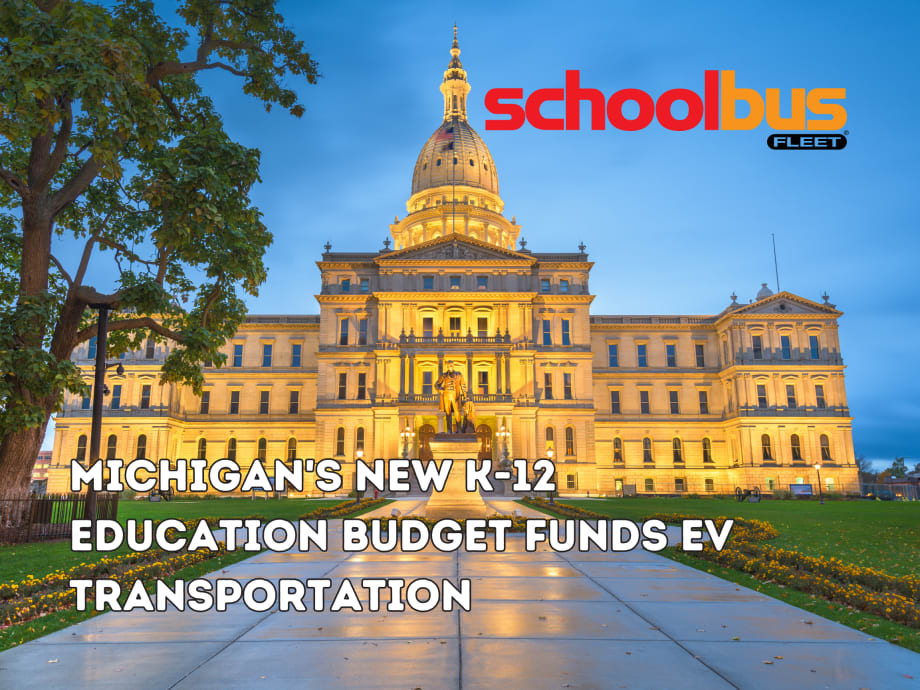
Michigan Gov. Gretchen Whitmer has set a goal of achieving carbon neutrality by 2050.
Image: Canva
2 min to read
The Michigan state legislature on June 28 passed a K-12 education budget that contains $125 million in funding for school districts to transition their bus fleets to cleaner options.
“With the passage of the K-12 state budget, Michigan lawmakers have sent a clear message that they are invested in our state’s educational future,” said Aaron Viles, director of campaigns for the Electrification Coalition. “We’re grateful for their leadership in creating a $125 million program to support the transition from dirty diesel to clean electric school buses. This is a big win for the state: Michigan’s kids will get a clean ride to school and school districts will free up fuel costs to invest in teachers, programs, and materials for better educational outcomes.”
Expected Benefits of the Michigan State Budget
The investment is expected to help replace hundreds of diesel-powered school buses in the 17,000 vehicle Michigan fleet.
The 2024 budget, also referred to as the Make It in Michigan Budget, was hailed by Gov. Gretchen Whitmer as a means to “build a brighter future for our state.”
“It lowers costs on healthcare, preschool, meals for kids, higher education, housing, and workforce training,” Whitmer said. “It will help us keep fixing the damn bridges, replacing lead pipes, and protecting public safety.”
Whitmer has set a goal of achieving carbon neutrality by 2050 and reducing emissions by 50% by 2030. Furthermore, she expects all new school bus purchases to be electric by 2030.
Electric School Bus Spending Concerns
But the spending – notably on electric buses – has its detractors in people like Pauline Wendzel, a Republican state representative. She called it a “spending spree,” according to Fox17.
“Despite foggy forecasts at the Consensus Revenue Estimating Conference (CREC), Democrats decided to spend $80 billion in this budget on ridiculous things like electric school buses, 1,000 new full-time bureaucrats to harass small businesses and farmers, swimming pools, a poet laureate, and the creation of new, long-term government programs that will cost Michigan families more in the long run,” Wendzel said.
The new electric school bus technology hasn’t been off to a perfect start in Michigan. In a May presentation to the Ann Arbor Public Schools Board of Education, downtime and performance issues proved key points for Emile Lauzzana. Lauzzana is the environmental sustainability director for Ann Arbor.
During the presentation, Lauzzana noted how expensive electric buses are compared to their diesel counterparts and lamented the unexpectedly high cost for the electrical infrastructure to power the vehicles.
However, despite the issues raised, Lauzzana went on to say that AAPS remained “committed to continuing with the pilot program and to purchase additional electric buses as the technology matures.”
More Alternative Fuels

Alt-Fuel Moves: New Buses, Charging Hubs & Real-World EV Testing
Propane and electric school bus deployments continue to grow as districts add new vehicles, expand charging infrastructure, and gather more real-world operating data.
Read More →
Fewer Electric School Bus Models Reshape the U.S. Market
WRI’s latest buyer’s guide points to a consolidating electric school bus market, but fewer options may reflect a maturing industry rather than fewer meaningful choices for school bus operators.
Read More →
The Fuel Budget You Can Actually Predict: How Propane Autogas Keeps Money in the Classroom
Learn how propane autogas helps school districts manage fuel costs with predictable pricing, lower maintenance, and reduced emissions from former transportation director Joel Stutheit.
Read More →
Hendrickson, Driventic Introduce New Electric Powertrain for School Buses
ELECTRAAX, the electrified, lightweight drive axle offers integrated ePowertrain efficiency and modular flexibility for Class 6–7 school bus use.
Read More →
The Mobility House Joins PowerFlex in Fleet Electrification Deal
The acquisition combines intelligent charging software, bidirectional charging expertise, and fleet electrification services to support the growing adoption of electric school buses across North America.
Read More →
Alt-Fuel Moves: Electric School Bus Investments Hit the Road
See which districts across the U.S. are putting electric school buses into service, expanding charging infrastructure, and planning the next phase of fleet electrification.
Read More →
With Fuel Volatility Ahead, School Districts Turn to Propane
While diesel prices peaked above $5 this spring, districts with propane autogas-powered fleets paid under $2 per gallon, according to PERC.
Read More →
EPA Unveils Proposed Changes to 2027 Heavy-Duty Engine Rules
The federal agency has proposed changes to next year’s targets that would eliminate DEF derates, ease warranty requirements, and retain current NOx emissions standards.
Read More →
Alt-Fuel Moves: EV Charging & Infrastructure Projects Gain Momentum
The latest developments include new funding, charging infrastructure, utility investments, and fleet technologies designed to support the transition to electric school buses nationwide.
Read More →
Alt-Fuel Moves: Fleets Power Up Beyond the Bus
See how districts are pairing electric buses with charging, solar, and V2G technology to cut costs, boost resilience, and unlock new fleet value.
Read More →