





Fueling the Future: Green-Powered Technology
Science Moms Launch Clean Energy Campaign
The $2 million advertising campaign includes a 45-second spot that focuses on the connection between diesel school buses and cigarettes.
March 27, 2023
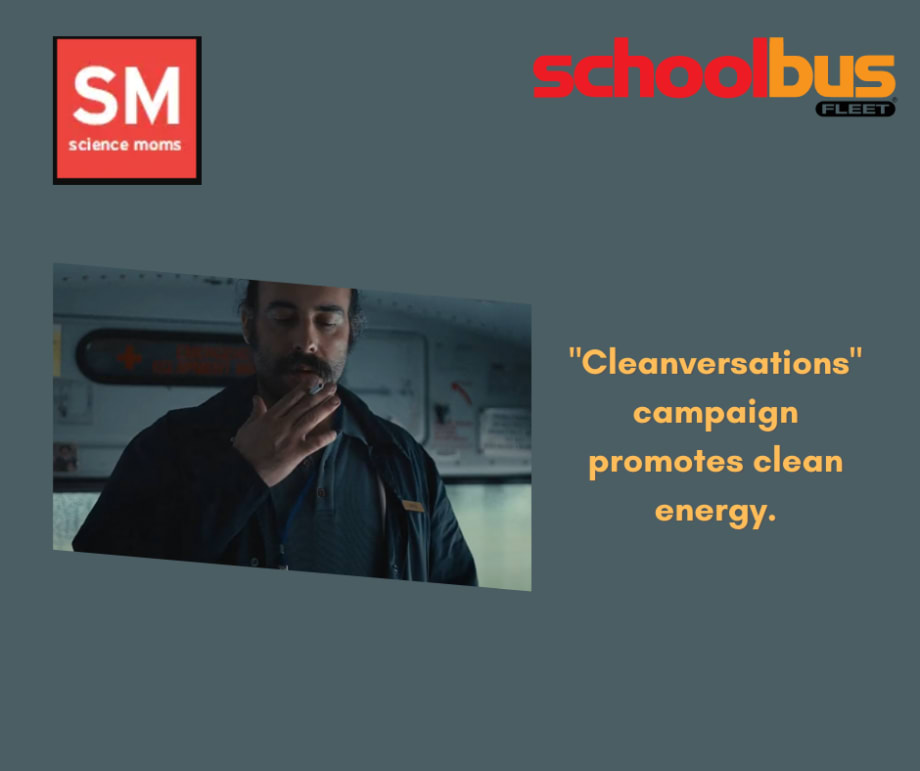
Nonpartisan group Science Moms launched an ad campaign to discuss the risks posed to children's health by pollutants.
Image: Science Moms/Canva
3 min to read
Science Moms — a nonpartisan group of scientists who engage moms in tackling climate change — has launched a $2-million ad campaign. The campaign, dubbed "Cleanversations", seeks to spark conversations about the risks that pollutants pose to kids' health and raise awareness of the resources now available to parents and local governments to help accelerate the transition to clean energy.
The new "Cleanversations" ads — titled "Smoking Bus" and "Game Show" — will run through Earth Day on platforms like YouTube, Hulu, TikTok, Instagram, Out of Home, and several local TV and radio stations. This campaign is part of a consistent multi-million dollar media spend from Science Moms over the past two years to get moms off the sidelines and demand from their leaders a bold plan to stop big polluters. "Smoking Bus" dramatizes the connection between the toxic fumes found in diesel school buses and the same ones found in cigarettes, while "Game Show" taps into the over-the-top excitement a mom will feel when she discovers how huge the savings and health benefits of clean energy are for her children.
"Clean energy laws are good for our kids and the climate," said Dr. Lisa Patel, a pediatrician, the executive director of the Medical Society Consortium on Climate and Health, and the newest member of Science Moms. "Kids are not just little adults — they consume higher quantities of food, water, and air per pound of body weight, making them uniquely vulnerable to pollution and extreme weather events. Thankfully, there is an army of moms who have shown, time and again, that they are able to move mountains in the name of protecting our children's future. Who is more motivated to get school boards to switch from toxic diesel buses to clean electric vehicles than moms?"
"As moms, we do everything within our power to keep our kids safe — but for too long, protecting them from the effects of dirty energy and climate change wasn't possible," said Dr. Melissa Burt, a climate scientist at Colorado State University and founding member of Science Moms. "Unprecedented spikes in extreme heat, toxin-filled air from diesel school buses, and intensifying storms continue to worsen as more heat-trapping pollution is released into the atmosphere from dirty energy sources. By starting Cleanversations, Science Moms is not only educating parents on the risks of dirty energy but empowering them to implement real solutions to keep their little ones safe."
Recently-passed federal climate laws, like the Inflation Reduction Act and the Bipartisan Infrastructure Law, allocate hundreds of billions of dollars toward making clean energy more affordable. By offering thousands of dollars of savings for households to purchase products like heat pumps, the federal government is finally equipping parents with the means to usher in a clean energy future. Key funds allocated to local governments will institute additional needed changes — like the electrification of school bus fleets — as municipalities seek to rapidly decarbonize.
"Saving our kids' futures is more affordable than ever, and we all have a role to play," said Dr. Joellen Russell, a climate scientist at the University of Arizona and founding member of Science Moms. "This funding won't get spent automatically, but everyday moms are uniquely qualified to lead the charge and protect our kids. With Cleanversations, we're empowering moms to take steps toward a cleaner and healthier future by making clean choices at home and engaging with their local communities. This is a once-in-a-generation opportunity — let's keep the mom-entum going!"
Last year, Science Moms released its action plan for tackling climate change, encouraging moms to swap out dirty energy-powered items with clean energy versions. With these new climate laws, making that swap is more affordable than ever.
More Alternative Fuels

CALSTART and Forth Combine to Form Catalyst Mobility
The new name represents a renewed vision for the nonprofit focused on advancing clean, equitable, and affordable transportation solutions that move people and goods.
Read More →
Alt-Fuel Moves: New Buses, Charging Hubs & Real-World EV Testing
Propane and electric school bus deployments continue to grow as districts add new vehicles, expand charging infrastructure, and gather more real-world operating data.
Read More →
Fewer Electric School Bus Models Reshape the U.S. Market
WRI’s latest buyer’s guide points to a consolidating electric school bus market, but fewer options may reflect a maturing industry rather than fewer meaningful choices for school bus operators.
Read More →
The Fuel Budget You Can Actually Predict: How Propane Autogas Keeps Money in the Classroom
Learn how propane autogas helps school districts manage fuel costs with predictable pricing, lower maintenance, and reduced emissions from former transportation director Joel Stutheit.
Read More →
Hendrickson, Driventic Introduce New Electric Powertrain for School Buses
ELECTRAAX, the electrified, lightweight drive axle offers integrated ePowertrain efficiency and modular flexibility for Class 6–7 school bus use.
Read More →
The Mobility House Joins PowerFlex in Fleet Electrification Deal
The acquisition combines intelligent charging software, bidirectional charging expertise, and fleet electrification services to support the growing adoption of electric school buses across North America.
Read More →
Alt-Fuel Moves: Electric School Bus Investments Hit the Road
See which districts across the U.S. are putting electric school buses into service, expanding charging infrastructure, and planning the next phase of fleet electrification.
Read More →
With Fuel Volatility Ahead, School Districts Turn to Propane
While diesel prices peaked above $5 this spring, districts with propane autogas-powered fleets paid under $2 per gallon, according to PERC.
Read More →
EPA Unveils Proposed Changes to 2027 Heavy-Duty Engine Rules
The federal agency has proposed changes to next year’s targets that would eliminate DEF derates, ease warranty requirements, and retain current NOx emissions standards.
Read More →
Alt-Fuel Moves: EV Charging & Infrastructure Projects Gain Momentum
The latest developments include new funding, charging infrastructure, utility investments, and fleet technologies designed to support the transition to electric school buses nationwide.
Read More →