




Check Out: Contractor Roundtable: After-School Transportation and Driver Shortages
Latest Safety Report Praises HopSkipDrive's Drivers
The third annual report indicates that the platform's drivers experienced no critical safety incidents in more than 400,000 rides.
by SBF Staff
July 20, 2022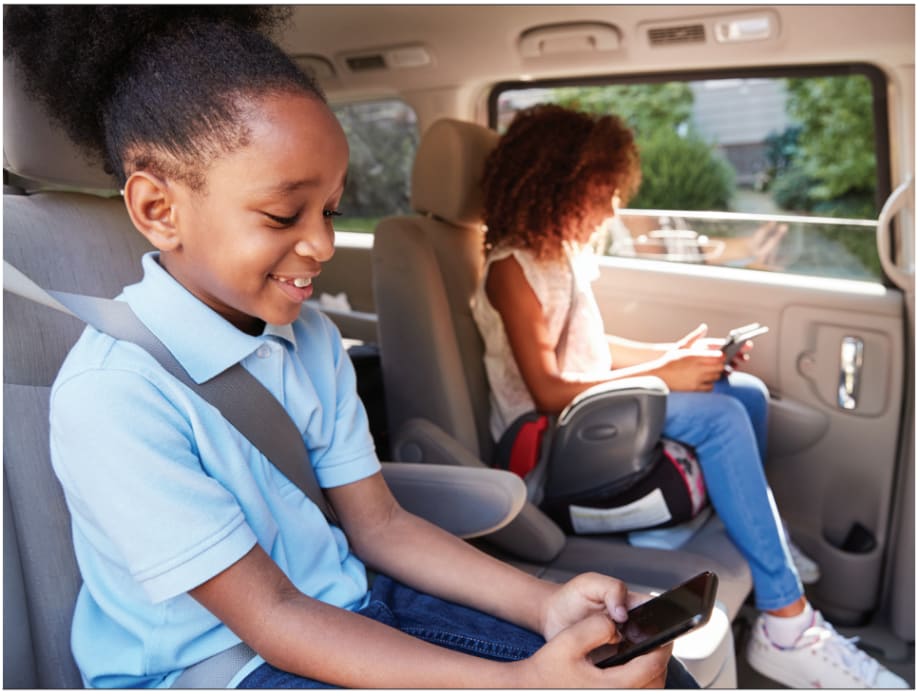
HopSkipDrive's "CareDrivers" have logged more than 20 million miles, transporting students in 20 markets across 10 states and Washington, D.C.
Photo: HopSkipDrive
3 min to read
In its third annual safety report, alternative student transportation platform HopSkipDrive heralds about 99.7% of its more than 400,000 rides ending without safety-related concerns – and all rides ended without a critical incident.
The company’s “CareDrivers” have logged more than 20 million miles, covering 13,000 schools in 20 markets in 10 states and Washington, D.C.
“With the pandemic introducing a number of significant new challenges for us all over the past year, one unexpected outcome was the increase in the number of fatalities that occurred across U.S. roadways as a result of a surge in distracted driving,” the report states. “With riskier driving behaviors like speeding and phone use becoming an even more prevalent issue across the country, HopSkipDrive reviewed our safety data and found that CareDrivers have continued to be safer on the road even as the roadways around them have become increasingly unsafe with each passing year.”
Overall safe driving scores for drivers on the HopSkipDrive platform rose 1% from 2020, according to the report.
“This increase year over year confirms that CareDrivers are not only safer on the road than average drivers, but continue to show safety improvements even as the roads get more dangerous every year,” the report states.
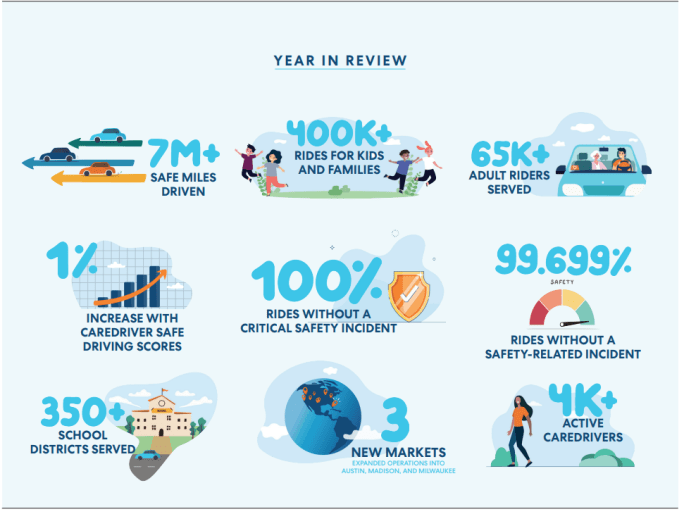
The year saw the addition of three new markets and a 1% increase in overall driver safety, according to the report.
Image: HopSkipDrive
Qualifying criteria for would-be CareDrivers include:
At least five years of caregiving experience.
Comprehensive search of county, state, and national records, global watchlist, and sex offender registries.
Fingerprint-based background check.
Child abuse and neglect scan.
Proof of a valid driver’s license.
Minimum three years of driving experience.
Initial motor vehicle history search and ongoing monitoring for new driving infractions.
At least 23.
Own or lease a vehicle no more than 10 years old, seating four to seven passengers.
Proof of vehicle registration.
Proof of insurance consistent with state law.
Annual vehicle inspection by certified mechanic.
Live orientation with a member of the HopSkipDrive team.
Adopt the HopSkipDrive Community Guidelines.
Adopt the HopSkipDrive Zero Tolerance Policies.
In the report, CEO Joanna McFarland wrote: “I’m also incredibly proud of our safety data: 100% of rides were completed without a critical safety incident. This update continues our perfect record: There has never been a critical safety incident in the eight years HopSkipDrive has been in business. I consider this, more than our expansion, more than any funding we receive or awards we win, to be HopSkipDrive’s greatest accomplishment.”
The company also indicated that it is positioned to help fill the gaps in school transportation caused by bus driver shortages and other hurdles to mobility within school districts.
“Countless students were left without a safe and reliable way to get to school at a time when in-person learning and efforts to recapture learning loss resulting from COVID-19 school closures is most critical,” the report states. “This has led to more policymakers and school administrators thinking about the barriers to standing up transportation programs that better meet the needs of their communities and help alleviate the impacts of the bus driver shortage.”
More Safety

How to Build a Better School Bus Driver Training Program
Is it time to strengthen your driver training? Here’s how to pick the right talent and improve recruitment, retention, and safety. This video is brought to you by IC Bus.
Read More →
Recent School Bus Accidents Leave 2 Dead, 2 Injured
Four school bus crashes in Florida, Illinois, and Georgia highlight risks in transportation lots, at bus stops, and during student loading and unloading.
Read More →
Sponsored•September 8, 2026
When Every Second Matters, Clarity Keeps Routes Moving
From routine delays to urgent incidents, strong communication practices help drivers, dispatchers, schools, and families respond with confidence.
Read More →

What Happens When a School Bus Catches Fire — and What Can Help
School bus fires are rare but can be devastating. Learn how advances in fire suppression and asset protection help fleets detect fires earlier, reduce damage, and improve safety.
Read More →
Geotab Launches Tool to Help Fleets Investigate Road Incidents
Geotab Investigations combines telematics data, video, documents, and other evidence to help fleets reconstruct incidents, resolve claims, and determine what happened.
Read More →
Texas Sixth Grader Wins 2026 National School Bus Safety Poster Contest
Sai Darshana Yekolu of Moseley Middle School in Prosper, Texas, was named the newest winner for her artwork, bringing the theme of “Safe Rides, Everyday Heroes” to life.
Read More →
Sponsored•August 27, 2026
Doing More With Less: How Transportation Directors Can Prioritize Safety Amid Budget Uncertainty
With diesel prices soaring and nearly one-third of transportation directors expecting budget cuts, maintaining student safety has never been more challenging. Download this guide to learn how leading districts are prioritizing risk, funding critical safety technology, and building stronger budget cases with data.
Read More →
Walton County Schools Adds Gatekeeper Stop-Arm Enforcement System
The Florida district will deploy Gatekeeper’s updated Student Protector technology, which now incorporates AI to improve video evidence.
Read More →
How To Build a More Secure School Bus Yard During and After Hours
As thefts and overnight security threats continue, school transportation leaders are combining stronger operational practices with AI-enabled surveillance to better protect buses, facilities, and staff.
Read More →
FMCSA Names New Chief Safety Officer: What School Bus Operators Should Know
Steve Dowling is set to lead the federal agency's efforts to advance commercial motor vehicle safety and reduce crashes, fatalities, and injuries on the nation's roadways.
Read More →