

Zūm to Provide School Transportation Service for California District
Zum Launches New EV Initiative
The Zum Net Zero initiative outlines the student transportation company's plan to transition its entire fleet to electric vehicles by 2025.
by SBF Staff
August 17, 2021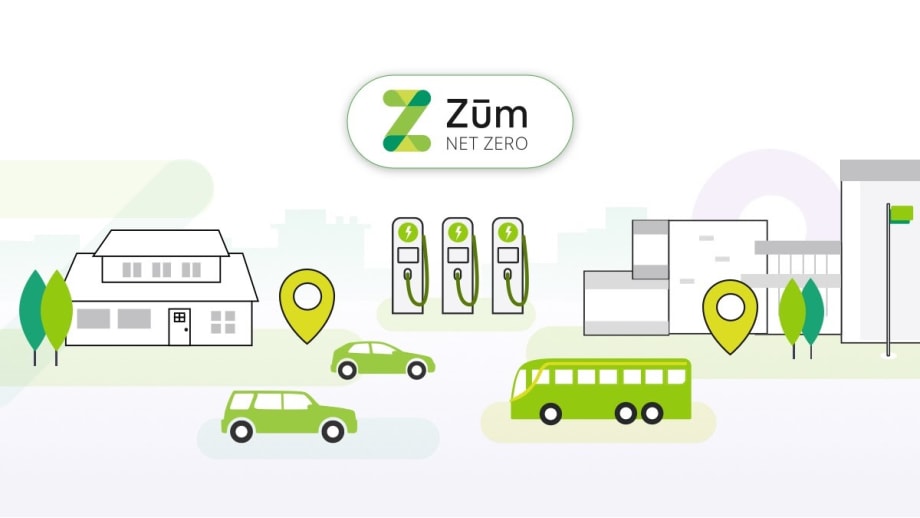
The Zum Net Zero initiative outlines the student transportation company’s plan to transition its entire fleet to electric vehicles by 2025.
Graphic courtesy Zum
2 min to read
Student transportation company Zum announced that it is transitioning its fleet to 100% electric vehicles (EVs) by 2025.
The investment is the company’s latest step in its Zum Net Zero initiative, a program designed to create a safer, healthier, more sustainable planet, according to a news release from the student transportation provider.
As previously reported, in July, Zum announced a partnership with AutoGrid, a provider of AI-powered energy software solutions, to deploy 10,000 electric school buses to create a gigawatt of flexible capacity for the electric grid. The partnership will reportedly leverage AutoGrid's Virtual Power Plant (VPP) technology, and when fully deployed, is expected to be one of the largest VPPs in the world, according to the company.
“We plan for Zum’s entire fleet to be 100 percent EVs by 2025, but we can’t wait for technology to catch up to our ambitions to drive sustainable change,” said Ritu Narayan, CEO and founder of Zum. “Transportation is the largest source of carbon emissions in the United States, and we have an opportunity to make an immediate positive impact on society and provide students with carbon neutral rides.”
As part of this investment, Zum is working with 3Degrees, a firm that helps organizations achieve renewable energy and decarbonization goals, to support verified emissions reductions projects. Those projects include the Winston Creek Forest Project — a 10,000 acre forest in Washington State that serves as a bridge for owls traveling from nesting locations — and the Meridian SF6 Reduction Project — which, in the auto parts manufacturing process, replaces a powerful greenhouse gas that has a global warming impact 22,800 times greater than carbon dioxide.
“As organizations work to decarbonize their operations as aggressively and as quickly as possible, supporting emissions reduction projects through the purchase of verified carbon credits is a critical near-term solution to address their direct and indirect emissions,” said Stephanie Harris, director of carbon markets at 3Degrees. “We’re excited to see Zum take immediate action to address its carbon footprint as it continues to make progress on transitioning to a completely electrified fleet.”
More Alternative Fuels
Bipartisan Bill Seeks to Extend Clean School Bus Program Through 2031
The proposed legislation would renew federal support for cleaner school buses as districts navigate funding uncertainty, rising fuel and infrastructure costs, and fleet replacement needs.
Read More →
Alt-Fuel Moves: Electric Bus Rollouts, Bidirectional Charging & Propane Growth
See which fleets are adding electric and propane school buses as districts and operators invest in charging infrastructure, bidirectional technology, and alternative-fuel expansion.
Read More →
Nobody Told Diesel Prices They Were Supposed to Come Down
With diesel prices surging, school bus fleets have new reason to stress-test fuel costs, consider diversification, and calculate what each route really costs to operate.
Read More →
Why Gasoline School Buses Are Making a Comeback
Gasoline is gaining ground in full-size school buses. See how today’s options stack up against diesel on cost, maintenance, emissions, performance, and more.
Read More →
EPA Opens $180M DERA Funding Round for Diesel Upgrades
The 2026 Diesel Emissions Reduction Act program seeks applications from eligible organizations to accelerate the retirement of legacy diesel vehicles.
Read More →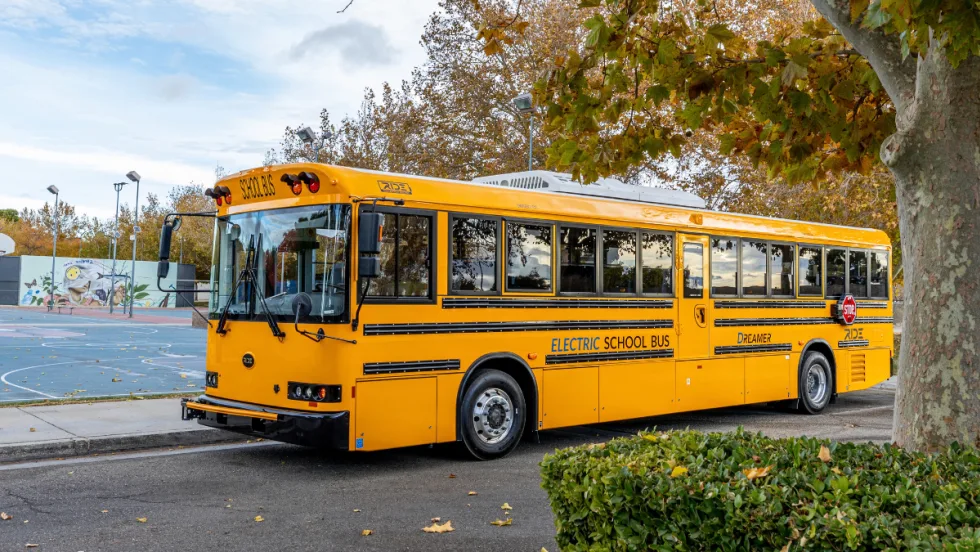
The Secret Life of an Electric School Bus Battery
Batteries change throughout years of daily routes, but degradation doesn’t necessarily mean the end. Here’s what operators should know about performance, safety, and second life.
Read More →
CALSTART and Forth Combine to Form Catalyst Mobility
The new name represents a renewed vision for the nonprofit focused on advancing clean, equitable, and affordable transportation solutions that move people and goods.
Read More →
Alt-Fuel Moves: New Buses, Charging Hubs & Real-World EV Testing
Propane and electric school bus deployments continue to grow as districts add new vehicles, expand charging infrastructure, and gather more real-world operating data.
Read More →
Fewer Electric School Bus Models Reshape the U.S. Market
WRI’s latest buyer’s guide points to a consolidating electric school bus market, but fewer options may reflect a maturing industry rather than fewer meaningful choices for school bus operators.
Read More →
The Fuel Budget You Can Actually Predict: How Propane Autogas Keeps Money in the Classroom
Learn how propane autogas helps school districts manage fuel costs with predictable pricing, lower maintenance, and reduced emissions from former transportation director Joel Stutheit.
Read More →