




Electric School Bus Maintenance: Key Similarities, Differences
New York District Gets Voter Buy-In for Electric School Buses
Voters support Bethlehem Central Schools’ plans to buy up to five electric school buses. The purchase in the 2021-22 school year is contingent upon state grant funding.

Nicole Schlosser・Former Executive Editor

Voters have supported Delmar, New York-based Bethlehem Central Schools’ plans to buy up to five electric school buses. The purchase in the 2021-22 school year is contingent upon state grant funding.
Photo courtesy Jo Ellen Gardner
2 min to read
Voters who live in the area served by Bethlehem Central Schools in Delmar, New York, recently approved propositions that support buying electric school buses.
Two of the three propositions that residents cast votes for on May 18 will support the purchase of up to five electric school buses, according to a news release from the district.
Buying the buses in the 2021-22 school year is contingent upon grant funding from the New York State Energy Research and Development Authority (NYSERDA).
The district has announced its intention to transition its school bus fleet to electric buses and is awaiting a funding decision from NYSERDA on New York Truck Voucher Incentive Program funding, Karim Johnson, the district’s director of student transportation, told School Bus Fleet.
Once approved, Johnson said, the district will order the buses and begin to train its drivers and mechanics on electric school bus operation and maintenance, “as we eagerly await their arrival.”
With the voter approval, Bethlehem Central Schools becomes one of the first school districts in New York state to begin the move to a clean energy bus fleet. (White Plains City School District partnered with school bus contractor National Express and local utility provider ConEdison to operate five electric school buses with vehicle-to-grid capability in 2018.)
Here’s the voter approval breakdown, according to the school district:
• Bus purchase proposition (75% approval).
• Electric bus infrastructure proposition (76% approval).
• GPS/telematics (76% approval).
“Our community has spoken overwhelmingly to enhance the safety and health of our students and of our environment by moving forward with school bus electrification,” Johnson said.
“We are so appreciative of this community not only for approving our budget and bus propositions but for its unwavering support of our schools especially this year and last,” said Jody Monroe, the district’s superintendent, in the news release. “We have been living in uncertain times but never once doubted this community’s commitment to education or to the safety and well-being of our students and staff.”
Monroe added that turnout for the annual budget vote was greater than expected given the effects of the pandemic. A total of 2,555 residents voted.
Meanwhile, the district is continuing to explore other available grant funding to enable the purchase of more electric buses for its future fleet replacement cycle, Johnson said.
In addition, Bethlehem Central Schools is developing a flexible charging infrastructure plan to accommodate the electric buses authorized for purchase as well as ongoing electric school bus purchases.
“Depending upon the availability of funding, it is my hope that 100% of our future purchases of Type C buses will be electric,” Johnson said.
More Alternative Fuels
Bipartisan Bill Seeks to Extend Clean School Bus Program Through 2031
The proposed legislation would renew federal support for cleaner school buses as districts navigate funding uncertainty, rising fuel and infrastructure costs, and fleet replacement needs.
Read More →
Alt-Fuel Moves: Electric Bus Rollouts, Bidirectional Charging & Propane Growth
See which fleets are adding electric and propane school buses as districts and operators invest in charging infrastructure, bidirectional technology, and alternative-fuel expansion.
Read More →
Nobody Told Diesel Prices They Were Supposed to Come Down
With diesel prices surging, school bus fleets have new reason to stress-test fuel costs, consider diversification, and calculate what each route really costs to operate.
Read More →
Why Gasoline School Buses Are Making a Comeback
Gasoline is gaining ground in full-size school buses. See how today’s options stack up against diesel on cost, maintenance, emissions, performance, and more.
Read More →
EPA Opens $180M DERA Funding Round for Diesel Upgrades
The 2026 Diesel Emissions Reduction Act program seeks applications from eligible organizations to accelerate the retirement of legacy diesel vehicles.
Read More →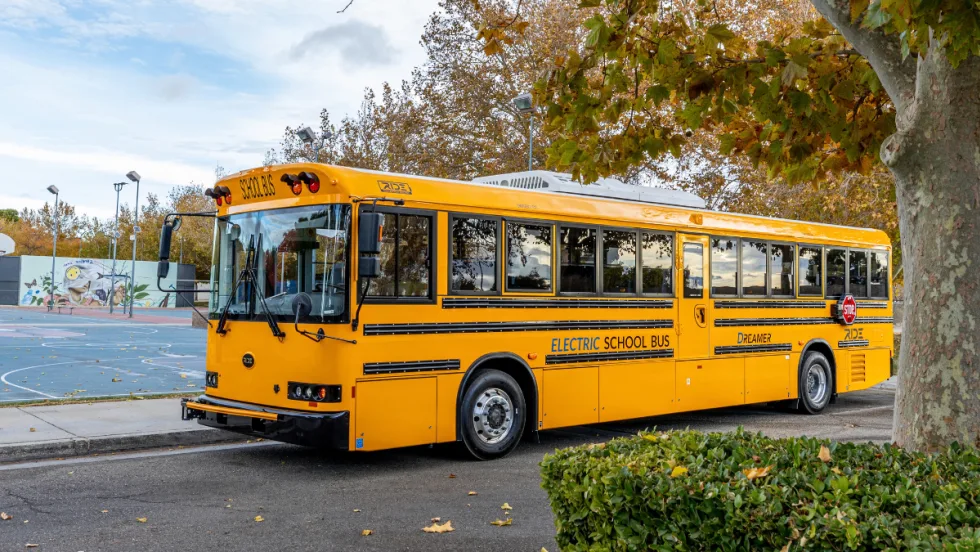
The Secret Life of an Electric School Bus Battery
Batteries change throughout years of daily routes, but degradation doesn’t necessarily mean the end. Here’s what operators should know about performance, safety, and second life.
Read More →
CALSTART and Forth Combine to Form Catalyst Mobility
The new name represents a renewed vision for the nonprofit focused on advancing clean, equitable, and affordable transportation solutions that move people and goods.
Read More →
Alt-Fuel Moves: New Buses, Charging Hubs & Real-World EV Testing
Propane and electric school bus deployments continue to grow as districts add new vehicles, expand charging infrastructure, and gather more real-world operating data.
Read More →
Fewer Electric School Bus Models Reshape the U.S. Market
WRI’s latest buyer’s guide points to a consolidating electric school bus market, but fewer options may reflect a maturing industry rather than fewer meaningful choices for school bus operators.
Read More →
The Fuel Budget You Can Actually Predict: How Propane Autogas Keeps Money in the Classroom
Learn how propane autogas helps school districts manage fuel costs with predictable pricing, lower maintenance, and reduced emissions from former transportation director Joel Stutheit.
Read More →