




Related: United Motorcoach Association Forum Focuses on Ways to Help Operators During COVID-19
School Bus Contractors Share Struggle With COVID-19 Impact
The pandemic is having a significant impact on many companies, as they struggle with a swift and nearly complete suspension, or in some cases, loss of business. Industry associations are urging state and federal support.

Nicole Schlosser・Former Executive Editor
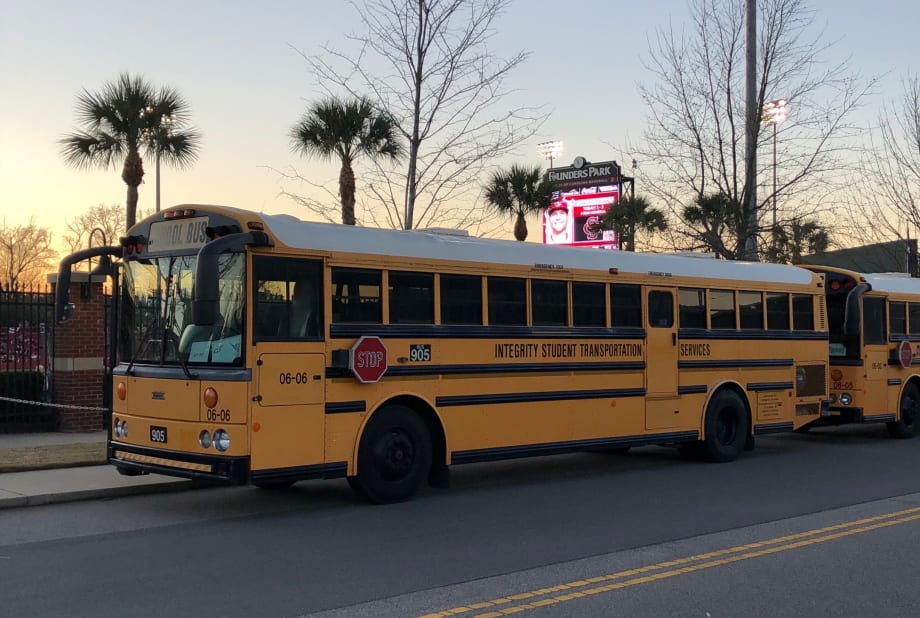
Integrity Student Transportation Services in Columbia, S.C., is one of many school bus contractors suffering a significant loss of business due to the COVID-19 pandemic. Photo courtesy Karim Johnson
3 min to read
Integrity Student Transportation Services in Columbia, S.C., is one of many school bus contractors suffering a significant loss of business due to the COVID-19 pandemic. Photo courtesy Karim Johnson
The COVID-19 pandemic is having a significant impact on many school bus contractors as they struggle with a swift and nearly complete suspension — or in some cases, loss — of business.
Karim Johnson, the general manager of Integrity Student Transportation Services in Columbia, S.C., operates one of those companies.
“I have been hit hard because I only have field [and] athletic trip contracts with schools,” Johnson told School Bus Fleet.
Since March 11, Johnson had all his trips canceled because of school closings prompted by the COVID-19 pandemic.
That isn’t just having an impact on Integrity Student Transportation Services in the near term.
“With the chance that school may not return to session this school year, the future of my operation is up in the air,” Johnson added.
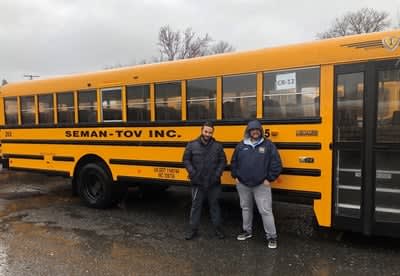
Seman-Tov Bus Co. in Neptune, N.J., is another small school bus company that may be in jeopardy without receiving funding for drivers and other staff during the pandemic-driven school closures. Shown left to right: Judah Nagar, fleet manager, and Kevin Dougherty, general manager. Photo courtesy Judah Nagar
In New Jersey, where on Saturday Gov. Phil Murphy ordered all residents to stay home, Judah Nagar, the fleet manager for Seman-Tov Bus Co., told SBF that, like many other contractors, he is concerned about the pandemic putting his family’s operation out of business.
“Districts need to start paying all private contractors,” he said. “They have the money allocated for it anyway.”
Seman-Tov Bus Co. serves 12 districts and three private schools and has about 10 buses handling food delivery for the Lakewood Board of Education. The company, which is run by Nagar’s parents, is made up of about 250 employees.
“We need to pay our drivers, to keep them employed, so we don’t lose them,” Nagar added. “There’s a shortage as it is.”
John Benish Jr., the president of the National School Transportation Association (NSTA) and president and chief operating officer of Cook-Illinois Corp., told SBF that the effect COVID-19 has had on his workforce is unprecedented, and, just like everyone else, “we have no idea what is going to happen the next hour or day.”
Benish Jr., who has worked in student transportation in his family business for most of his life, said that although the school transportation industry has weathered some severe crises over the years, including very long cold spells, strikes, and 9/11, “this has been and will be the most devastating event in our lifetimes.”
“I remember running on 9/11, and that was surely tragic, but seeing 90% of our employees off of work and worried sick about not working possibly the next 18 weeks is making me heartbroken,” Benish Jr. said.
When asked about what could help during this challenging time, Benish Jr. told SBF that constant communication within the organization and with customers is very important.
“Get in the ear of as many people as you can,” Benish Jr. said. “Explain not only what you are going through, but what you are going to do.”
He added that Cook-Illinois Corp is focusing on conveying calm and compassion.
“We owe it to our employees and the students we transport to be ready to get back to work when asked,” Benish Jr. said. “The children need us and we want them to come back [to school] soon.”
Meanwhile, school transportation and other transportation industry associations are calling Congress’s attention to the problem and are urging financial support.
Last week, the NSTA sent letters to 50 state governors, the Mayor’s Office of the District of Columbia, and U.S. Department of Education Secretary Betsy DeVos calling for action that requires school districts to fund transportation systems through the conclusion of the pandemic. Read the NSTA’s letter to DeVos here.
Additionally, on Friday, seven major transportation associations signed a letter to President Trump and Congressional leaders asking for $12 billion to save transportation, an essential national infrastructure, during the COVID-19 pandemic. The American Bus Association’s (ABA's) President, Peter Pantuso, asked members in an email to immediately contact their congressional representatives, detail their situation and support the industry's requests for funding. On Saturday, the ABA shared this link to find Senator’s phone numbers to make calls.
More Management

How to Build a Better Driver Training Program
Ready to boost up your school bus instructor training? Here’s how to pick the right talent and improve recruitment, retention, and safety.
Read More →
CALSTART and Forth Combine to Form Catalyst Mobility
The new name represents a renewed vision for the nonprofit focused on advancing clean, equitable, and affordable transportation solutions that move people and goods.
Read More →
What Makes a Great School Bus Driver Trainer?
Choosing the right school bus driver trainer takes more than experience. Learn six keys to selecting and developing trainers and evaluating program effectiveness.
Read More →


School Bus Contractors Expand Through New Deals, Acquisitions & Partnerships
STA's Canadian division acquires Ontario-based G&L Stevenson Transport while Durham School Services adds a new district contract in California, First Student adds a New Jersey contract, and Minnesota Coaches acquires Halo Transportation.
Read More →
Logan Bus Company Rolls Out AI Phone System for NYC School Bus Families
A summer pilot found that AI agents could handle most routine calls, freeing up time for customer service staff to focus on emergencies and complex family concerns.
Read More →
From Intent to Impact: What I Learned About Leadership from TAPT
A Texas transportation supervisor shares lessons on self-awareness, accountability, managing stress and building trust — and why investing in leadership development matters at every stage of your career.
Read More →
NAPT Names 2026 Award Recipients, Hall of Fame Inductee
Who earned national recognition for their work in student transportation? This year, NAPT named five recipients of its 2026 awards for service, safety, and leadership, plus its newest Hall of Famer.
Read More →
Sponsored•September 2, 2026
2026 State of Student Transportation Report
Driver shortages. Rising costs. Growing safety expectations. More data, but not enough time to act on it. The 2026 State of Student Transportation Report reveals what transportation leaders say is putting the most pressure on their operations—and where they’re investing next. See how your priorities compare.
Read More →
How to De-Escalate an Angry Person: 5 Steps for Handling Workplace Conflict
What makes emotions run high, and how should you handle an angry colleague or parent? Follow these steps for staying calm, listening, showing empathy, and resolving conflict.
Read More →
Sponsored•September 1, 2026
What Readiness Looks Like This School Year
Learn about the challenges shaping the 2026–2027 school year, from persistent driver shortages and budget pressure to technology and readiness gaps. See how school districts are responding and adapting in Zonar’s 2026 Back-to-School Readiness Report.
Read More →