



NASDPTS Marks Half a Century of Leadership in Pupil Transportation Policy
The association, which turns 50 in November, connects state directors with federal regulators, school bus manufacturers, suppliers, and other industry groups.

Thomas McMahon・Executive Editor

5 min to read

NASDPTS, which turns 50 in November, connects state directors with federal regulators, school bus manufacturers, suppliers, and other industry groups. Seen here is the association’s 2016 conference.
It began as a modest gathering of state-level school transportation officials, but over the past 50 years, it has grown into a vital hub where state directors connect with federal regulators, school bus manufacturers, suppliers, and other industry groups.
The National Association of State Directors of Pupil Transportation Services (NASDPTS) is celebrating its 50th anniversary this year at its annual conference, which will take place in Kansas City, Missouri, from Oct. 27 to 31.
NASDPTS was formed in November 1968, with Pope Baird of Florida serving as the first president. While details on the earliest days of the association aren’t readily available, a former state director described the informal nature that he saw when he first attended a NASDPTS conference in Portland, Oregon, in 1982.
“It was a meeting in a back room. … I wouldn’t even call it a conference at that point,” said Ron Kinney, who was California’s top pupil transportation official at the time.
In the early 1980s, Kinney said, the NASDPTS gathering was essentially an offshoot of the National Association for Pupil Transportation (NAPT) conference (although NASDPTS had been meeting for several years before NAPT began its conference). The state directors heard updates from vendors but didn’t have much of a program beyond that. Kinney said it was clear that NASDPTS needed to take its conference to the next level.
That major step forward came in 1987 in Norfolk, Virginia. NASDPTS broke away from the NAPT conference, booking its own banquet room at a Holiday Inn and setting up a substantial conference agenda of its own. Starting either that year or shortly afterward, Kinney recalled, presentations by federal agency officials became regular features of the program.
“It was a big change from what we had in the past," said Kinney, who in 1987 had become president of NASDPTS. "It was the first time we actually moved away from NAPT. It was a friendly thing — we wanted to have our own venue and not really have to rely on NAPT to do all the legwork for us.”

Current state directors and NASDPTS board members Diana Hollander (left) and Max Christensen (near left, with red tie) are seen here with more than two dozen now-former state directors at the 2006 NASDPTS conference. In the bottom row (near center, in dark suit) is Charlie Hood, then the Florida state director and now executive director of NASDPTS. Photo courtesy Derek Graham, former North Carolina state director
Another key development for NASDPTS was the addition of three member councils in the early 1990s: the Supplier Council, the School Bus Manufacturers Technical Council (as the successor to the former School Bus Manufacturers Institute), and the State and National Associations Council. With those new subgroups, plus the creation of the associate member category, NASDPTS significantly expanded its membership base, its budget, and its footprint in the industry.
Also in the 1990s, NASDPTS brought on its first executive director, Charlie Gauthier, who had been in charge of school bus standards at the National Highway Traffic Safety Administration.
Charlie Hood, the current executive director of NASDPTS and former Florida state director, said that Gauthier’s expertise and the Supplier Council’s financial support helped NASDPTS boost its reach in a number of areas, such as commenting on federal rulemaking, developing position papers, and promoting policies that support safe and efficient student transportation.
“We just really ramped up the array of services that we provide, as well as our advocacy role,” Hood recalled of that period in the 1990s.
With state directors, council participants, and other members, NASDPTS now has a total membership of about 340 individuals. The association has designated a state director representative from every state. Even if that person doesn’t actively participate in the association, he or she will get school bus safety and security updates and other missives that NASDPTS receives from federal agencies and distributes across the nation.
“We believe it’s important … to make a positive effort to contact someone from every state,” Hood said.
While state directors oversee pupil transportation matters in their own states, their work with colleagues in NASDPTS has sought to provide leadership and guidance on school bus issues on a national level. One method for carrying out that mission has been the creation of position papers on a variety of topics. For Diana Hollander, the Nevada state director who will conclude her term as president of NASDPTS at the 2018 conference, the association’s most influential position paper so far is that on lap-shoulder belts for school buses — perhaps the most polarizing subject in the pupil transportation community.
In 2013, NASDPTS’ then-President Max Christensen and then-Executive Director Bob Riley began developing a paper that would update the association’s stance on seat belts. Previously, NASDPTS had gone on the record to support lap-shoulder belts for school buses if funding was made available for them. The new NASDPTS position, adopted by the board at the 2013 conference in Grand Rapids, Michigan, bolstered the association’s support for the three-point restraints by dropping the funding clause from its prior position.
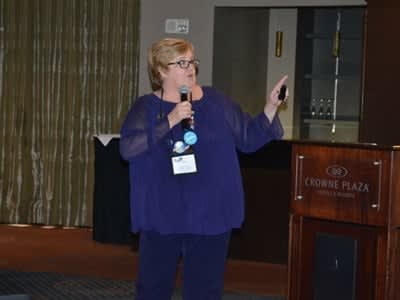
Hollander, who will conclude her term as NASDPTS president in October, says the association’s most influential position paper so far is that on lap-shoulder belts for school buses.
“NASDPTS fully supports the installation and use of lap-shoulder belts in school buses, period, with no ifs, ands, or buts,” Christensen said at the 2013 conference.
The paper, finalized and released in 2014, gives a detailed background on the school bus seat belt issue, explains the association's position, and lays out supporting points.
“I think that’s one of the most important things we’ve done,” Hollander said of the lap-shoulder belt position paper.
Another area of industry leadership for NASDPTS is the National Congress on School Transportation (NCST). The state directors chair the steering committee and appoint delegates for NCST, which brings together representatives from each state every five years to develop pupil transportation specifications and recommended procedures.
Hollander said she would like to see NCST become a more agile undertaking, allowing the industry to update standards in an efficient way “without having to wait every five years.”
As she and other longtime state pupil transportation directors look to retire over the next few years, Hollander said that NASDPTS needs to prepare the next wave of state directors to lead the association's efforts.
“These younger people are very inventive,” Hollander said. “It’s time for us to take the association into the next generation — bring them in and set them free to change the world.”
More Management
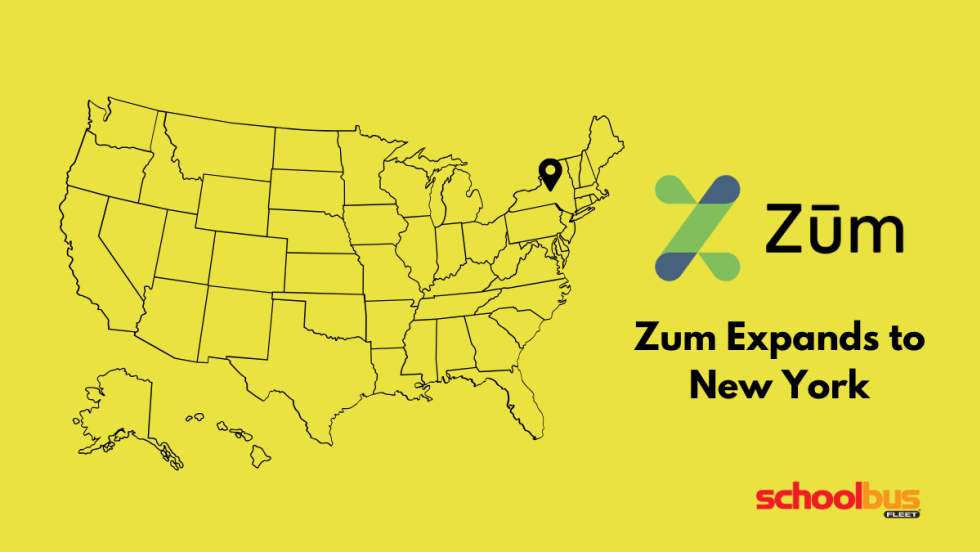
Zum Reaches 19 States With New York Expansion
The addition of the Empire State to the student transportation company's roster marks a growing expansion in the Northeast as it scales its tech and school bus services.
Read More →
First Student Updates Its Parent App
First View connects both yellow bus and alternative transportation, giving families one platform to track student trips for the new school year, with 15 languages supported.
Read More →
The Back-to-School Checklist Every Director Should Complete Before the First Bell
Help your transportation team start the school year strong with these tips for contingency planning, communication, fleet visibility, technology, and trip management.
Read More →
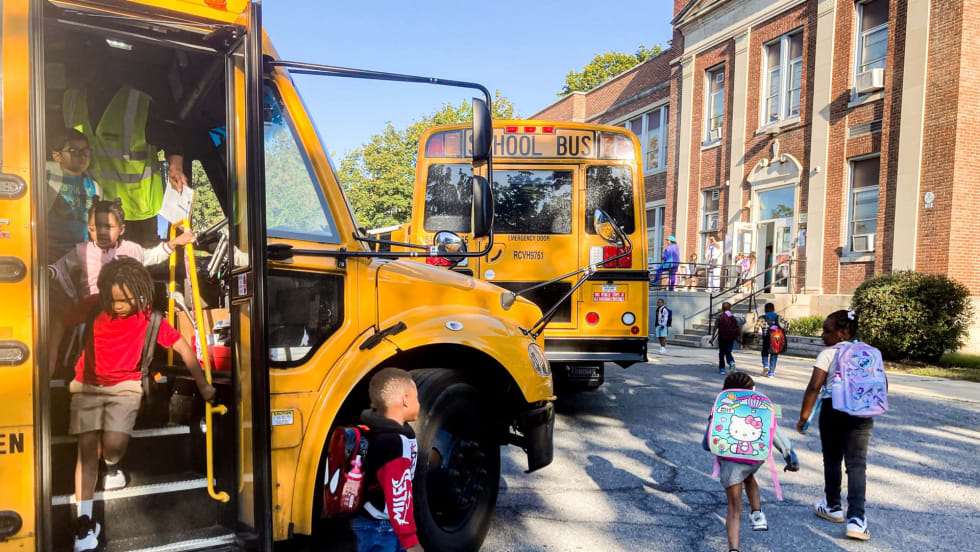
How a New York District Cut Nearly $1M in Transportation Costs While Expanding Bus Access
A data-driven overhaul with BusRight reduced Poughkeepsie City School District's planned routes from 26 to 17 while extending school bus service to about 1,200 additional students.
Read More →
Sponsored•August 17, 2026
Budgets Down, Enrollment Shifting: What the Data Says Districts Should Watch
School transportation departments face two converging challenges this year: tightening budgets and shifting enrollment. Most districts still address these issues separately, but the assumption that either trend will simplify operations is proving incorrect.
Read More →
These 8 School Transportation Companies Made the 2026 Inc. 5000 List
Find out which school transportation contractors, technology providers, and suppliers ranked among America’s fastest-growing private companies.
Read More →
The Link Between Emotional Intelligence and School Bus Safety
How can emotional intelligence help transportation pros navigate stress, manage change, and build stronger relationships? Listen to find out.
Read More →
What Emotional Intelligence Has to Do With School Bus Safety
In this video, discover how emotional intelligence can help transportation leaders and drivers navigate stress, manage change, and build stronger relationships. The Route is sponsored by IC Bus.
Read More →
Beyond Two-Way Radios: School Bus Communications Evolve With Push-to-Talk Over Cellular
PRYME Radio and PositionPTT join forces to advance hands-free radio use and reduce distracted driving. See how PoC compares with traditional radios on range, cost, safety, and connectivity.
Read More →
Have School Districts Adapted to Bus Driver Shortages or Simply Accepted Less Service?
According to a recent report from HopSkipDrive, many districts appear to have recalibrated what "normal" transportation service looks like.
Read More →