




New NASDPTS paper details support for lap-shoulder belts
The new position paper elaborates on the state directors association’s recently updated stance on lap-shoulder belts — fully supporting their installation and use in school buses. NASDPTS lays out 10 supporting points for its position, including the limits of compartmentalization and the ability of current lap-shoulder belt systems to maintain bus capacity.

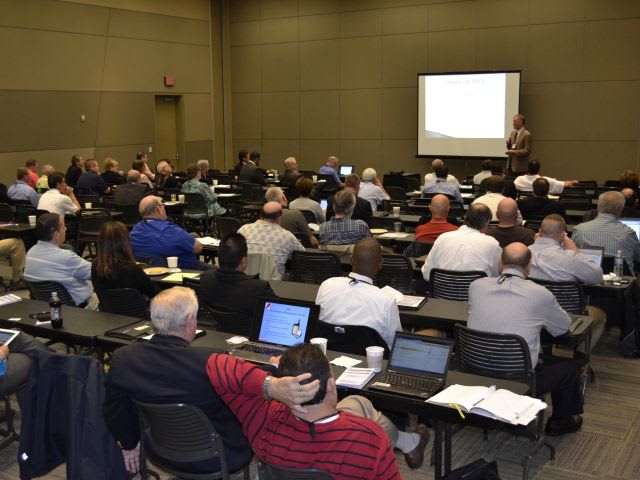
A new position paper elaborates on the state directors association's recently updated stance on lap-shoulder belts — fully supporting their installation and use in school buses.
The state directors association on Tuesday released a new position paper that elaborates on its recently updated stance on lap-shoulder belts for school buses.
At the National Association of State Directors of Pupil Transportation Services (NASDPTS) conference in Grand Rapids, Mich., in October, the association's board decided to bolster its support for the three-point restraints by dropping a funding clause from its previous position (which said that the association supported lap-shoulder belts if funding was made available for them).
“NASDPTS fully supports the installation and use of lap-shoulder belts in school buses, period, with no ifs, ands or buts,” President Max Christensen said at the conference, with the clarification that “we are not recommending the installation and use, nor are we asking that lap-shoulder belts be required. We believe this should be a local decision based on local need.”
Over the past few months, Christensen and NASDPTS Executive Director Bob Riley have been working on a new lap-shoulder belt position paper, which the association’s board recently approved.
The paper gives a detailed background on the issue, including the National Highway Traffic Safety Administration (NHTSA)’s 2008 final rule that addressed lap-shoulder belts and the National Transportation Safety Board’s recommendations in response to the 2012 school bus crash near Chesterfield, N.J.
The new NASDPTS paper also thoroughly explains the association's position on lap-shoulder belts and lays out 10 supporting points. For example, the paper points to "limits for protection" of compartmentalization alone.
“Compartmentalization offers protection in frontal and in rear crashes assuming passengers are properly seated, but offers limited protection in rollovers or side impacts,” the paper says. “Passengers restrained by lap-shoulder belts are retained in the seating compartment, thus minimizing injury caused by body impact to surroundings.“
Among NASDPTS’ other supporting points are the ability of current lap-shoulder belt systems to maintain bus capacity, NHTSA’s approved technical standards for lap-shoulder belts in school buses, and the design of lap-shoulder belts minimizing the possibility of them being used as a weapon.
To read the full position paper, click here.
More Safety

How to Build a Better School Bus Driver Training Program
Is it time to strengthen your driver training? Here’s how to pick the right talent and improve recruitment, retention, and safety. This video is brought to you by IC Bus.
Read More →
Recent School Bus Accidents Leave 2 Dead, 2 Injured
Four school bus crashes in Florida, Illinois, and Georgia highlight risks in transportation lots, at bus stops, and during student loading and unloading.
Read More →
When Every Second Matters, Clarity Keeps Routes Moving
From routine delays to urgent incidents, strong communication practices help drivers, dispatchers, schools, and families respond with confidence.
Read More →

What Happens When a School Bus Catches Fire — and What Can Help
School bus fires are rare but can be devastating. Learn how advances in fire suppression and asset protection help fleets detect fires earlier, reduce damage, and improve safety.
Read More →
Geotab Launches Tool to Help Fleets Investigate Road Incidents
Geotab Investigations combines telematics data, video, documents, and other evidence to help fleets reconstruct incidents, resolve claims, and determine what happened.
Read More →
Texas Sixth Grader Wins 2026 National School Bus Safety Poster Contest
Sai Darshana Yekolu of Moseley Middle School in Prosper, Texas, was named the newest winner for her artwork, bringing the theme of “Safe Rides, Everyday Heroes” to life.
Read More →
Doing More With Less: How Transportation Directors Can Prioritize Safety Amid Budget Uncertainty
With diesel prices soaring and nearly one-third of transportation directors expecting budget cuts, maintaining student safety has never been more challenging. Download this guide to learn how leading districts are prioritizing risk, funding critical safety technology, and building stronger budget cases with data.
Read More →
Walton County Schools Adds Gatekeeper Stop-Arm Enforcement System
The Florida district will deploy Gatekeeper’s updated Student Protector technology, which now incorporates AI to improve video evidence.
Read More →
How To Build a More Secure School Bus Yard During and After Hours
As thefts and overnight security threats continue, school transportation leaders are combining stronger operational practices with AI-enabled surveillance to better protect buses, facilities, and staff.
Read More →
FMCSA Names New Chief Safety Officer: What School Bus Operators Should Know
Steve Dowling is set to lead the federal agency's efforts to advance commercial motor vehicle safety and reduce crashes, fatalities, and injuries on the nation's roadways.
Read More →