




Guidelines for Designing a School Bus Maintenance Facility
Input from the entire staff is essential to avoid a 'dysfunctional' facility. Measure your needs carefully. If possible, consider sharing your with other public agencies.
The school bus maintenance and storage facility is a key element in an effective school transportation program. A facility that functions efficiently and meets the needs of the school bus operator requires careful planning.
The planning and design guidelines provided below are a composite of what works well in the vast majority of school district and contractor settings. However, building codes, environmental mandates and other regulatory elements can vary widely by state and locale. Likewise, each building site has unique characteristics such as topography, ingress and egress and access to utilities.
I strongly urge the reader to work closely with his/her own architects and engineers to assure full compliance and proper construction methodology. I also sug-gest involving individuals who will be using the facility -- such as mechanics, drivers, supervisors and clerks -- in the early design stages of the project. I've toured bus maintenance facilities that I would classify as "dysfunctional." Not surprisingly, when the staff was queried about the faulty design, they al-most always told me that their input was never requested.
First, look at function
A key factor in the design phase is deciding how the facility will be used. Maintenance only? Indoor parking? Supervisory offices? Dispatch? Driver train-ing? Fueling area? Paint booth? Vehicle wash? If outside parking is planned, will the entire parking area be fenced? Security systems needed? Will it be a day use-only facility? Or will a night-shift maintenance crew also be employed?
No facility should have fewer than two bays dedicated to maintenance, and each bay should measure at least 16 feet wide by 60 feet long to allow for tool stor-age and access to all sides for repairs. I suggest one maintenance bay for every 20 to 30 buses. If a second or third shift is planned, this ratio can be higher, for example, one bay for every 30 to 40 buses and so on.
Ideally, ceiling height should be at least 18 feet to allow for raising a bus on a lift. We recommend at least one lift, two if possible, to allow for flexibil-ity during lengthy repair jobs and/or inspections. The need for additional lifts can vary by state, depending on the frequency of inspections required.
Options for bus washing
If possible, the plans should include a dedicated wash bay. Several options are available for cleaning buses: automatic wash system, portable wash system, hand-washing, contract washing service or municipal and/or public vehicle wash. A clean bus looks better and lasts longer, and an automatic, drive-through wash system can be more cost effective than manual cleaning. A typical wash bay will occupy about 1,200 square feet of space. Most states now require a water recovery system as well as storm discharge and sewer access.
If a dedicated paint bay is being considered, even more regulatory compliance must be considered. There are three popular methods for painting buses -- com-pressed air, high-volume low-pressure (HVLP) air and electrostatic.
A compressed air system produces a quality finish, but the high pressure generates excess over-spray and airborne particles. An HVLP system operates with reduced air pressure, but results in a lower quality finish. An electrostatic sys-tem uses electrically charged paint particles, resulting in reduced over-spray. Each system has different facility requirements.
The sum of the parts
A parts storage room is another consideration, but quick access to parts delivery can minimize the need for an expansive inventory. Dry storage should also be provided for bulk items such as tires and pipes. It is not unusual for school districts to store bulky, lightweight items above the office areas. Storage of flammable/hazardous items requires a secured area with fire-rated partitions and doors. Limited access should be considered for security purposes, as should com-puter networking capabilities to allow for computerized inventory and scheduling.
Rooms for supervisor(s), dispatch/clerical, drivers/meetings and mechanical/electrical equipment and toilet facilities should also be included in the design; all must meet Americans with Disabilities Act (ADA) requirements.
If possible, the drivers' lounge should be kept small but functional, especially if you don't want it to become a hang-out between morning and afternoon runs. If a time clock is utilized, it should be integrated into the district's payroll system.
Parking considerations
Decide early whether to park the buses inside or outside, because it has a large effect on the size of the building(s) in which you house your department. In northern climates, a minimally heated storage area will keep snow off vehicles and significantly reduce cold-weather starting problems. Electrical hook-ups for block heaters can also be provided for vehicles parked indoors with no heat or for those parked outside.
If a fuel facility is to be included, ingress and egress to this area, as well as security considerations, should be thoroughly researched before finalizing plans. It should not interfere with normal vehicular traffic flow. Of course, compliance with federal, state and local laws and environmental regulations is required. The fuel area should paved with concrete; gasoline and diesel fuel will damage asphalt when spilled.
How big should it be?
Once facility plans are in place, the site's size requirements can be considered. The main components are the building, bus/van parking, car parking (staff and drivers), driveways, fuel site, building setbacks and future expansion.
Parking area requirements for school buses will vary depending upon the size and make-up of the fleet. A typical 40-foot bus will need a parking space 14 feet wide. To determine the size of the parking area, including drive space to get vehicles in and out of their spaces, allow 900 square feet per bus. There should also be an allowance for as many cars as there are route buses, as the drivers will be arriving while the buses are still in the lot. I suggest allowing 350 square feet per car. If possible, the bus parking lot should be fenced, as most fleet vandalism occurs during off hours.
Ballpark figures
When getting estimates for construction costs, some "round numbers" can be helpful. For each of the following estimates, it is assumed that the facility in-cludes the appropriate offices and amenities for the number of repair bays indi-cated:
2-bay facility = 3,800 square feet
3-bay facility = 5,100 square feet
4-bay facility = 6,400 square feet
5-bay facility = 8,500 square feet
For larger facilities, multiples of these "round numbers" can be applied. For example, an 8-bay facility would equal 12,800 square feet (6,400 x 2).
Meanwhile, parking space can be estimated as follows:
40 buses and 40 cars = 50,400 sq. ft.
60 buses and 60 cars = 75,600 sq. ft.
80 buses and 80 cars = 100,800 sq. ft.
100 buses and 100 cars = 126,000 sq. ft.
Remember, these are just guidelines for initial cost estimates. Final costs will be determined when actual specifications are put out for bid.
Shared usage?
In the early stages of planning, a school district should consider the involvement of other governmental agencies. Many of the elements of a transportation facility lend themselves to sharing. For example, if designed properly, the fuel depot, bus wash and paint bay can be utilized by the local police, state police, ambulance corps, fire department and most municipal vehicles. Maintenance services can also be provided to many of these entities. Such sharing of resources reduces costs and increases public support.
More Maintenance

Cummins on Smarter, Simpler Engine Innovation
Cummins discusses its first-ever gasoline engine for school buses, EPA 2027, and why bus fleets still want durable, simpler internal combustion options.
Read More →
Report: 72% of Diesel School Buses Now Use Advanced Low-Emission Engines
New data shows advanced low-emission diesel technology continues expanding across school bus fleets, even as electric bus adoption gains momentum.
Read More →
Vampire Tools' CAIMAN 7.5-Inch Multi-Purpose Screw Extractor Long-Nose Pliers with Crimper
Vampire Tools introduced the VAMPLIERS Caiman 7.5-inch multi-purpose pliers, combining screw extraction, cutting, crimping, and gripping functions into a single tool designed for fleet maintenance professionals.
Read More →
How Advanced Diagnostics Helps Bus Fleets Stay Ahead of Repairs
Chat with Noregon’s Kevin Smallhorn at ACT Expo about bus diagnostic tools, telematics integration, CNG maintenance support, and strategies to help reduce downtime and improve uptime.
Read More →
How School Bus Fleets are Getting Ahead of Breakdowns
Don’t let bus downtime wear you down. Here’s how bus operators are shifting from manual processes to AI-powered, data-driven maintenance systems for improved reliability and safety.
Read More →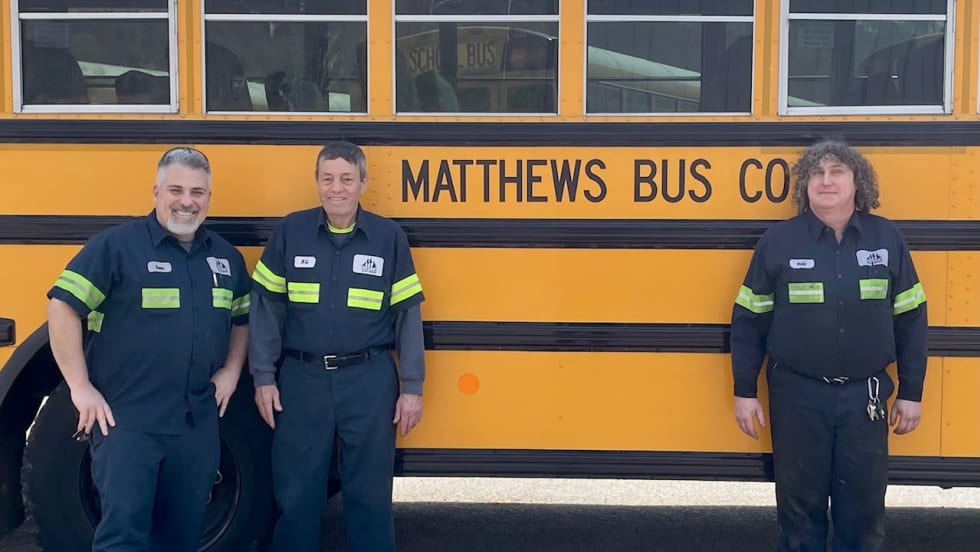
Pennsylvania School Bus Maintenance Team Praised for Dedication to Safety
Matthews Bus Company’s West Jefferson received a letter of commendation from the Pennsylvania State Police for their fleet inspections.
Read More →
2026 State of Student Transportation Report
Student transportation teams are being asked to do more with less, facing driver shortages, rising costs, and increasing safety expectations. This report uncovers how fleets are adapting, where technology is making the biggest impact, and why student ridership tracking is emerging as a top priority. Download the report to explore the key trends shaping 2026 and what they mean for your operation.
Read More →
From Chaos to Clarity: How School Districts Are Running Leaner Transportation Operations
Covering 38 routes on a Friday afternoon. Buses idling while routes overlap. Parents calling nonstop about late arrivals. Sound familiar? This whitepaper explores how district transportation leaders solved these exact problems — and what measurable results followed.
Read More →
The New Playbook for Safer, Smarter School Bus Maintenance
As school districts juggle aging buses, technician shortages and rising safety expectations, proactive fleet maintenance is becoming essential. This guide explores how telematics, predictive maintenance and real-time vehicle data can help transportation departments reduce breakdowns, extend vehicle life, improve compliance and keep students safer on the road.
Read More →
2026 School Bus Fleet Vendor Directory & Buyer's Guide
Searching for the right equipment, technology, or services for your school transportation program? This industry guide brings together manufacturers and suppliers across the entire school bus market, all in one place. Download it to find the partners who can help move your operation forward.
Read More →