



Myriad Options Characterize Type A School Bus Lines
Small buses are classified as having a conversion or body constructed on a van-type or cutaway chassis designed for carrying 10 or more students. They...

Small buses are classified as having a conversion or body constructed on a van-type or cutaway chassis designed for carrying 10 or more students. They provide many advantages to schools, childcare centers and Head Start agencies with high safety expectations and lower-capacity needs. They are much safer than non-conforming vans and substantially less expensive than higher-capacity buses. A rapidly growing market illustrates the popularity of these buses. Operators should get a basic understanding of their possible uses by checking available options, vehicle specifications and state regulatory requirements. SBF’s previous installment featuring small buses in the February 2001 issue touched on some models by Thomas Built Buses, Blue Bird Corp. and U.S. Bus Corp. In this issue, Corbeil, Girardin Minibus and Mid Bus are examined, with emphasis on a few key models from each company. Corbeil
Based in Laurentides, Quebec, with U.S. headquarters in Indianapolis, Corbeil manufactures a complete line of Type A school buses available on Ford, GMC and General Motors chassis. They are available with a wide variety of chassis options including diesel or gasoline engine, air conditioning, tilt steering, cruise control, locking differential and radio options. The GVWR of these units ranges from 9,500 to 14,050 pounds. The wheel base lengths range from 138 to 159 inches. Chassis are available with single- and dual-rear-wheel configurations. Passenger capacities range from 10 to 30. Current product developments at both General Motors and Ford are expected to allow passenger capacities to increase substantially in the near future. All Corbeil products are standard with a one-piece roof bow, heavy-duty floor structure, driver storage compartment and high gloss acrylic urethane paint on the interior and exterior. Standard with every Corbeil bus is a soft touch switch panel. The original design of the panel emphasizes driver comfort and accessibility, while limiting maintenance requirements. Marked and color-coded wiring is also standard, permitting easier tracing and servicing. Bus models are available with a wide variety of body options such as high headroom, remote electric mirrors, remote electric roof hatch, electric entrance door, LED lighting, fire block upholstery and colored flooring. Corbeil buses can be customized to buyer specifications based on several other options as well. A large percentage of units manufactured are customized for wheelchair accessibility. Common options selected by these customers are flat floor, track seating and tie down restraints combined with a front or rear wheelchair lift door manufactured by Braun or Ricon. Passenger seating for child restraint in various configuration options is available in all Corbeil models. Configuration varies depending on capacity, model, wheelbase and other options. Two of Corbeil’s more popular models are the Single Wheel (SW) School Bus and the Dual Wheel (DW) Activity School Bus. Both buses are available with three different engines - 5.7L V8 gasoline, 6.6L V8 diesel or 7.3L V8 diesel. They have automatic transmissions and are available with options such as touch-tone switch panel, front and rear wheelchair lift doors and wide entrance doors. The GVWR is 9,500 to 10,000 pounds on the SW and 10,000 to 14,050 pounds on the DW. Girardin Minibus
For 35 years, Girardin, in Drummondville, Quebec, has specialized in designing, manufacturing and marketing a wide variety of small school buses. Every school bus has a unitized steel roof bow construction acting as a safety cage, with precision-welded and coated joints for durability. Aluminum sides and roof skins, along with heavy gauge steel side impact barriers also enhance occupant safety. Girardin school buses are available on Chevrolet, GMC and Ford chassis with gasoline or diesel engines. Girardin gives customers an extensive range of options on its buses. Some of Girardin’s special features include dash-level entrance control doors, super-hard acrylic urethane paint and energy-absorbing body mounting blocks. Each bus has an isolated electrical system with automatic reset circuit breakers instead of fuses. Buses are available with additional features such as air conditioning, wheelchair options, extra-wide patented oval body, large more-view windows, fully glassed entrance door, insulated roof bows and an SXL numbered wiring harness. Girardin uses its twin assembly line manufacturing facility to produce these specialized parts. The MB-IV is a small bus that can be classified as either a Type A-1 or Type A-2 vehicle. It offers a roomy interior with 75 inches of headroom. The MB-IV is available with a Ford E-350 cutaway, Ford E-450 cutaway or Chevrolet cutaway chassis. The MB-IV also comes in a Super-Duty model, offering a larger engine and more standard options. Girardin also offers its MB-II for those operations with needs for a smaller bus. The MB-II can seat up to 20 passengers and has a headroom ranging from 66 to 74 inches. It has a gasoline or diesel front engine and offers the same features as the MB-IV. Mid Bus
Mid Bus, in Bluffton, Ohio, offers a Type A school bus line that includes 10- to 48-passenger school, activity and child care buses, a variety of ADA-compliant lift models and single-rear and dual-rear wheel models. Mid Bus units are available on Chevrolet, GMC and Ford chassis, in gasoline or diesel, with either single or dual rear wheels. The Mid Bus product line is made for the needs of childcare providers, Head Start agencies, non-conforming van replacement orders, school activites and contractor services. Mid Bus chassis options include tilt steering wheel, cruise control, California emissions, AM/FM cassette radio and air conditioning. Mid Bus offers certified activity bus seats, child restraint seats, track seating, flat floors, rear air conditioning and a variety of paint colors as optional items. Buses feature a one-seam roof construction, overhanging exterior mirrors, low side windows and a driver’s assist window. The company’s main models are the Mid Bus Single Wheel Guide (Guide SW), the Dual Wheel Guide (Guide DW), the Single Wheel Activity Bus (SW Activity) and the School Coach (SC). The Guide SW comes in 4 and 5 rows of seating with a maximum capacity of 20. It can be gasoline or diesel, with an exterior width of 83 inches, an interior width of 77 inches and 74 inches of headroom. The Guide DW is offered in 4, 5 and 6 rows with a capacity of 10 to 31 passengers. It has 74 inches of headroom and 90 inches of interior space. It can be gas or diesel, built on a GMC, Chevrolet or Ford chassis in 10,000 or 12,000 GVWR. And it meets all 50 states' specifications and FMVSS standards. Front or rear wheelchair lifts are available upon customer request. The SW Activity Bus has a capacity of 14, 16 or 20 passengers in 4 or 5 rows, available on Chevrolet, GMC or Ford chassis. The exterior width is 83 inches with an interior width of 77 inches and headroom of 74 inches. It can be gas or diesel. The SW Activity also meets all FMVSS requirements and can be built to each state's minimum school bus specifications. The SC is larger, with more headroom and greater visibility. It is mounted on an International chassis and has an outside width of 96 inches with 79 inches of interior headroom. It is available in five body sizes, seating 10 to 48 passengers.
More Management
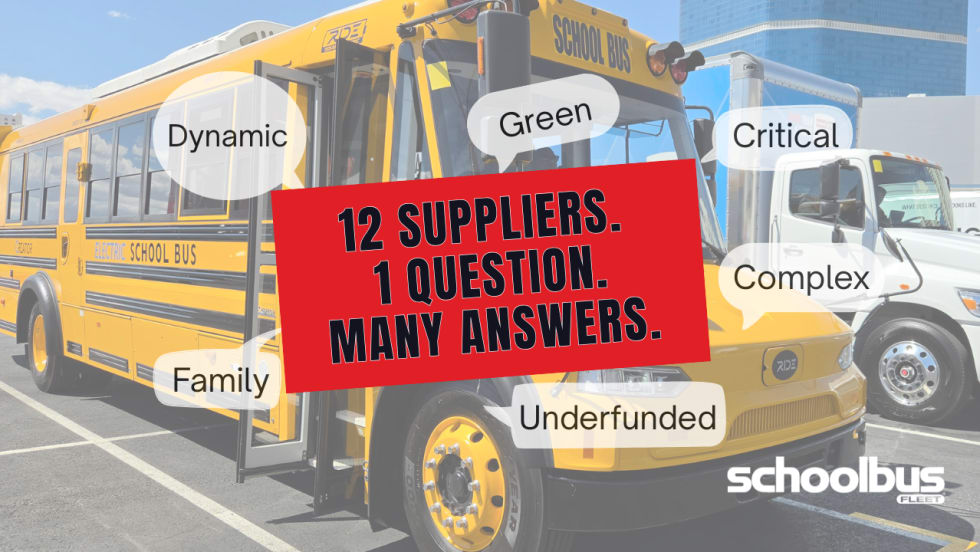
13 Industry Leaders Describe School Transportation in One Word
What word best describes the school bus industry today? We posed that question to over a dozen manufacturers, resulting in a revealing mix of perspectives on the challenges and opportunities ahead.
Read More →
Tyler Technologies Adds New AI, Transactions Leadership Roles
Two company executives are promoted to newly created C-suite positions to accelerate the company's long-term growth in both artificial intelligence and payments.
Read More →
Pro-Vision Acquires Convoy Technologies
The deal aims to broaden customer relationships and adds specialized vehicle video capabilities for commercial fleets.
Read More →


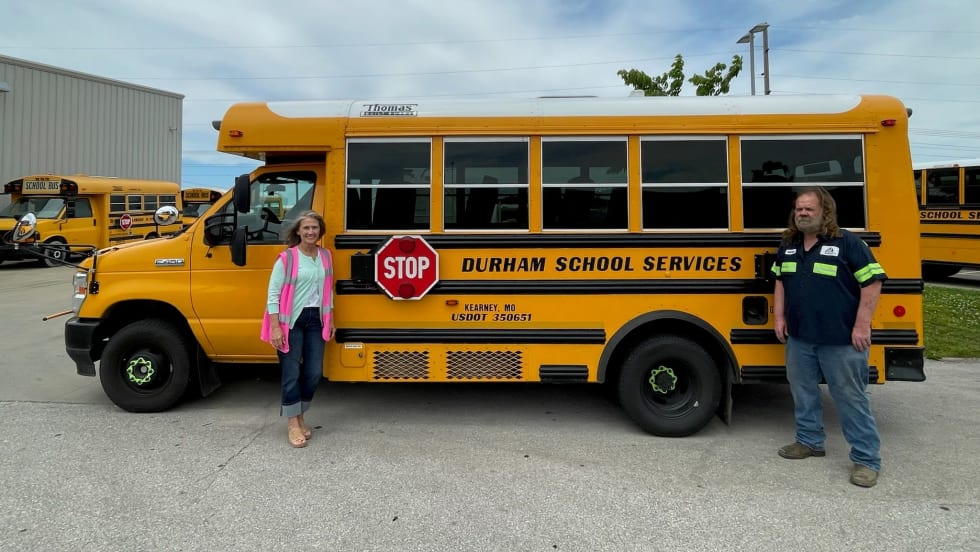
Durham School Services Maintenance Teams Earn Missouri Fleet Excellence Awards
Eight of the contractor’s school bus fleets achieved a distinction few maintenance teams earn during the state’s rigorous annual inspection program.
Read More →
How Incentives, AI, and Energy Markets Are Reshaping School Transportation
Sit down with Joe Annotti of TRC Companies to talk district grant funding, utility challenges, AI, and why school buses are evolving from transportation assets into energy assets.
Read More →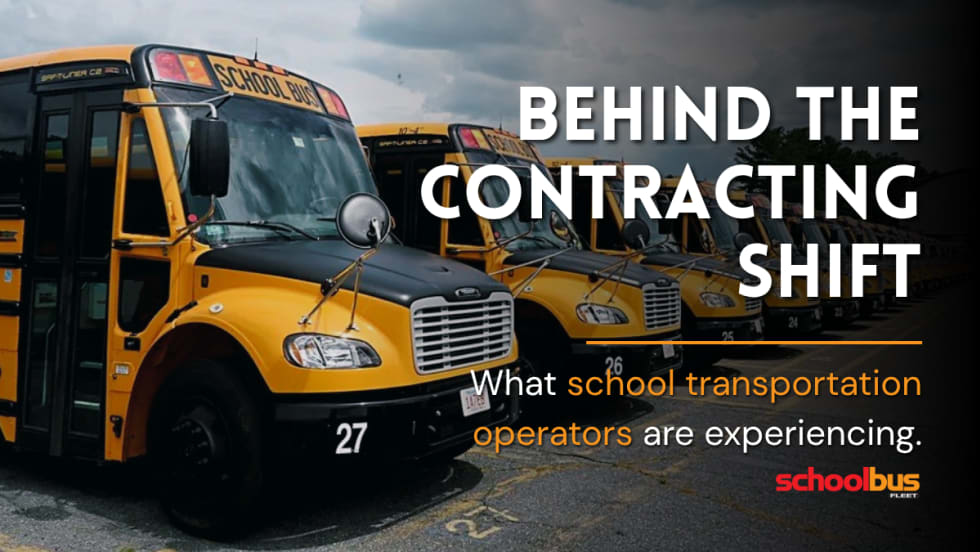
Inside the Contracting Shift: What School Transportation Operators Are Seeing Now
School transportation contractors weigh in on recent trends, costs, driver shortages, and the rise of multimodal student transportation.
Read More →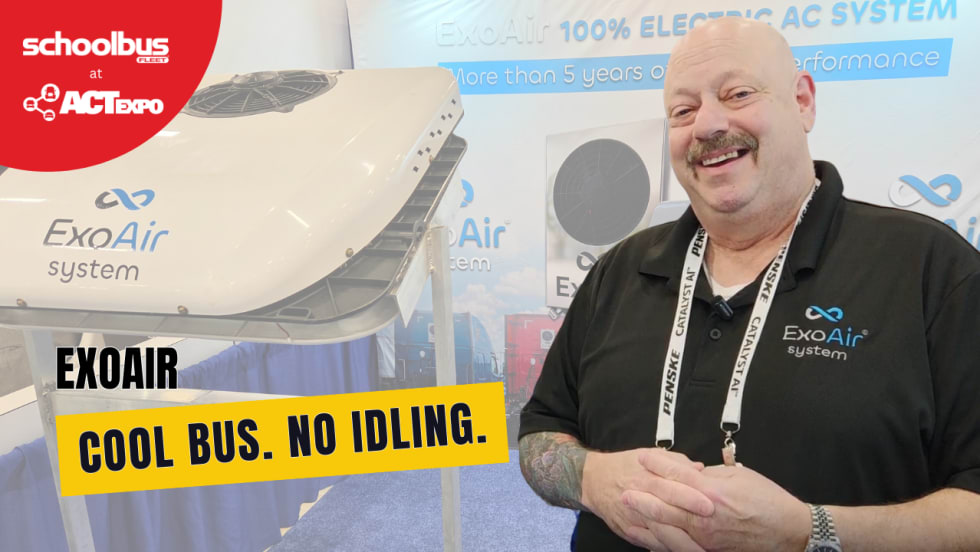
The No-Idling School Bus AC System
Take a peek at ExoAir Systems’ battery-powered cooling solution designed to run for up to 10 hours without the engine on, reducing fuel use and improving comfort for drivers and students.
Read More →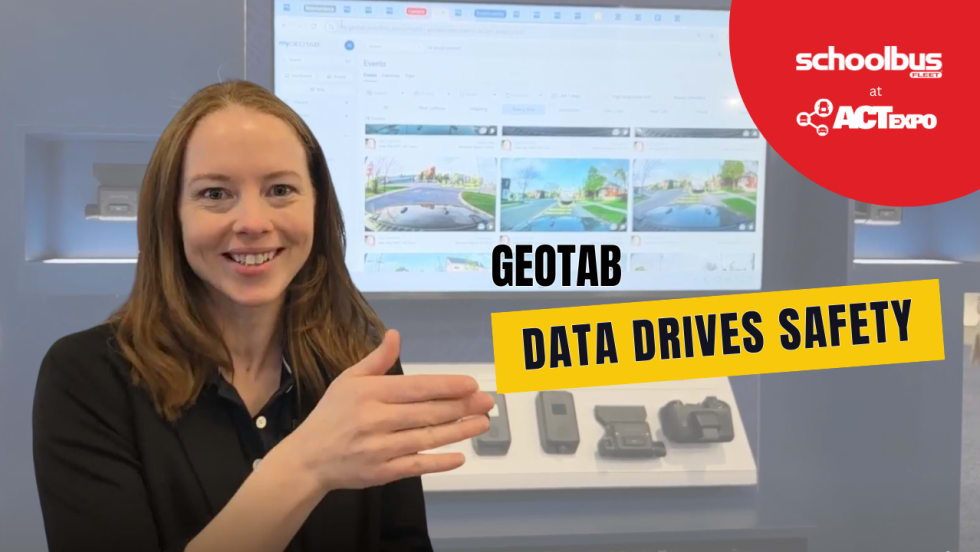
Geotab on Three Major Trends in School Transportation
School bus fleets are becoming more proactive than ever. From AI driver alerts to vehicle-to-grid opportunities, Geotab outlines the biggest technology trends transforming school bus operations.
Read More →
Gatekeeper Lands Major School Bus Deals as Revenue Surges
The video solutions provider announces contracts with Atlanta Public Schools and other fleet operators as it records quarterly revenue growth and expanding subscription business.
Read More →
Building Leaders Who Last: Creating a Successful Mentorship Program in Student Transportation
Discover five strategies for building an effective mentorship program to strengthen leadership development and support staff retention.
Read More →