




Wild Rides Across America
Where there’s a will, there’s a way. That’s the law of the land for transportation operations at some school districts across America. Regardless of t...
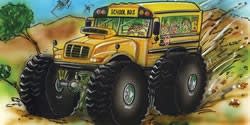
Where there’s a will, there’s a way. That’s the law of the land for transportation operations at some school districts across America. Regardless of the terrain, distance or mode of travel, transportation operations must see to it that students reach school each day, even if that means enduring long commutes, sending students across the frozen tundra on dogsleds or dodging polar bears. Here are examples.
Road warriors
Beating the heat has taken on a new meaning in Shoshone, Calif., where students often endure extended bus rides through blistering temperatures.
“The heat is a real problem,” says Jim Copeland, superintendent at Death Valley Unified School District, which covers 6,000 square miles of the eastern Mojave Desert. “A driver will open the bus doors sometime after noon, and the interior will usually hover around 120 degrees or above. The road temperatures are just as high.”
Some 78 students at Death Valley are spread throughout an area the size of Los Angeles and Orange County combined. For students and bus drivers, this equates to traveling distances of no less than 30 miles and up to 60 miles one way.
The lengthy bus rides led district administrators to pursue legislation, later signed by Gov. Arnold Schwarzenegger, that allows students to attend school four days out of the week instead of the traditional five.
“The issue came up in part because the kids are spending so much time on the bus, and it’s mostly dead time,” says Copeland.
But traveling distance isn’t the only problem that plagues Death Valley students and drivers. Flash floods also occur in North America’s driest region.
In August, two motorists died in a flood that ravaged a 20-mile stretch of highway and stranded four students.
“Flash floods have been a problem this year,” says Copeland. “State route 190 was washed out late in August, and we don’t see that it will reopen before February. We can’t run buses on that road and therefore can’t pick up kids on that route. The alternative route is two-and-a-half hours each way, if you hustle. It just won’t work.”
Death Valley buses don’t have radios, so when a bus breaks down, drivers must thumb a ride to the nearest town or anywhere else they can get assistance. About a year-and-a-half ago, a bus broke down with students aboard.
“At Furnace Creek, it gets so hot that the bus air conditioners sometimes stop working,” says Copeland. “We sometimes exceed the capability of the air conditioners and the motors just shut down.”
In the end, the four-day school week will provide relief for some at Death Valley but not enough for others. Parents worry about daycare, drivers about reduced hours and students about boredom.
The district has challenges to face in light of the legislation. A major condition of the program is that schools meet annual mandated test scores, or else they face permanent revocation of the four-day school week.
“I’ve learned that when you play statistical games with a very small sample group, anything can happen,” says Copeland. “It isn’t always reflective of what would happen with scores at a very big school.” {+PAGEBREAK+} Desert storm
At San Juan Unified School District in Blanding, Utah, the problems are different, but the result is the same. San Juan students have 12-hour school days, and four of those hours are on the bus.
The long commutes in Blanding have been attributed mostly to the distances between the schools and the homes of the children who attend them.
“It’s a real challenge to the kids who have to ride the bus on a daily basis,” says Steve Olsen, transportation director at San Juan Unified. “Some of them handle it by doing their homework on the bus while others will go to sleep.”
The school district is made up of about 8,000 square miles of southeastern Utah desert. It, along with many other school districts in states that include Kentucky, North Dakota and West Virginia, has a tradition of longer bus routes that has led some students to drop out of school.
Extreme driving
Christine Jones has driven a school bus for 17 years. Previously, she was a contractor for San Juan, but now she drives for the district. Her route begins as early as 5 a.m. and consists of traveling about 70 miles one way.
“It takes about two hours round trip, and I carry about 32 kids each day,” says Jones. She doesn’t mind the long commute. In fact, she has found several things that she enjoys about the drive. “I’m an early riser,” she says. “I enjoy the sunrise and the students are nice.”
Jones shuns any negativity associated with her long drive and empathizes more with her passengers and colleague, William Mustache, who drives a similar route but mostly on unpaved roads through the dusty, rugged desert terrain.
Mustache’s route consists of a 134-mile, round-trip voyage through a Navajo reservation and to the local middle and high school. His bus often leaves the two-lane blacktop for some of the roughest, bone-rattling terrain imaginable. “His bus rattles, squeaks and kicks up tons of dust,” says Jones, who travels mostly paved roads on her bus.
The district’s fleet of 60 buses undergoes a lot of punishment with the desert heat and the unpaved roads. Brake drums get clogged with dirt, rivets dislodge from the chassis and light bulbs will sometimes shatter.
“We’re putting a lot of extreme wear and tear on our buses,” says Olsen. “One reason the commutes take longer is because we drive some routes slower.”
Because of the rattle and hum of the bus, it’s difficult to complete homework assignments and even harder to write neatly. Sometimes discipline problems erupt, but the drivers are adept at squelching them.
“The drivers do a really good job,” says Olsen. “They deal with the roads, the parents and the students. They go above and beyond the call of duty making sure students get back and forth to school safely.”
Bush life
In Alaska, specifically the Alaskan bush, it isn’t the extreme heat or long commutes that create challenges for drivers and students; there the problem is simply how to get children to school.
Alaska is larger than Texas, California and Montana combined. But about 80 percent of the land is inaccessible to heavy, wheeled vehicles like school buses. The state is surrounded by swamp, glaciers and ice fields. There are very few accessible roads that connect to certain school districts. North Slope Borough School District encompasses an area close to 90,000 square miles, making it the largest school district in the country, but it has less than 200 miles of road. {+PAGEBREAK+} Joe Precourt, transportation manager of Vancouver (Wash.) Public Schools and former state director of transportation for the Alaska Department of Education, recalls some of the nightmares the lack of accessible roads causes when ordering new school buses. Orders must be timed for delivery toward the end of the summer months when pack ice melts. The new buses reach the coast of Alaska by barges.
“There are only one or two barges a year, and they leave out of Seattle or Anchorage,” says Precourt. “But if you miss placing your order on that barge, your district could face waiting a whole year before it can receive that bus.”
The only alternative is to have the bus delivered by a Herc, which is essentially an oversized helicopter. But shipping bus orders this way is expensive — about a third of the cost of the bus.
Air taxi waiting
Even if you have a bus in some parts of Alaska, it does you no good. In Bristol Bay, which lies at the mouth of the Naknek River, a district contracts with a private bus operation to transport about 20 students to a small airstrip, where a single-engine plane flies them across the river, which is less than a half-mile across.
“The contractor takes students across the river in three trips,” says Precourt. “Once they’re across the river, a district school bus transports them to school.”
Boats are used to transport students in the islands of southeast Alaska. The islands have approximately 1,100 miles of road, but they, too, are inaccessible. “About 90 percent of the roads are dirt logging roads,” says Precourt. “And they are virtually impassable by anything other than all-terrain vehicles or other four-wheel-drive vehicles.”
Getting around
In Alaska, some parents are reimbursed in lieu of district-provided transportation for use of privately-owned vehicles, including boats, to get their children to and from school. The families may live up river, and boats are the only way to get children to school during the spring and fall. Boats are the most common mode of transportation, but they are only the tip of the iceberg in terms of creative ways to get to school.
Snowmobiles or other vehicles that can travel over the ice and tundra are used during the winter months.
With limited road access, due especially to the frozen tundra, parents and students often resort to tundra vehicles, all-tracks, snowmobiles and even the classic dogsled for transportation.
“Families have traveled as much as 40 miles down river in these alternative vehicles,” says Precourt.
It’s easier to get around in the bush during the winter than the summer because swamps and the ground are frozen, making the terrain manageable for tundra vehicles.
Bear in mind
In Barrow, Alaska, the state reimburses districts for 100 percent of eligible costs for transporting students who live more than one-and-a-half miles from their school. If the district proclaims an area too hazardous for students to walk, the state and the district will split the cost for hazard busing. In Barrow, a major hazard happens to be bears.
“Polar bears wander through town in Barrow,” says Precourt. “In years past, they’ve been attracted to the scent of freshly butchered whales. So we’ve had to transport all the kids in town even though they’re in walking distance to the local school.”
Charles Beaudry, senior field officer at the Manitoba Education Pupil Transportation Unit in Churchill, Manitoba, reports a similar problem with polar bears.
“The polar bears come out during the winter and sometimes during the summer. They’re attracted to the garbage dumps,” says Beaudry. “Sometimes they prowl around because there’s just nothing better to do.”
More Management
13 Industry Leaders Describe School Transportation in One Word
What word best describes the school bus industry today? We posed that question to over a dozen manufacturers, resulting in a revealing mix of perspectives on the challenges and opportunities ahead.
Read More →
Tyler Technologies Adds New AI, Transactions Leadership Roles
Two company executives are promoted to newly created C-suite positions to accelerate the company's long-term growth in both artificial intelligence and payments.
Read More →
Pro-Vision Acquires Convoy Technologies
The deal aims to broaden customer relationships and adds specialized vehicle video capabilities for commercial fleets.
Read More →


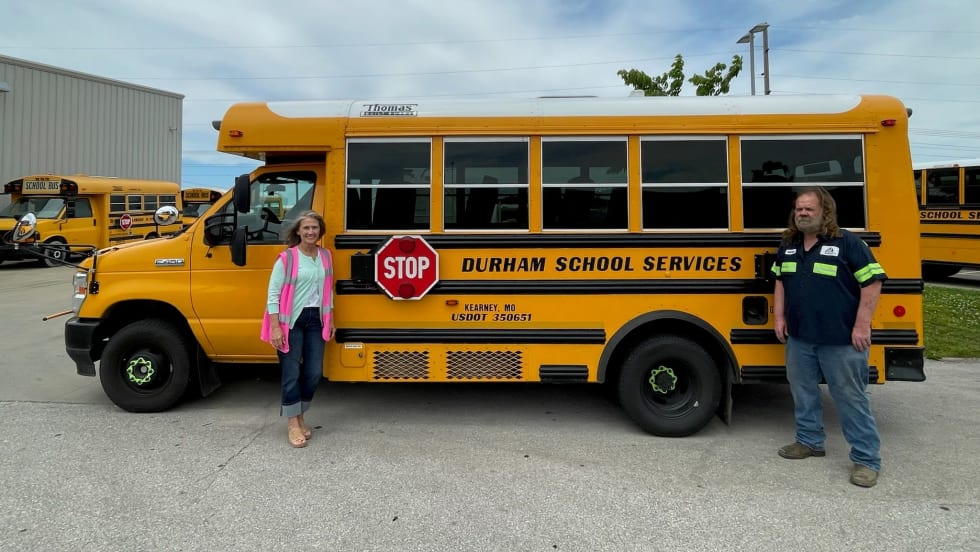
Durham School Services Maintenance Teams Earn Missouri Fleet Excellence Awards
Eight of the contractor’s school bus fleets achieved a distinction few maintenance teams earn during the state’s rigorous annual inspection program.
Read More →
How Incentives, AI, and Energy Markets Are Reshaping School Transportation
Sit down with Joe Annotti of TRC Companies to talk district grant funding, utility challenges, AI, and why school buses are evolving from transportation assets into energy assets.
Read More →
Inside the Contracting Shift: What School Transportation Operators Are Seeing Now
School transportation contractors weigh in on recent trends, costs, driver shortages, and the rise of multimodal student transportation.
Read More →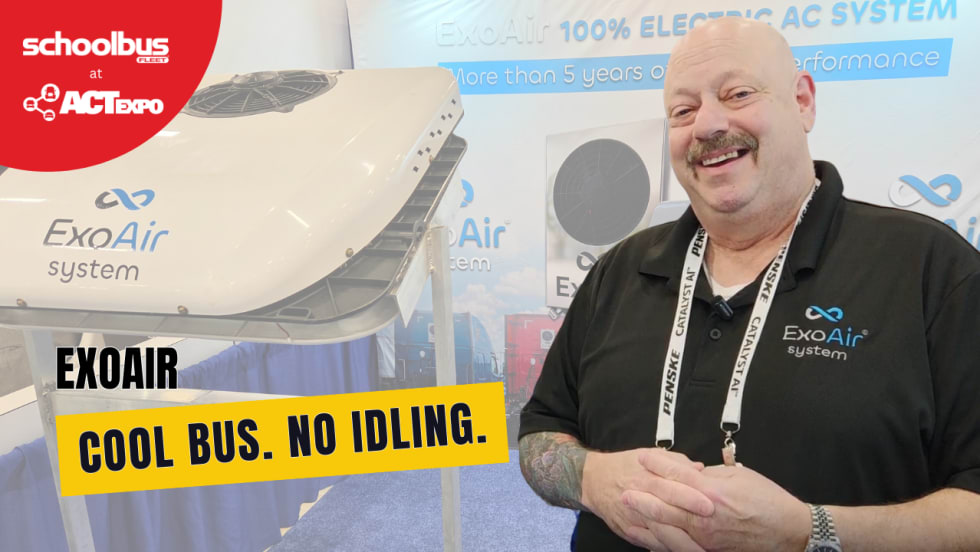
The No-Idling School Bus AC System
Take a peek at ExoAir Systems’ battery-powered cooling solution designed to run for up to 10 hours without the engine on, reducing fuel use and improving comfort for drivers and students.
Read More →
Geotab on Three Major Trends in School Transportation
School bus fleets are becoming more proactive than ever. From AI driver alerts to vehicle-to-grid opportunities, Geotab outlines the biggest technology trends transforming school bus operations.
Read More →
Gatekeeper Lands Major School Bus Deals as Revenue Surges
The video solutions provider announces contracts with Atlanta Public Schools and other fleet operators as it records quarterly revenue growth and expanding subscription business.
Read More →
Building Leaders Who Last: Creating a Successful Mentorship Program in Student Transportation
Discover five strategies for building an effective mentorship program to strengthen leadership development and support staff retention.
Read More →