




NAPT News & Views — Like fire drills, shooter drills are vital
We need to develop a proactive approach — meaning run purposefully, hide intelligently and fight fiercely, in that order (fight only as a last resort) — to an active shooter scenario and teach it to everyone, especially students. The drill should be done in conjunction with local law enforcement personnel.
I recently attended a fascinating daylong seminar about school safety and security. It was the second one I have been to since the shootings in Newtown, Conn., and Midland City, Ala.
In contrast to the first seminar — which was attended by more than 1,000 people, most affiliated with a school system — this one was invitation-only and had an audience of fewer than 100 people, mostly police, SWAT and other emergency personnel. I think I was the only non-officer in the room, and I was certainly the only school transportation guy, which made me an “educator” (more on that later).
The premise of the seminar was straightforward: In the wake of school shootings, we can either feel hopeless and vulnerable, or we can grasp that there are simple and effective procedures, training and drills that take minimal time, use minimal funds, and empower students and staff.
One of the instructors addressed the challenge presented by those who are fearful that threat assessments, lockdown drills and simulated active shooter response will frighten children. He compared that attitude with the apprehension toward fire drills that prevailed in the early 20th century.
In 1908, 172 students and three adults died in a school fire in Collinwood, Ohio; in 1923, nearly 80 people lost their lives in a school fire in Camden, S.C. It took time to get fire drill regulations in all the states; since then, there has not been a death in a public school because of a fire.
In other words, emergency preparedness should not be viewed as frightening; it is serious, objective education that helps save lives. That’s why we teach children about fires, about never getting into a car with a stranger, and about when and how to dial 911.
By the same token, while it can be interesting to learn about shooter mentality, it’s law enforcement and hostage negotiators who need that knowledge, not educators. What educators need to know is how to distance themselves and their students from a shooter. This holds true whether you are an educator in the traditional sense — like a classroom teacher — or in the more expansive view held by the forward-thinking law enforcement offices that invited me to their seminar.
They believe, as do I, that school transportation professionals are educators, every bit as important to child development as any other teacher. And they believe, as do I, that we need to enhance our emergency preparedness training for educators.
We have real-world evidence that hiding under a desk (Virginia Tech, Columbine) or dropping to the ground (Stockton) won’t automatically save someone from an active shooter. Nor will standing up to a shooter (Midland City). So what should teachers, bus drivers and students do in these dangerous situations?
I believe we need to develop a proactive approach — meaning run purposefully, hide intelligently and fight fiercely, in that order (fight only as a last resort) — to an active shooter scenario and teach it to everyone, especially students.
The drill should be done in conjunction with local law enforcement personnel. Training should take less than an hour; the drill itself should be no more than 15 minutes. The drills should be commonplace albeit sporadic, just like fire drills, so they simulate real-world parameters.
Training and procedures should also include space management in high-anxiety situations, meaning teaching people how to work with each other in tight quarters, as opposed to trampling each other. And, finally, evacuation and reunification procedures need to be included and practiced at the very least on an annual basis.
There is no rational reason for not preparing staff and students for a natural or manmade disaster, including active shooters. NAPT has been providing education on this topic since 2000, when the U.S. Secret Service talked at our conference about a study they did of 37 different school shootings.
I worry incessantly about the threat of an active shooter targeting a school bus. School buses are the safest mode of transportation. But they must also be as secure as possible.
The safety of children is our core charter in the school transportation industry. It is our duty to think about the unthinkable and to be prepared to act appropriately in these circumstances.
NAPT will continue to think this way and act accordingly. In fact, the NAPT safety and security task force meets regularly and is serving as a coordinating body for ideas on how pupil transportation can enhance its security posture. The committee, chaired by David Anderson of Colorado’s Adams 12 Five Star Schools, includes Charlie Hood of the Florida Department of Education, Denny Coughlin of School Bus Training Co., Kathy Furneaux of the Pupil Transportation Safety Institute and Gail Hyser of Wilson’s Bus Service. The committee recently did a survey of NAPT members to get a sense of the size and scope of their security concerns (see story here).
Given our ever-changing landscape, we all agree that appropriate training is critical to saving lives.
More Safety

How to Build a Better School Bus Driver Training Program
Is it time to strengthen your driver training? Here’s how to pick the right talent and improve recruitment, retention, and safety. This video is brought to you by IC Bus.
Read More →
Recent School Bus Accidents Leave 2 Dead, 2 Injured
Four school bus crashes in Florida, Illinois, and Georgia highlight risks in transportation lots, at bus stops, and during student loading and unloading.
Read More →
When Every Second Matters, Clarity Keeps Routes Moving
From routine delays to urgent incidents, strong communication practices help drivers, dispatchers, schools, and families respond with confidence.
Read More →

What Happens When a School Bus Catches Fire — and What Can Help
School bus fires are rare but can be devastating. Learn how advances in fire suppression and asset protection help fleets detect fires earlier, reduce damage, and improve safety.
Read More →
Geotab Launches Tool to Help Fleets Investigate Road Incidents
Geotab Investigations combines telematics data, video, documents, and other evidence to help fleets reconstruct incidents, resolve claims, and determine what happened.
Read More →
Texas Sixth Grader Wins 2026 National School Bus Safety Poster Contest
Sai Darshana Yekolu of Moseley Middle School in Prosper, Texas, was named the newest winner for her artwork, bringing the theme of “Safe Rides, Everyday Heroes” to life.
Read More →
Doing More With Less: How Transportation Directors Can Prioritize Safety Amid Budget Uncertainty
With diesel prices soaring and nearly one-third of transportation directors expecting budget cuts, maintaining student safety has never been more challenging. Download this guide to learn how leading districts are prioritizing risk, funding critical safety technology, and building stronger budget cases with data.
Read More →
Walton County Schools Adds Gatekeeper Stop-Arm Enforcement System
The Florida district will deploy Gatekeeper’s updated Student Protector technology, which now incorporates AI to improve video evidence.
Read More →
How To Build a More Secure School Bus Yard During and After Hours
As thefts and overnight security threats continue, school transportation leaders are combining stronger operational practices with AI-enabled surveillance to better protect buses, facilities, and staff.
Read More →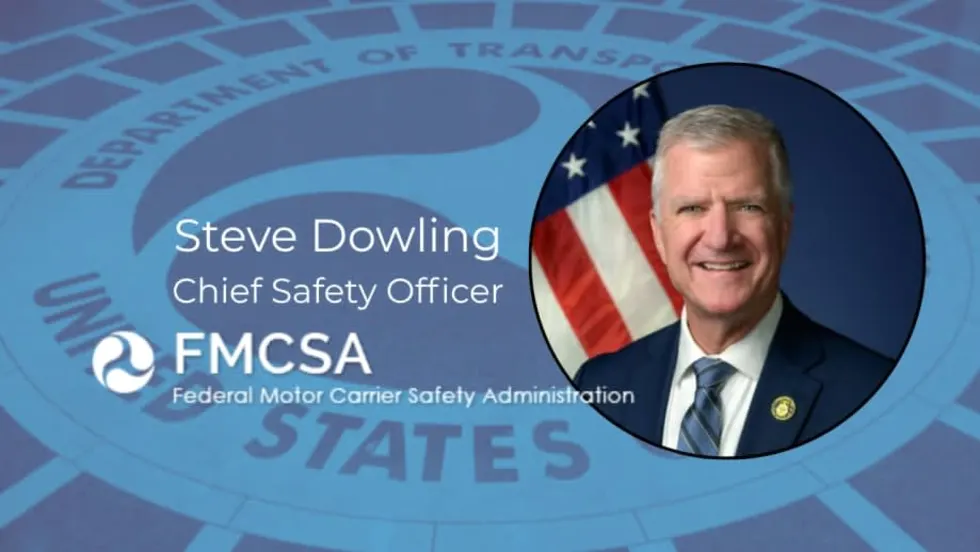
FMCSA Names New Chief Safety Officer: What School Bus Operators Should Know
Steve Dowling is set to lead the federal agency's efforts to advance commercial motor vehicle safety and reduce crashes, fatalities, and injuries on the nation's roadways.
Read More →