




NSTA Advocacy in Action — Safety Fitness Proposal Would Leave Safe Carriers Unrated
The NSTA believes the Federal Motor Carrier Safety Administration's proposal would offer very limited guidance on the safety record of some carriers and cause confusion.
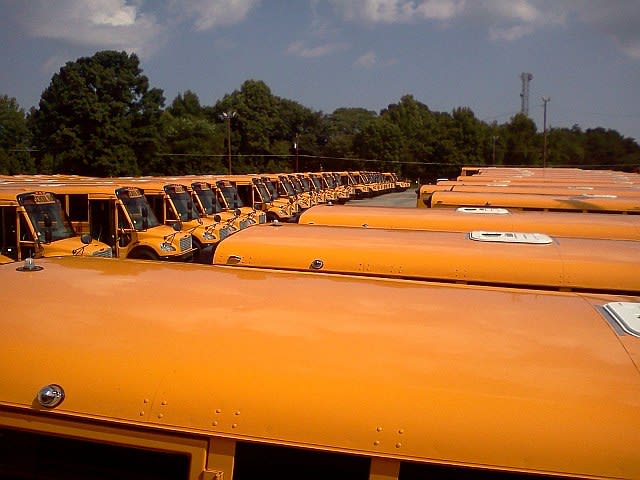
The NSTA has several concerns over a notice of proposed rulemaking on safety fitness determination from the Federal Motor Carrier Safety Administration. Photo by Derek Graham
The NSTA has several concerns over a notice of proposed rulemaking on safety fitness determination from the Federal Motor Carrier Safety Administration. Photo by Derek Graham
The Federal Motor Carrier Safety Administration (FMCSA) released a notice of proposed rulemaking (NPRM) on safety fitness determination earlier this year. The National School Transportation Association’s (NSTA’s) Advocacy in Action column last month provided the issue’s history. An explanation of why NSTA opposes the proposal follows.
NSTA has several concerns with FMCSA’s safety fitness determination proposal: the proposed change in the rating system; the proposed change in methodology to determine an unfit carrier; and the disregard for the congressionally directed procedures for undertaking a significant rulemaking.
The current safety fitness rating system ranks a carrier as “satisfactory,” “conditional,” or “unsatisfactory” based on a comprehensive safety compliance review. This system aligns well with the safety culture within the school transportation industry as well as the safety culture that is expected by the public and the enforcement community. By viewing these ratings, there is no doubt as to the status of the carrier.
However, we recognize that many carriers are unrated under this system. FMCSA’s safety fitness determination proposal would radically modify the safety fitness rating system, and the new methodology would be based on on-road safety data in relation to five of the agency’s seven behavior analysis and safety improvement categories (BASICs), an investigation, or a combination of on-road safety data and investigation information.
Rather than recognize a safe carrier as being safe, FMCSA’s proposal would simply leave a safe carrier unrated, offering very limited guidance on the safety record of the carrier and causing potential confusion among carriers, law enforcement, and the public.
NSTA has grave concerns about the method proposed in this rulemaking. The proposed new system would remove all existing ratings and create only one rating, “unfit.” Rather than recognize a safe carrier as being safe, FMCSA’s proposal would simply leave a safe carrier unrated, offering very limited guidance on the safety record of the carrier and causing potential confusion among carriers, law enforcement, and the public.
This rating change, which lacks common sense, is culturally flawed as it seeks only to recognize carriers that do not adhere to the regulations while failing to positively acknowledge those that invest time, resources, and personnel into being in compliance and operating safely.
The FAST (Fixing America’s Surface Transportation) Act directed a National Academy of Sciences study and contained several provisions addressing regulatory reform at FMCSA. This section specifically advised that if a proposed rule is going to lead to a major rule, FMCSA must first begin with an advance notice of proposed rulemaking (ANPRM) or a negotiated rulemaking.

Ronna Weber is executive director of the National School Transportation Association (NSTA).
In this case, FMCSA utilized a waiver requirement in the law that permits the agency to waive the requirement if it deems an ANPRM impracticable, unnecessary, or contrary to the public interest. The safety fitness determination proposal is a very significant proposal that would fundamentally alter the rating system used to determine the safety of a commercial motor vehicle carrier and alter the paradigm in which the new rating occurs.
By sidestepping the ANPRM stage or deciding not to form a negotiated rulemaking committee, FMCSA is choosing to begin the discussion with its own proposal, rather than seeking input from the very motor carriers the proposal would affect.
Many motor carriers have offered criticism of the CSA (Compliance, Safety, Accountability) system and its safety measurement scores, agreeing with the school transportation industry that it is based on flawed data. For FMCSA to ignore that criticism and continue to push forward — while also offering a proposal without first seeking input from its affected audience — is misguided.
FMCSA has on two recent instances chosen to utilize the ANPRM (in the case of obstructive sleep apnea) and the negotiated rulemaking (for entry-level driver training) processes, and NSTA sees no reason why the agency could not proceed with either of those methods on the safety fitness determination rulemaking because it will have such a significant impact on all regulated commercial motor vehicle operators, including the school transportation industry.
NSTA opposes this proposal. FMCSA needs to address the issues that have been identified in the CSA program before trying to move forward on any proposal that would utilize the same data and information.
More Safety

How to Build a Better School Bus Driver Training Program
Is it time to strengthen your driver training? Here’s how to pick the right talent and improve recruitment, retention, and safety. This video is brought to you by IC Bus.
Read More →
Recent School Bus Accidents Leave 2 Dead, 2 Injured
Four school bus crashes in Florida, Illinois, and Georgia highlight risks in transportation lots, at bus stops, and during student loading and unloading.
Read More →
When Every Second Matters, Clarity Keeps Routes Moving
From routine delays to urgent incidents, strong communication practices help drivers, dispatchers, schools, and families respond with confidence.
Read More →

What Happens When a School Bus Catches Fire — and What Can Help
School bus fires are rare but can be devastating. Learn how advances in fire suppression and asset protection help fleets detect fires earlier, reduce damage, and improve safety.
Read More →
Geotab Launches Tool to Help Fleets Investigate Road Incidents
Geotab Investigations combines telematics data, video, documents, and other evidence to help fleets reconstruct incidents, resolve claims, and determine what happened.
Read More →
Texas Sixth Grader Wins 2026 National School Bus Safety Poster Contest
Sai Darshana Yekolu of Moseley Middle School in Prosper, Texas, was named the newest winner for her artwork, bringing the theme of “Safe Rides, Everyday Heroes” to life.
Read More →
Doing More With Less: How Transportation Directors Can Prioritize Safety Amid Budget Uncertainty
With diesel prices soaring and nearly one-third of transportation directors expecting budget cuts, maintaining student safety has never been more challenging. Download this guide to learn how leading districts are prioritizing risk, funding critical safety technology, and building stronger budget cases with data.
Read More →
Walton County Schools Adds Gatekeeper Stop-Arm Enforcement System
The Florida district will deploy Gatekeeper’s updated Student Protector technology, which now incorporates AI to improve video evidence.
Read More →
How To Build a More Secure School Bus Yard During and After Hours
As thefts and overnight security threats continue, school transportation leaders are combining stronger operational practices with AI-enabled surveillance to better protect buses, facilities, and staff.
Read More →
FMCSA Names New Chief Safety Officer: What School Bus Operators Should Know
Steve Dowling is set to lead the federal agency's efforts to advance commercial motor vehicle safety and reduce crashes, fatalities, and injuries on the nation's roadways.
Read More →