




Todd Watkins on Effective Recruiting, Management Strategies
The director of transportation for Montgomery County (Md.) Public Schools talks driver recruitment, stop-arm cameras, seat belts, and the workings of a large district operation.

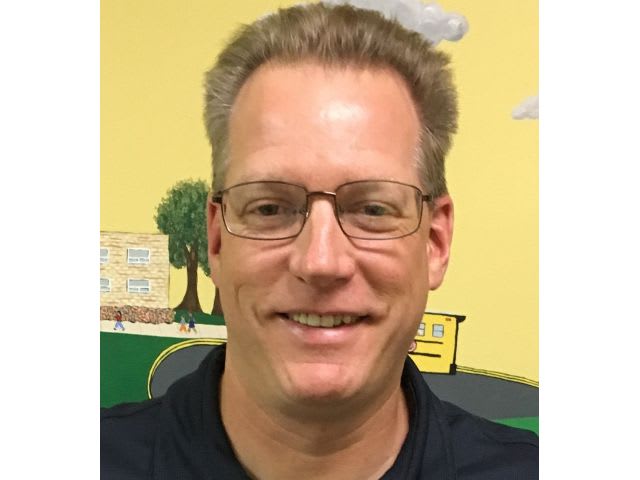
Todd Watkins of Montgomery County (Md.) Public Schools says that an efficient hiring process and paid training have helped his department keep up with driver recruitment.

Todd Watkins of Montgomery County (Md.) Public Schools says that an efficient hiring process and paid training have helped his department keep up with driver recruitment.
Our discussion this month covers driver recruitment, stop-arm cameras, seat belts, and the workings of a large district operation with Todd Watkins, director of transportation for Montgomery County Public Schools (MCPS) in Rockville, Maryland. The district runs about 1,200 yellow buses, transporting more than 100,000 students daily.
1. Driver shortage has been a top challenge for many operations. Is it having an impact on MCPS?
Except for temporary shortages caused by the difficulty in hiring the correct number of bus operators at the right times to keep up with the continuing need caused by turnover, MCPS has not been impacted by shortages.
2. What have been some of the most effective recruiting strategies?
For the past 12 years or so, MCPS has been very successful at remaining fully, or close to fully, staffed. Here are some of the factors that helped:
• We get plenty of applicants on our online hiring site.
• We have deliberately lowered our English proficiency standards from completely conversational to functional/safe. We offer English classes in the midday for those who need or would like to improve their English proficiency.
• The HR/hiring function is now in the department of transportation.
• We have paid training for the entire process, from getting a learner’s permit to completing bus operator training.
• When someone comes in to apply, we talk to them right away. If we think they are a good candidate, we put them to work training the very next day ... while we concurrently put them through all the hoops involved in becoming a bus operator. This keeps us from losing the good, responsible candidates who can’t wait around to see if they get the job while they are not making any money.
• Being able to offer full county benefits to folks as soon as they become permanent, which generally takes about a year, helps tremendously.
• We are a huge entry point into MCPS. We help folks come in as bus operators and then move wherever they want to move within the system. While this adds to turnover, it is good turnover in my opinion. I am very proud when I walk around our school system and see folks who started in transportation. ... We have become known for helping folks build a career in the school system.
3. Tell us about your stop-arm camera program.
We have cameras provided by Bus Patrol (who recently changed their name from Force Multiplier Solutions). They have loaded the system on 217 of our buses since October of 2016. Since that time, approximately 16,000 citations have been issued. Our contract calls for equipping all 1,300 of our buses within three years. I am very hopeful that impacting the wallet of violators will bring about behavior change.
4. You were recently interviewed about school bus seat belts for PBS NewsHour. What did you think of the piece?
I was pleased with the PBS coverage. I think they did an excellent job presenting a balanced view of a topic on which committed, professional, safety-oriented school bus professionals disagree. I was a bit concerned [beforehand] about being portrayed as anti-student-safety since I do not currently believe that seat belts are needed or are a good investment. They didn’t do that to me. They also did a good job clearing up the confusion around the term seat belts, pointing out that the real debate is about three-point, lap-shoulder belts, and should not be confused with the lap-only belts of the past.
5. What’s it like to oversee such a large school bus operation?
I love my job. I find it very fulfilling and exciting. ... The people that work in our department, and in the school transportation field in general, [are] wonderful folks. They are committed to the safety and well-being of our students. I love that there is always something new to figure out and deal with.
I get asked all the time how I am able to run such a large operation. ... I have two related answers:
• I have lots of help from a bunch of dedicated, highly skilled professionals.
• I don’t have the hard job compared to the director of a small department. They have every issue to deal with that I have, albeit each on a smaller scale. I have the direct help of an assistant director, an operations manager, a fleet maintenance manager, an IT manager, a safety/training manager, an HR manager, and a routing manager. In those smaller systems, the director has to be an expert in all of these areas. I have to know some about each area, but I have expert help in each. My hat goes off to the guy or gal who has only a secretary, a dispatcher, and a part-time trainer, and who may also be in charge of facilities or athletics! They have the hard job.
And, as a Christian, I find my department, with our 2,200 employees, to be a big mission field — a place to share the love of Jesus, which is my real life’s work.
More Management

How to Build a Better Driver Training Program
Ready to boost up your school bus instructor training? Here’s how to pick the right talent and improve recruitment, retention, and safety.
Read More →
CALSTART and Forth Combine to Form Catalyst Mobility
The new name represents a renewed vision for the nonprofit focused on advancing clean, equitable, and affordable transportation solutions that move people and goods.
Read More →
What Makes a Great School Bus Driver Trainer?
Choosing the right school bus driver trainer takes more than experience. Learn six keys to selecting and developing trainers and evaluating program effectiveness.
Read More →

School Bus Contractors Expand Through New Deals, Acquisitions & Partnerships
STA's Canadian division acquires Ontario-based G&L Stevenson Transport; Durham School Services adds a new district in California; First Student expands in New Jersey; and Minnesota Coaches rebrands and acquires Halo Transportation.
Read More →
Logan Bus Company Rolls Out AI Phone System for NYC School Bus Families
A summer pilot found that AI agents could handle most routine calls, freeing up time for customer service staff to focus on emergencies and complex family concerns.
Read More →
From Intent to Impact: What I Learned About Leadership from TAPT
A Texas transportation supervisor shares lessons on self-awareness, accountability, managing stress and building trust — and why investing in leadership development matters at every stage of your career.
Read More →
NAPT Names 2026 Award Recipients, Hall of Fame Inductee
Who earned national recognition for their work in student transportation? This year, NAPT named five recipients of its 2026 awards for service, safety, and leadership, plus its newest Hall of Famer.
Read More →
2026 State of Student Transportation Report
Driver shortages. Rising costs. Growing safety expectations. More data, but not enough time to act on it. The 2026 State of Student Transportation Report reveals what transportation leaders say is putting the most pressure on their operations—and where they’re investing next. See how your priorities compare.
Read More →
How to De-Escalate an Angry Person: 5 Steps for Handling Workplace Conflict
What makes emotions run high, and how should you handle an angry colleague or parent? Follow these steps for staying calm, listening, showing empathy, and resolving conflict.
Read More →
What Readiness Looks Like This School Year
Learn about the challenges shaping the 2026–2027 school year, from persistent driver shortages and budget pressure to technology and readiness gaps. See how school districts are responding and adapting in Zonar’s 2026 Back-to-School Readiness Report.
Read More →