




How Ed Bobit impacted pupil transportation
Beyond his contributions in trade magazine publishing, what you may not know about Ed Bobit is the crucial role he played in the survival of the National Association for Pupil Transportation in its early years. As Mike Martin puts it, "There would be no NAPT without Ed Bobit. Period."
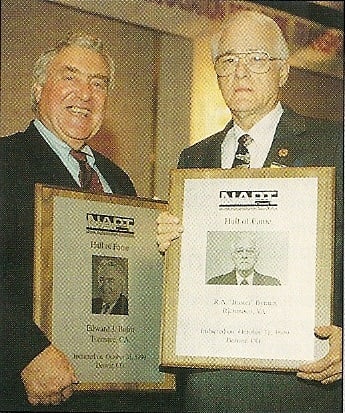
Bobit Business Media founder Ed Bobit (left) was inducted into the National Association for Pupil Transportation Hall of Fame in 1999. Also inducted that year was Buster Bynum, former pupil transportation director in Virginia.
Although you may not have known him personally, Ed Bobit likely had an impact on your pupil transportation career in some way.
Ed, who was the founder and chairman of Bobit Business Media, passed away on Sunday at age 86.
Certainly his most well-known contribution to the school bus industry is the trade publication you're reading right now, SCHOOL BUS FLEET, but his efforts went beyond the printed page.
SBF history
Ed started his company, initially called Bobit Publishing, with an idea: There should be a magazine for vehicle fleet managers at big companies. When his bosses at publishing giant McGraw-Hill turned down his pitch, Ed decided to strike out on his own, launching Automotive Fleet in 1961.
A few years later, Ed bought a publication called School Bus Transportation. The magazine had debuted under another name, School Bus Trends, in 1956. On the cover of the first issue was the Miss America at the time, Sharon Kay Ritchie, perched on a 1956 Wayne Superamic school bus.
After Ed acquired the magazine, he relaunched it in 1965 as SCHOOL BUS FLEET with a new look and vision. In the decades since then, the Bobit company has been distributing SBF to tens of thousands of pupil transportation managers to keep them informed and to help them succeed in their critical mission of safely transporting students.
Supporting NAPT
Beyond his pioneering in trade magazine publishing, what you may not know about Ed is the vital role he played in the National Association for Pupil Transportation (NAPT).
In fact, Ed was a crucial figure in the survival of NAPT in its early years. In 1977, his financial assistance allowed the association to hold its third annual conference.
That same year, Ed was named executive director of NAPT. In 1999, he was inducted into the NAPT Hall of Fame for his contributions to the industry.
Mike Martin, the longtime executive director of NAPT, emphasizes Ed's importance in the association's history and in the school bus industry in general.
"There would be no NAPT without Ed Bobit. Period," Martin says. "There are thousands of people in our organization and in our industry that owe him an eternal debt of gratitude, including and especially me."
Greatly grateful
Personally and professionally, I'm also greatly indebted to Ed — or, as many called him, "Coach." I’ve had the privilege of being a part of the Bobit Business Media family for the past 33 years.
Thanks to the opportunities that Ed provided for me (and countless other Bobit staff members over the years), I've had a long, rewarding career in both the publishing business and the bus industry.
Ed's influence reached across multiple industries and touched innumerable transportation professionals, vehicle manufacturers, magazine editors, publishers and many more. He will be greatly missed by all of them, especially me.
More Blog Posts

'I’m a School Bus Driver, You Can Trust Me'
A crowded Cleveland parking lot, a full-size pickup, and five unexpected words turned a stressful moment into a reminder of just how much trust we place in school bus drivers every day.
Read More →
The Sound of Summer Starting [Guest Editorial]
That unmistakable school bus rumble? It carries childhood memories, community routines, and a whole lot of unseen work behind the scenes.
Read More →
The Technology Power Combo That Enables EV Charging on Difficult Sites
As the pace of fleet electrification increases and charging infrastructure continues to pose challenges, many fleets find themselves puzzling over the question: how do I install charging infrastructure faster and more cost-efficiently?
Read More →
Trip Sheet: Farewell, Faithful Readers – Keep on Rolling
Executive Editor Wes Platt offers parting thoughts as he parks the School Bus Fleet bus to focus on ultra-local community journalism, making way for someone else to take the wheel as the pupil transportation industry continues to evolve.
Read More →
Trip Sheet: School Transportation Pros Can Champion Children's Mental Health
Children's Mental Health Awareness Day underscores the significance of school bus drivers in fostering supportive environments during students' journeys. SAMHSA's initiatives, including stigma reduction and access to resources, complement the Biden-Harris administration's funding efforts to enhance youth mental health services and workforce development.
Read More →
Trip Sheet: Is It Time for Daylight Saving Time to Clock Out?
How do you think the potential shift to permanent Daylight Saving Time or standard time would impact our daily lives and routines, especially considering the divided approach across various states?
Read More →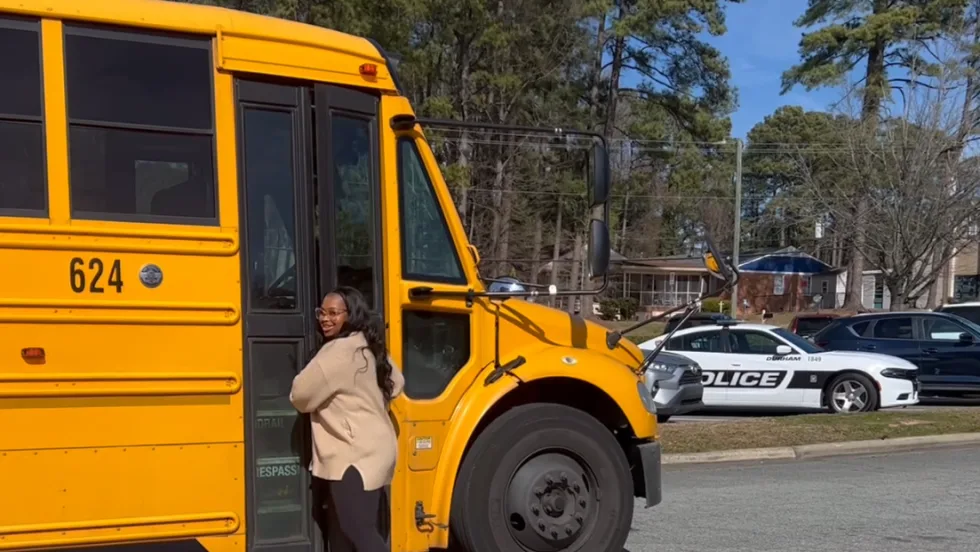
Trip Sheet: Meeting a Hero in My Own Back Yard
I remain impressed by the matter-of-fact heroism that’s often demonstrated by school bus drivers like Deona Washington who are caught in these situations where the best of us might lose our cool and panic. But, then again, bus drivers are a unique breed.
Read More →
Trip Sheet: 3 Takeaways from the EPA Clean School Bus Grant Program
Most applicants sought grant funding to acquire electric school buses, with propane coming in a distant second. No one indicated plans to purchase compressed natural gas (CNG) buses in this round. That’s not terribly surprising, I suppose, given how few school districts listed the inclusion of CNG buses in their fleets for our 2023 top district fleets survey.
Read More →
Trip Sheet: Let's Get Rolling: What's Coming in 2024?
Calendar pages keep flipping toward the mandates set in states like New York and California to transition their school bus fleets from diesel to zero-emission, but there’s plenty of reluctance and pushback.
Read More →
California School Children Ride in Green School Buses
Today, California prides itself on utilizing the most zero-emission (ZE) school buses in the country with over 1,689 being used by California school districts; and while the state is on a positive health trajectory thanks to a decree to eliminate gas and diesel vehicles, more work needs to be done to improve children’s well-being.
Read More →