


 MENU
MENU SEARCHMENUSEARCH
Loading data...

The Oak Ridge Board of Education is bringing back school bus service to about 1,300 of 1,800 students who had been affected by an expanded “parent responsibility zone,” following protests from parents and grandparents. The zone was expanded to 1.5 miles in June in an effort to reduce a $1.25 million budget deficit.
Read More →

In March, Etiwanda School District launched a "shared cost model" pilot transportation program for students who live at least 3 miles from school. District officials say that the program "did not generate the interest nor the revenue that was expected," and the board decides to discontinue it after the last day of school.
Read More →School boards would be required to provide free transportation for students who live 2 miles or more from their assigned school, up from one and a half miles, under House Bill 5967. In a letter to a local newspaper, Illinois School Transportation Association President Patrick Johnson writes that the legislation would put “thousands of school children at risk, increase traffic congestion and harm the environment.”
Read More →The board at Minnesota’s South Washington County Schools approves a plan to adjust bell times from four to three tiers, which will go into effect for the 2014-15 school year. However, the board decides against shortening walking distances to the levels at which they had been up until last school year.
Read More →In an effort to prevent late buses and enhance transportation service, Minnesota’s South Washington County Schools is proposing to change from a four-tier bell time schedule to three tiers. Another change under consideration would be to reduce walking distances from 1.5 miles to 1 mile for middle school students and from 2 to 1.5 miles for high school students.
Read More →After a 9-year-old girl was fatally struck by a pickup truck while walking home in December, parents petitioned the Etiwanda (Calif.) School District to bring back school bus service. The school board decides to implement a pilot transportation program for students who live at least 3 miles from school.
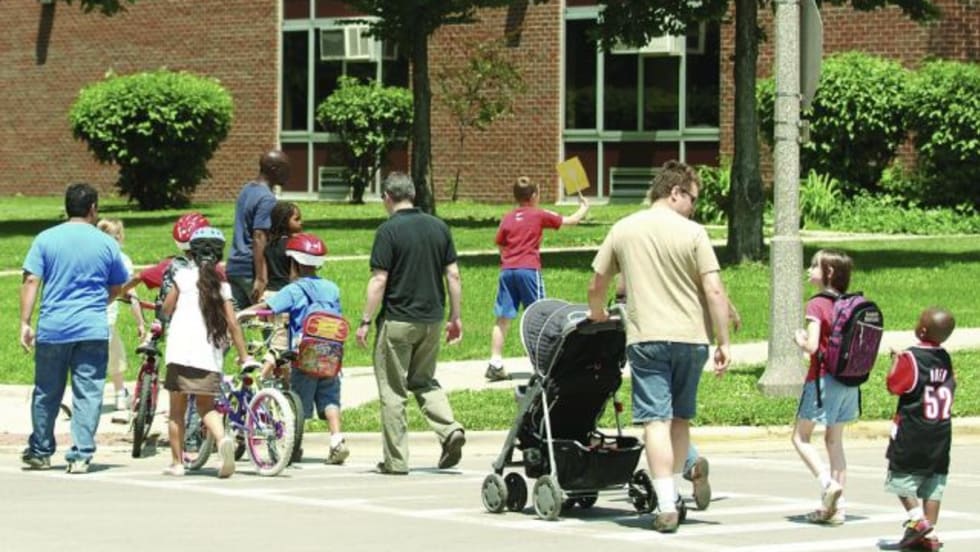
Read More →While walking school buses may make sense in some cases, parents should be informed that the traditional yellow school bus remains the safest way for children to get to school, NAPT Executive Director Mike Martin says. The walking bus concept has made headlines recently with a high-profile nod from first lady Michelle Obama.
Read More →Three years ago, the Anoka-Hennepin School District increased walking distances from homes to bus stops for all grade levels, which has enabled the district to reduce the number of buses it uses by 10 and to achieve a $500,000 annual savings. Transportation Director Keith Paulson discusses these and other efforts to increase efficiency.
Read More →The school district collaborated with its 19 transportation providers to come up with the new agreement, which freezes a rate increase, among other changes. Director of Pupil Transportation Ted Vasser tells SBF about how the deal was worked out.
Read More →