


 MENU
 SEARCHMENUSEARCH
Loading data...

Pupil transportation officials share tips on bus stop safety, pre-trip inspections, emergency communications and more in this sequel to the August issue feature.
Read More →




The number of children carrying trauma is likely more prevalent than you realize. A safe, predictable school commute can help students impacted by trauma thrive, exhibiting improved student behavior and attendance. Learn how trauma-informed principles can transform your school transportation operation.
Read More →It is essential that the motorists who share the road with bus drivers stop for stopped school buses. However, it is encouraging to see how technology is evolving to help provide an even safer ride for all students.
Read More →The agency outlines what it calls the “life-saving benefits” of collision avoidance systems and recommends that they become standard on all new passenger and commercial vehicles.
Read More →Reflecting on recent tragic school bus accidents, accident prevention in pupil transportation is imperative. Here, learn common driver errors, the need for focused training, practical tips to enhance safety measures, and how to address minor incidents before they escalate into serious accidents.
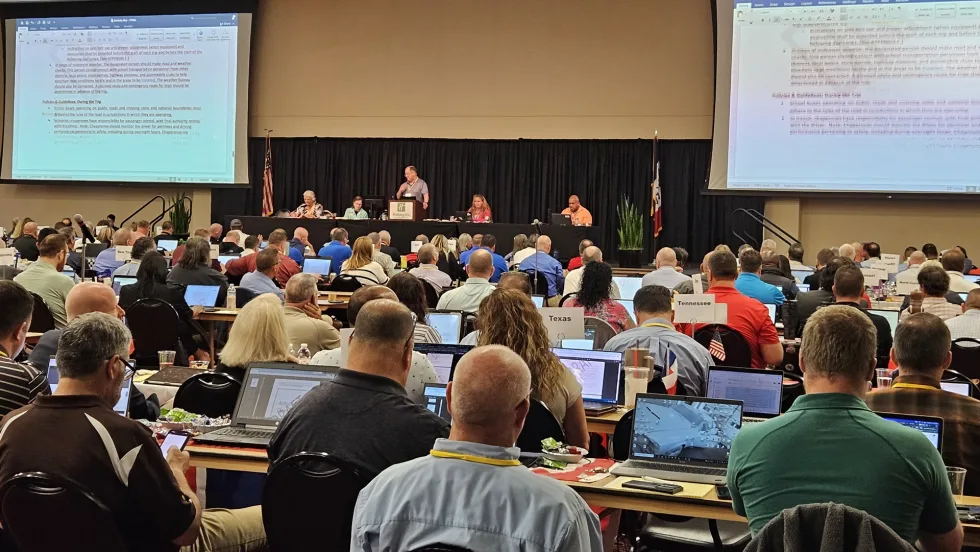
Read More →Three new sections, spirited debates on school bus specs and alternative transportation guidelines, NCST was far from boring. In fact, this year’s congress wrapped early, even after a 10-year hiatus. Delegates from 48 states worked through these new industry recommendations.
Read More →Let’s seize the opportunity to improve training for students and drivers and help them understand the entire process of crossing safety, including what to do if the danger signal is sounded.
Read More →More than 750 drivers, monitors and other employees at All-Star Transportation don blue T-shirts calling for students to “Be Nice on My Bus!” The move is part of the fourth annual Blue Shirt Day, the World Day of Bullying Prevention.
Read More →Too many children have died because motorists have decided that the flashing red lights and extended stop arm of a school bus are merely a suggestion.
Read More →To ensure students’ safety, transportation managers must implement a procedure for this effort that includes scheduled onsite reviews and a means to efficiently communicate the hazards to staff. School bus drivers, local and state police, and local emergency operations centers should be involved.
Read More →