





More: Survey: Electric School Buses Can Help Students' Mental Health
WRI: Electric School Buses Bring $1.6B Health & Climate Benefits
New research shows that using electric school buses instead of diesel could offer substantial benefits across every state in the contiguous U.S. each year. Here's a breakdown.
August 27, 2025

Approximately 90% of the half a million school buses operating in the U.S. currently run on diesel.
Photo: Highland Electric/School Bus Fleet
5 min to read
New research from WRI’s Electric School Bus Initiative and Carleton University shows that the U.S. would see an estimated $1.6 billion in societal benefits every year by using electric school buses.
This estimate accounts for the societal cost of using diesel-burning school buses compared to electric, measured by two key metrics: health impacts and climate effects. Comparing these costs at the local level provides annual societal benefit figures in dollar terms for every county in the contiguous United States.
According to WRI's research, people in every state analyzed would experience positive benefits from using electric school buses. Those benefits would be most pronounced in counties operating the oldest diesel-burning school buses, often in communities with higher proportions of people of color, and in counties with larger populations.

The health and climate benefits are nationwide, with99.7% of counties in the contiguous U.S. coming out ahead, according to WRI's study.
Source: WRI Electric School Bus Initiative
How the Benefits Were Calculated
The research focused only on PM2.5-related premature mortality as the primary health endpoint given the metric’s well-established use in pollution-health impact research. Diesel school buses also emit large amounts of NOx, which contributes to ozone formation and nitrogen dioxide (NO2) exposure — both linked to asthma, morbidity, and additional premature deaths.
Diesel exhaust contains pollutants such as fine particulate matter (PM2.5), nitrogen oxides (NOx), and volatile organic compounds (VOCs). These pollutants can cause respiratory illness, cognitive impairment, and cancer, the World Health Organization recognized.
Older diesel-burning school buses don’t have modern emissions controls, so they emit even higher levels of pollutants.
Electric school buses, however, produce zero tailpipe emissions and have the lowest greenhouse gas footprint of any school bus type at the national level, even when accounting for emissions from the associated electricity generation, WRI said.
This study looked at the impacts of diesel-burning school buses, both in their operation and in the production and distribution of the diesel fuel used. That was made up of:
The health impacts of diesel-burning school buses, estimated by determining the excess mortality due to exposure to fine particulate matter caused by these school buses. These impacts were then calculated into dollar figures based on a sociological metric that looks at how much society is willing to pay for small reductions to the risk of dying from health conditions that may be caused by environmental pollution. The fine particulate matter is called PM2.5, and the sociological metric is called the Value of a Statistical Life.
The climate impacts of diesel-burning school buses, measured by calculating the Social Cost of Carbon from these buses' carbon dioxide (CO2) emissions. Social Cost of Carbon is an established metric for the societal damage from extreme heat, sea level rise, food insecurity, and other impacts of climate change.
Once the societal costs of diesel bus impacts were determined, the research then calculated and compared the same types of impacts for electric school buses, including from electricity generation, to provide an annual societal benefit figure in dollar amounts for each county.
The research used a new modeling approach to estimate these impacts specifically for diesel-burning school bus pollution by tracing air pollution back to its source. The research uses state-of-the-art models and county-level data to more specifically estimate where electric school buses would provide the most health and climate benefits through reduced emissions. It doesn’t look at the cost to own or operate different types of school buses, instead examining the impact on society from the use of the buses.

Texas, Florida, and
New York are the states poised to benefit most from electric buses, WRI said. Just over half of electric school bus commitments are coming in red congressional districts.
Source: WRI Electric School Bus Initiative
Key Findings
Electric school buses offer substantial health and climate benefits in all regions, all states, and 99.7% of counties in the contiguous U.S. Using electric school buses would produce an estimated $1.6 billion in societal benefits annually in the U.S.
The states poised to benefit most from school bus electrification are located throughout the country, with states in the Northeast, South, West, and Midwest all projected to see significant benefits. Larger populations and dense, urban areas experience increased benefits since reductions in harmful emissions affect more people.
Nearly every county stands to benefit by using electric school buses, with more than $509,000 in average annual benefits per county — some with more than $30 million in societal benefits each year.

More than 265,000 children already ride an electric school bus, the study cited.
Source: WRI Electric School Bus Initiative
Health benefits occur from using electric school buses in communities with older diesel-burning school buses — the same vehicles that are disproportionately located in districts with higher shares of residents of color and low-income households.
The most-polluting 10% of diesel-burning school buses are responsible for nearly 50% of the total health impacts of diesel-burning school buses nationwide. Per-mile health impacts from diesel-burning school buses vary widely— from under $10 to nearly $4,000 per 1,000 miles, depending on the school bus’s age and location.
The greatest equity and public health gains come from targeting the oldest diesel-burning school buses, which are disproportionately found in low-income communities and communities of color. Larger, more densely populated areas would especially see improvements.
Using electric school buses in densely populated areas would maximize the benefits, because more people would be avoiding harmful diesel exposure. Funding should prioritize districts with high shares of vulnerable populations and outdated school buses.
Future analyses that include ozone- and nitrogen dioxide-related health impacts would likely reveal even greater advantages to electrification. This strengthens the case for urgent policy action at the local, state, and federal levels to create funding and other support programs that aid school districts in the transition to electric school buses.
Study Methodology
This research is among the first to model and quantify the county-level health and climate impacts of using electric school buses instead of diesel. The study uses a novel method that traces air pollution back to its source, quantifying the benefits from health impacts (excess mortality from PM2.5) and climate impacts (Social Cost of Carbon).
Industry Reactions
"This new evidence from WRI proves that electric school buses are a symbol of hope and means for change, especially in disadvantaged communities," said Gilbert Blue Feather Rosas, director sustainability & adaptation for Modesto City Schools in California. "Now it’s up to officials at all levels to provide support so that districts can bring the clean, quiet ride of an electric school buses to those who need it most."
"For years, communities in New York have experienced outsized impacts of diesel pollution," said Matt Berlin, CEO of NYC School Bus Umbrella Services. "As this new data from WRI proves, school bus electrification makes sense for New Yorkers. Investing in electric school buses means making the bus ride for kids and bus attendants and drivers on the bus quieter and healthier. Beyond the bus itself, reducing pollution near schools and in the communities where we all live means we all enjoy these benefits."
More Alternative Fuels

CALSTART and Forth Combine to Form Catalyst Mobility
The new name represents a renewed vision for the nonprofit focused on advancing clean, equitable, and affordable transportation solutions that move people and goods.
Read More →
Alt-Fuel Moves: New Buses, Charging Hubs & Real-World EV Testing
Propane and electric school bus deployments continue to grow as districts add new vehicles, expand charging infrastructure, and gather more real-world operating data.
Read More →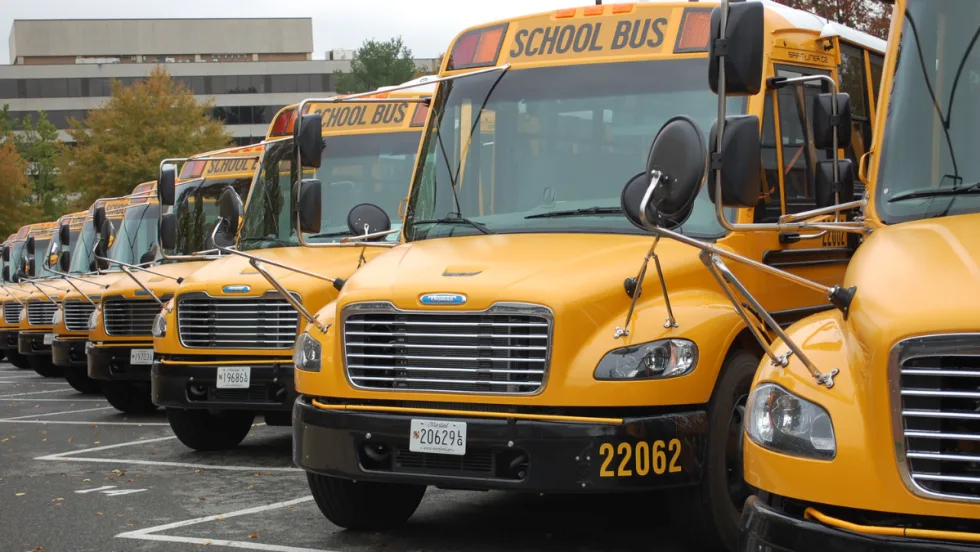
Fewer Electric School Bus Models Reshape the U.S. Market
WRI’s latest buyer’s guide points to a consolidating electric school bus market, but fewer options may reflect a maturing industry rather than fewer meaningful choices for school bus operators.
Read More →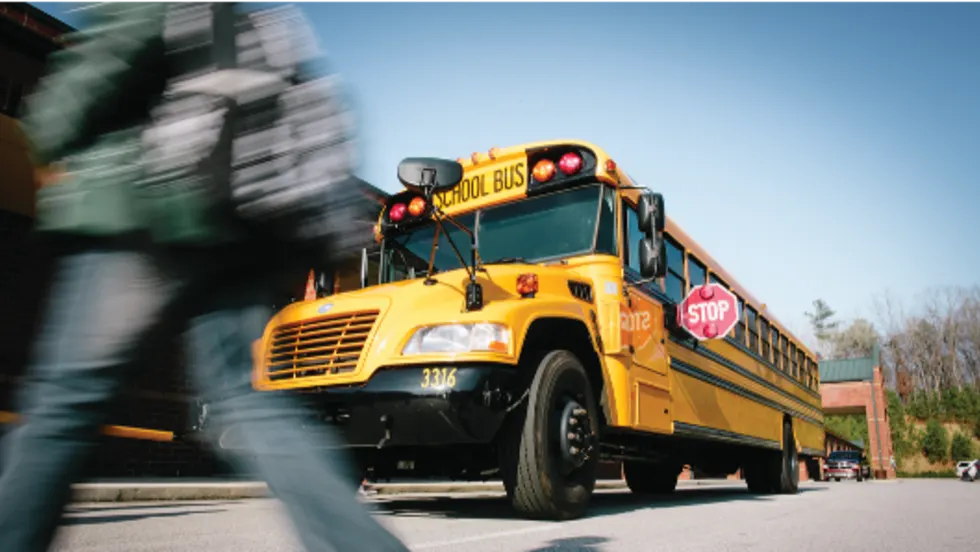
The Fuel Budget You Can Actually Predict: How Propane Autogas Keeps Money in the Classroom
Learn how propane autogas helps school districts manage fuel costs with predictable pricing, lower maintenance, and reduced emissions from former transportation director Joel Stutheit.
Read More →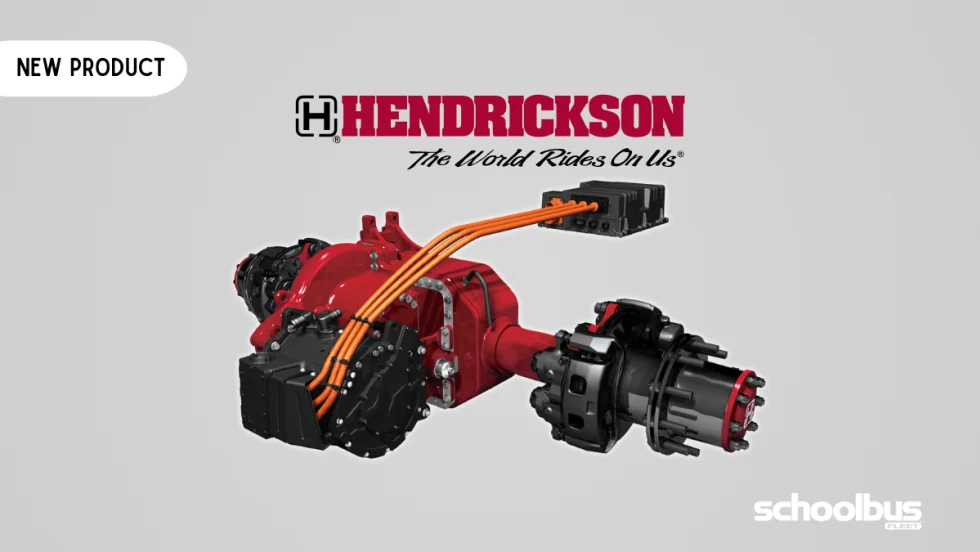
Hendrickson, Driventic Introduce New Electric Powertrain for School Buses
ELECTRAAX, the electrified, lightweight drive axle offers integrated ePowertrain efficiency and modular flexibility for Class 6–7 school bus use.
Read More →
The Mobility House Joins PowerFlex in Fleet Electrification Deal
The acquisition combines intelligent charging software, bidirectional charging expertise, and fleet electrification services to support the growing adoption of electric school buses across North America.
Read More →
Alt-Fuel Moves: Electric School Bus Investments Hit the Road
See which districts across the U.S. are putting electric school buses into service, expanding charging infrastructure, and planning the next phase of fleet electrification.
Read More →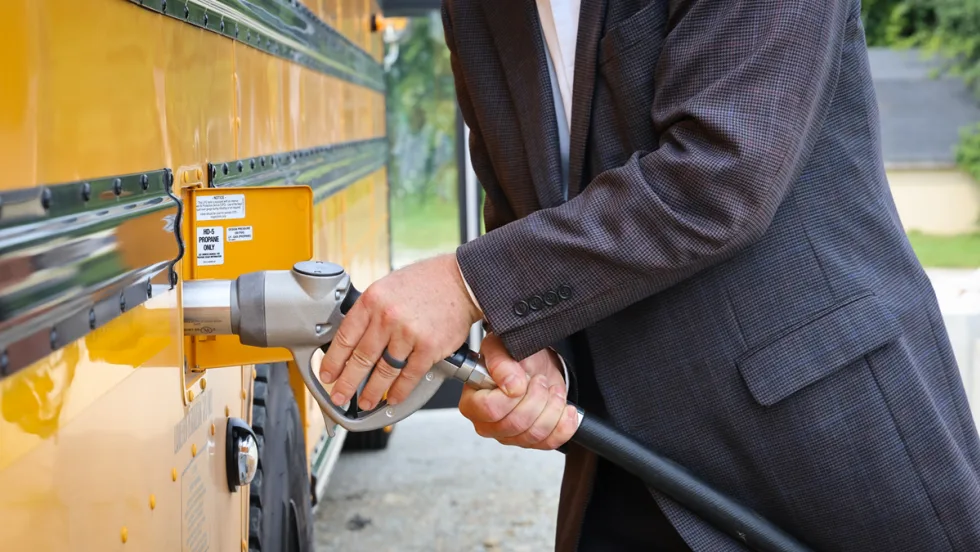
With Fuel Volatility Ahead, School Districts Turn to Propane
While diesel prices peaked above $5 this spring, districts with propane autogas-powered fleets paid under $2 per gallon, according to PERC.
Read More →
EPA Unveils Proposed Changes to 2027 Heavy-Duty Engine Rules
The federal agency has proposed changes to next year’s targets that would eliminate DEF derates, ease warranty requirements, and retain current NOx emissions standards.
Read More →
Alt-Fuel Moves: EV Charging & Infrastructure Projects Gain Momentum
The latest developments include new funding, charging infrastructure, utility investments, and fleet technologies designed to support the transition to electric school buses nationwide.
Read More →