




Texas school bus seat belt implementation plan released
The Legislative Budget Board approved the use of the Texas Transportation Institute's School Bus Seat Belt program report to set priorities for funding, including vehicles that will have the highest safety benefit from the addition of seat belts (small buses and motorcoaches) and counties with the highest number of serious bus crashes.

AUSTIN, Texas — In a letter to the Texas Education Agency (TEA) on Sept. 2, the Texas Legislative Budget Board (LBB) issued its approval of the Texas Transportation Institute's (TTI) report on a program to reimburse school districts for the installation of seat belts on school buses. The notification also indicated approval of the release of the $10 million appropriation made by the Legislature for fiscal year 2011 for the program.
As SBF previously reported here, a law requiring seat belts on all new school buses in the state went into effect Sept. 1, but TEA had limited funds available to reimburse schools.
When all state agencies were ordered to make budget cuts, TEA cut funding to the School Bus Seat Belt program. The available funding amount was reduced from $10 million to just over $3 million, leading some to speculate that TEA was obstructing the seat belt measure. TEA officials said they selected the program for cuts because it hadn't started yet.
The TTI report made the following recommendations for prioritizing seat belt installation:
Priority 1: Equip vehicles that will have the highest safety benefit from the addition of lap-shoulder belts: small buses and motorcoaches.
Priority 2: Equip buses used in counties with the highest number of serious bus crashes for use on high-speed, two-lane routes and with the highest average pupil density on those routes.
Priority 3: Equip buses on high-speed, two-lane routes in other counties, in order of decreasing linear density.
The TTI report also included policy and operational recommendations:
• a district plan for addressing any dimished capacity so as not to force students into alternative (and less safe, regardless of seat belt availability) transportation
• a district training program for drivers and students on correct belt use and emergency procedures, and
• a written policy regarding belt use and an enforcement system
The report recommends prioritizing or providing incentives to encourage the use of human or electronic monitoring of seat belt use.
The LBB instructed TEA to follow minimum program requirements, including:
1. Expenditures of grant awards should be limited to the incremental cost of purchasing buses with seat belts versus those without;
2. Districts making bus purchases that fall within any of the three TTI priorities are eligible to apply for funding, and funding will be prioritized in order of the three risk-based categories indentified in the report (all eligible priority 1 applications would be funded first, followed by priority 2 applications, etc. until the available funding is allocated);
3. School districts must certify in the application that the buses for which funding is sought under priorities 2 or 3 travel routes identified as high risk under the parameters of the TTI report;
4. Applications including a plan for monitoring seat belt use should be prioritized in the funding allocation;
5. School district property wealth should be a factor in prioritizing applications for funding allocation (lower wealth being a higher priority), if additional prioritization is necessary;
6. At a minimum, applications must include proof of adequate capacity, plans for driver and student training, and written district policies regarding seat belt use and enforcement to be eligible for funding; and
7. The program should be evaluated by TEA or its designee.
To read the LBB letter approving the report and funding, click here.
More Safety
School's Back. Here's What Happened to Traffic, Speeding & Distraction
What happens to traffic when school resumes? New data analysis examines changes in distracted driving, congestion, and speeding around schools.
Read More →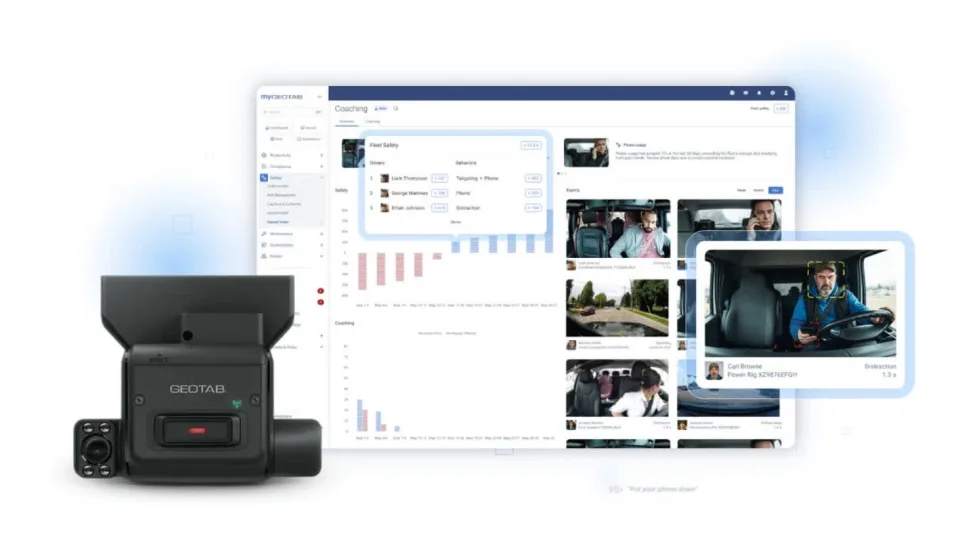
Geotab Expands Fleet Safety Tools With Video Coaching, Risk Insights
New safety and video capabilities aim to help fleet managers assess risk, support drivers, and take targeted action through video coaching, red-light violation detection, and more.
Read More →
How to Build a Better School Bus Driver Training Program
Is it time to strengthen your driver training? Here’s how to pick the right talent and improve recruitment, retention, and safety. This video is brought to you by IC Bus.
Read More →

Recent School Bus Accidents Leave 2 Dead, 2 Injured
Four school bus crashes in Florida, Illinois, and Georgia highlight risks in transportation lots, at bus stops, and during student loading and unloading.
Read More →
When Every Second Matters, Clarity Keeps Routes Moving
From routine delays to urgent incidents, strong communication practices help drivers, dispatchers, schools, and families respond with confidence.
Read More →
What Happens When a School Bus Catches Fire — and What Can Help
School bus fires are rare but can be devastating. Learn how advances in fire suppression and asset protection help fleets detect fires earlier, reduce damage, and improve safety.
Read More →
Geotab Launches Tool to Help Fleets Investigate Road Incidents
Geotab Investigations combines telematics data, video, documents, and other evidence to help fleets reconstruct incidents, resolve claims, and determine what happened.
Read More →
Texas Sixth Grader Wins 2026 National School Bus Safety Poster Contest
Sai Darshana Yekolu of Moseley Middle School in Prosper, Texas, was named the newest winner for her artwork, bringing the theme of “Safe Rides, Everyday Heroes” to life.
Read More →
Doing More With Less: How Transportation Directors Can Prioritize Safety Amid Budget Uncertainty
With diesel prices soaring and nearly one-third of transportation directors expecting budget cuts, maintaining student safety has never been more challenging. Download this guide to learn how leading districts are prioritizing risk, funding critical safety technology, and building stronger budget cases with data.
Read More →
Walton County Schools Adds Gatekeeper Stop-Arm Enforcement System
The Florida district will deploy Gatekeeper’s updated Student Protector technology, which now incorporates AI to improve video evidence.
Read More →