




Study: School Systems Giving Drivers More Hours to Combat Shortage
The North Carolina Department of Public Instruction study finds that some school systems offer drivers work in other departments to get them full-time hours and pay.


A North Carolina Department of Public Instruction study finds that some school systems offer drivers work in other departments to get them full-time hours and pay. File photo courtesy John Horton

A North Carolina Department of Public Instruction study finds that some school systems offer drivers work in other departments to get them full-time hours and pay. File photo courtesy John Horton
RALEIGH, N.C. — To combat driver shortage, school systems in North Carolina are finding work for drivers in other departments, requiring other staff members to drive buses, and recommending accelerating the recruitment process, according to a recent study.
The North Carolina Department of Public Instruction (DPI) worked with North Carolina State University’s Institute for Transportation Research and Education on a study that compared conditions for drivers in school systems statewide. The study used existing data from the DPI, federal data, and results from a recent survey, according to a report on the study, which was presented to the North Carolina General Assembly.
The General Assembly tasked the DPI with producing the report addressing school bus driver compensation and employment in 2017 for the Joint Legislative Education Oversight Committee and the Fiscal Research Division, because North Carolina, just like many other states, is facing a significant driver shortage.
Study findings include:
• Average hourly wage reported to DPI by school systems: $14.13.
• Yearly wages for a full-time driver (seven hours): $18,298 (185 days/1,295 hours).
• Yearly wages for a half-time driver (four hours): $10,456 (185 days/740 hours).
• 31.9% of drivers are full-time drivers, and 73% of those are in the largest six school systems.
• 34.8% are full time because they work another position in the school system (at their option or because the school system requires non-certified staff to drive school buses).
• Average time to finish Department of Motor Vehicles (DMV) school bus driver training: 54 days (some respondents reported months longer).
• Average out-of-pocket costs before potential employment: $260.
Additionally, the study found that some applicants cannot complete the application process due to medical and driving record requirements, license training and testing requirements, and the length of time it takes to get hired. About one-fifth of current full-time route drivers have been on the job for less than two years, said Kevin Harrison, state director of pupil transportation at the North Carolina DPI.
Harrison also noted that even full-time school bus drivers were only working 10 months out of the year.
The findings fall in line with a national school bus driver shortage based on a strong economy with other jobs available that offer more competitive pay and hours, diminishing the pool of candidates; the difficulty of working a second job due to the split shifts many bus drivers are required to work; the amount of time and money the candidate needs to invest in training; and the amount of responsibility that is involved in safely transporting children.
School systems in North Carolina have mainly employed two strategies to give school bus drivers full-time hours, which is key to retaining drivers, Harrison said: tiered school bus routing (varying school start times so that any driver in any bus can run multiple routes) and dual employment (providing another job to the driver, such as teacher's aide or custodian).
The North Carolina study found that large districts mostly use tiered routing and spreading out the schedule to get full-time employment for their drivers, and small districts primarily rely on dual employment.
“Being full time tends to increase people's willingness to stay on,” Harrison said. “There’s this group of core drivers that stick with you, and then there is a group where you are always rotating new drivers in.”
Districts in some counties are enforcing a policy that requires other school staff members, such as teacher’s assistants, non-managerial custodial staff members, and child nutrition staff members, to obtain CDLs, due to an inability to maintain enough school bus drivers, Harrison added.
“Some [make it] voluntary, so staff can make the higher rate of pay, because the teacher’s assistants' rate of pay is lower than a school bus driver’s, and some of the staff are required to do it [for] their job, either as a substitute or regular route driver,” he said.
In some cases, the practice is seen as a necessity for transportation departments to continue operating, but some staff view it as an imposition, and counties that have the requirement reported more difficulties recruiting and retaining those other positions.
“They not only have to find somebody who is a good child nutrition worker, but who is also willing to drive a school bus filled with children, and sometimes those skill sets don’t match up,” Harrison said. “But some transportation departments report that it’s nearly essential they do it.”
School districts' proposed solutions for addressing school bus driver shortage fell into four main categories: an increase in hourly compensation, an increase in hours and benefits availability, accelerating the recruitment process, and increasing job satisfaction and training.
Last year, the North Carolina General Assembly gave school bus drivers a larger raise than other state employees. As part of the state's 2018-19 fiscal year budget, school systems will receive $4,387,650 “to increase the average rates of pay for all school bus drivers ... on an equitable basis,” according to state Senate Bill 99 (see the bottom of pg. 43). That amount is about what would be needed for a 2% raise for school bus drivers, Harrison said.
More Management

How to Build a Better Driver Training Program
Ready to boost up your school bus instructor training? Here’s how to pick the right talent and improve recruitment, retention, and safety.
Read More →
CALSTART and Forth Combine to Form Catalyst Mobility
The new name represents a renewed vision for the nonprofit focused on advancing clean, equitable, and affordable transportation solutions that move people and goods.
Read More →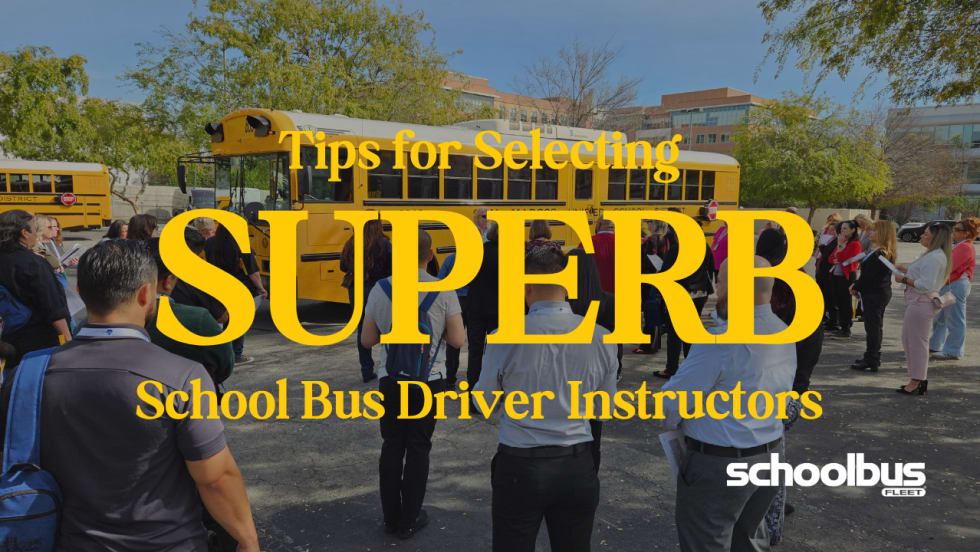
What Makes a Great School Bus Driver Trainer?
Choosing the right school bus driver trainer takes more than experience. Learn six keys to selecting and developing trainers and evaluating program effectiveness.
Read More →


School Bus Contractors Expand Through New Deals, Acquisitions & Partnerships
STA's Canadian division acquires Ontario-based G&L Stevenson Transport while Durham School Services adds a new district contract in California, First Student adds a New Jersey contract, and Minnesota Coaches acquires Halo Transportation.
Read More →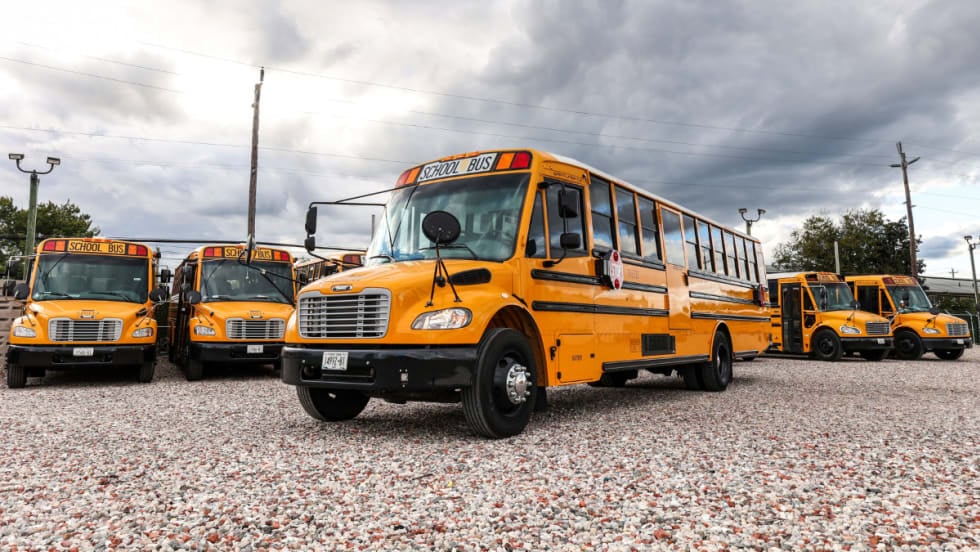
Logan Bus Company Rolls Out AI Phone System for NYC School Bus Families
A summer pilot found that AI agents could handle most routine calls, freeing up time for customer service staff to focus on emergencies and complex family concerns.
Read More →
From Intent to Impact: What I Learned About Leadership from TAPT
A Texas transportation supervisor shares lessons on self-awareness, accountability, managing stress and building trust — and why investing in leadership development matters at every stage of your career.
Read More →
NAPT Names 2026 Award Recipients, Hall of Fame Inductee
Who earned national recognition for their work in student transportation? This year, NAPT named five recipients of its 2026 awards for service, safety, and leadership, plus its newest Hall of Famer.
Read More →
2026 State of Student Transportation Report
Driver shortages. Rising costs. Growing safety expectations. More data, but not enough time to act on it. The 2026 State of Student Transportation Report reveals what transportation leaders say is putting the most pressure on their operations—and where they’re investing next. See how your priorities compare.
Read More →
How to De-Escalate an Angry Person: 5 Steps for Handling Workplace Conflict
What makes emotions run high, and how should you handle an angry colleague or parent? Follow these steps for staying calm, listening, showing empathy, and resolving conflict.
Read More →
What Readiness Looks Like This School Year
Learn about the challenges shaping the 2026–2027 school year, from persistent driver shortages and budget pressure to technology and readiness gaps. See how school districts are responding and adapting in Zonar’s 2026 Back-to-School Readiness Report.
Read More →