




Ralph Braun: a pioneer in mobility
Braun, who was diagnosed with spinal muscular atrophy at 6 years old, went on to develop innovative mobility products, including a motorized scooter and a vehicle wheelchair lift. The founder and CEO of The Braun Corp., who passed away on Feb. 8 at age 72, is also remembered for his contributions to safe pupil transportation.

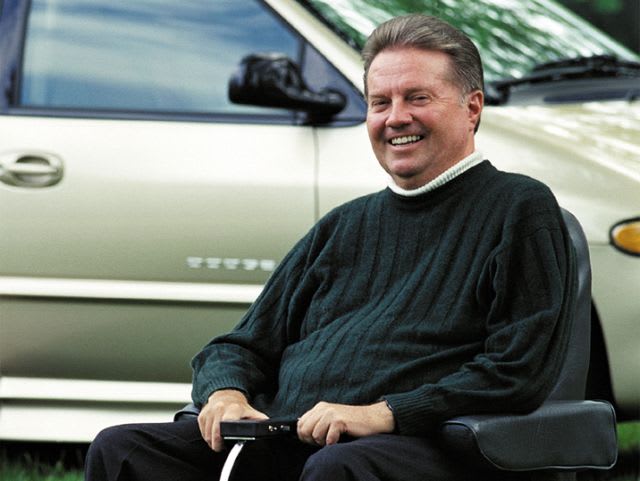
Ralph Braun, who was diagnosed with spinal muscular atrophy at age 6, went on to develop innovative mobility products, including a motorized scooter and a vehicle wheelchair lift.
WINAMAC, Ind. — Ralph Braun, who made important developments in mobility for people with special needs — including himself — has died.
The founder and CEO of The Braun Corp. passed away on Feb. 8 at age 72.
Among his contributions, Braun is remembered for his efforts to ensure that students with disabilities could get to and from school safely.
“Ralph’s dedication to the mobility needs of schoolchildren was unique in that he lived their challenges," Kathy Furneaux, executive director of the Pupil Transportation Safety Institute, told SBF.
Furneaux said that Braun was always open to listening to the school bus industry to improve safety and mobility.
"He set the school bus industry standard for safe transportation of children using mobility devices," she said. "His vision and commitment will be missed.”
Driven to move
Braun is credited with helping to create the mobility industry, driven initially by his own mobility needs.
In 1947, Braun was diagnosed with spinal muscular atrophy at 6 years old. He credited his parents with instilling in him the will to overcome the challenges his disability — and society — presented him.
At about age 20, Braun engineered his first mobility product: a motorized scooter, which he dubbed the Tri-Wheeler. The scooter let him conserve energy and keep his job as a quality control inspector at a factory near his home — he could ride the scooter to and from work.
Braun captured the attention of people with disabilities as his mobility increased. His part-time business filling orders for Tri-Wheelers from his parents’ garage grew into Save-A-Step Manufacturing.
When the factory where Braun worked moved a few miles from his home, he outfitted an old postal Jeep with hand controls and a hydraulic lift. The additions allowed him to drive his Tri-Wheeler into and out of the Jeep, giving him reliable transportation to and from work in any weather.
A few years later, when Dodge introduced the first full-size, front-engine van, Braun made another groundbreaking innovation: He devised a way to install a wheelchair lift on the van, enabling people with disabilities to travel on the road with their wheelchairs.
A vital lift
In 1972, Save-A-Step was incorporated under a new name, The Braun Corp. For much of the '70s and '80s, the company's product line focused on the wheelchair lift.
"Not only did this product revolutionize consumer mobility, but it forever changed public transportation as well," company officials said in a statement. "Finally, buses and vans could be outfitted with wheelchair lifts to allow universal public transportation from city and state governments. Most importantly, children across the country were offered accessible transportation to and from school — a benefit that didn’t seem possible when Ralph was a young man encountering multiple roadblocks to his own public education."
Braun Corp. went on to introduce a lowered-floor minivan. Ralph Braun also created a network of dealers across the country to evaluate individuals' needs and circumstances to find the best mobility option for them.
Today, the company offers wheelchair-accessible conversions on various minivans, as well as multiple lift platforms and additional mobility products.
The Braun Corp., which now employs close to 850 people, continues to be based in Ralph Braun's hometown, Winamac.
Moving tributes
Last year, the White House named Ralph Braun a "Champion of Change" for his dedication to improving the lives of people with physical disabilities.
Also last year, the National Mobility Equipment Dealers Association inducted Braun to its Hall of Fame.
A few years ago, Braun wrote an autobiography, titled Rise Above: How One Man's Search for Mobility Helped the World Get Moving. He also formed The Ralph Braun Foundation, which helps people with limited income afford mobility equipment.
"While Ralph made a significant impact in the world of accessibility, he left an even greater imprint on mankind: the proof that, yes, you may be different from most people, but those differences are not limiting," said Nick Gutwein, president of The Braun Corp. "In fact, those differences, combined with the drive to succeed, can lead to greatness."
For more information on Braun's life and legacy, go here.
More Special Needs Transportation
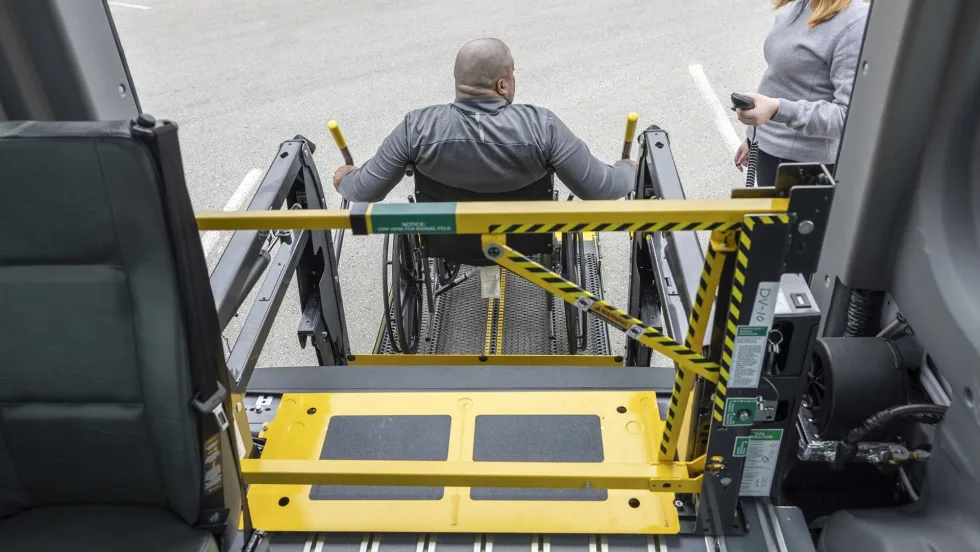
BraunAbility Introduces New Safety Barrier for Wheelchair Lifts
LiftSentinel is designed to add another layer of protection during wheelchair loading and unloading and can be retrofitted to many existing commercial lift installations.
Read More →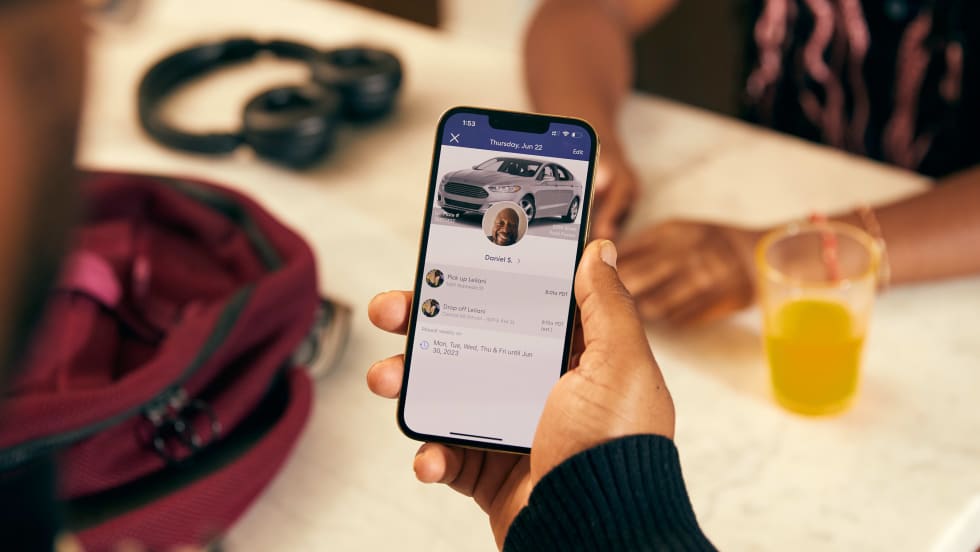
HopSkipDrive Launches New Safety, Driver Consistency Features for 2026-27 School Year
The company’s free ride recording, live ride tracking, and consistent driver assignments aim to improve safety and continuity for diverse student transportation needs.
Read More →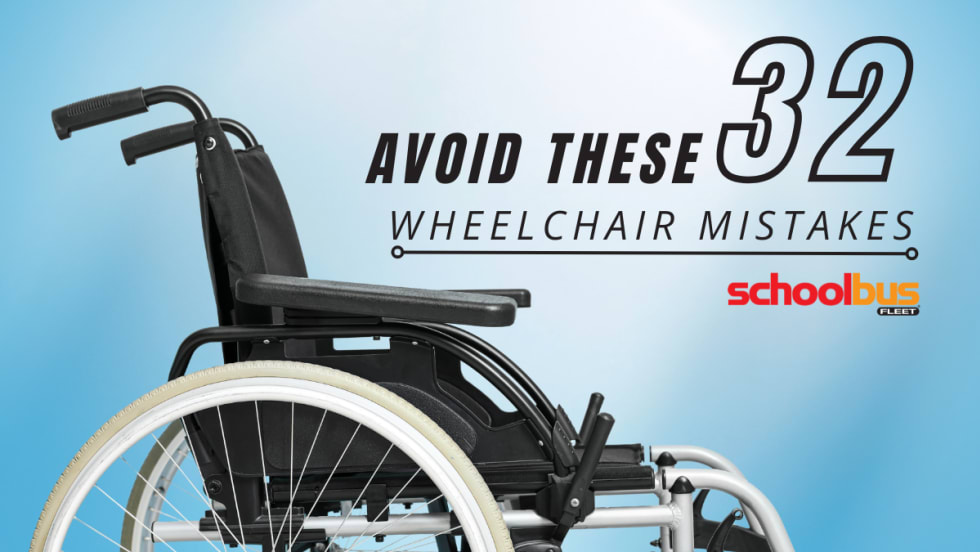
The Most Common Wheelchair Securement Mistakes on School Buses (and How to Fix Them)
Small missteps in wheelchair securement can have serious consequences. Here are 32 tips from experts to reduce risk and increase student safety on the bus.
Read More →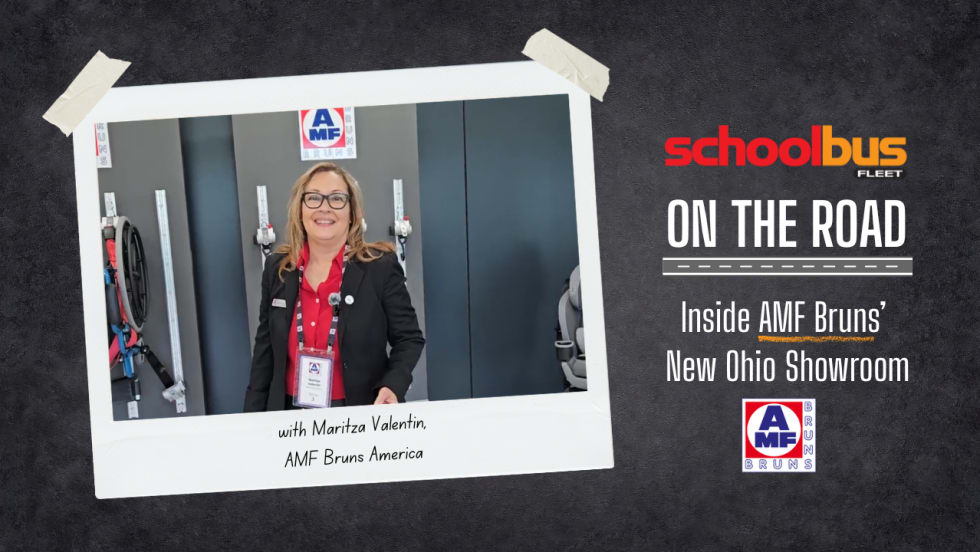
Inside AMF Bruns’ New Showroom: School Bus Securement Solutions Explained
Go inside AMF Bruns America’s new Ohio showroom with Maritza Valentin to see its FutureSafe technology, driver training tools, securement systems, and seating innovations.
Read More →
What AMF Bruns’ New Facility Means for Customers [Video]
Inside AMF Bruns’ new Stow, Ohio, operations: See how expanded space and innovation will enhance customer support and operations.
Read More →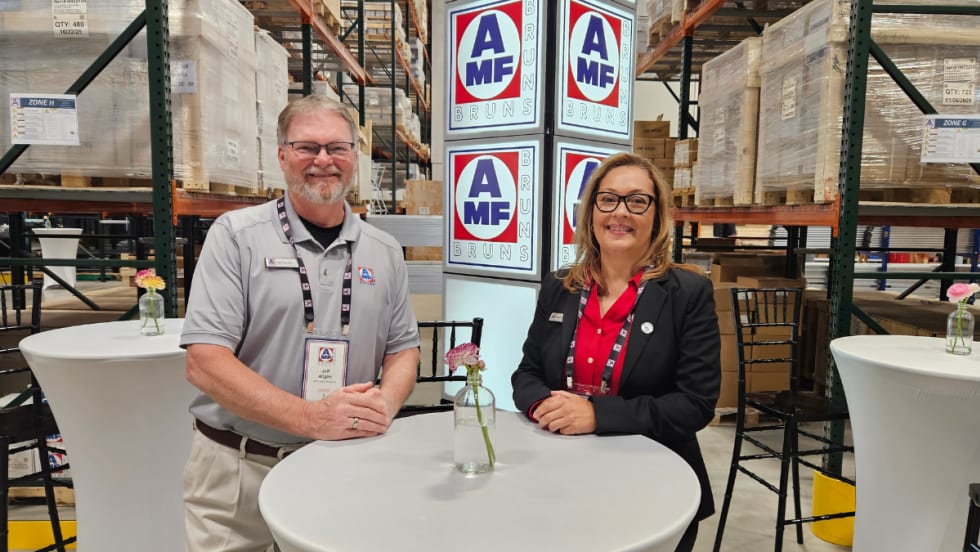
AMF Bruns Expands in Ohio, Investing in Growth and Community
With expanded production space, local investment, and a growing workforce, AMF Bruns is scaling its U.S. presence. Here’s an exclusive first look inside the new Stow, Ohio, HQ.
Read More →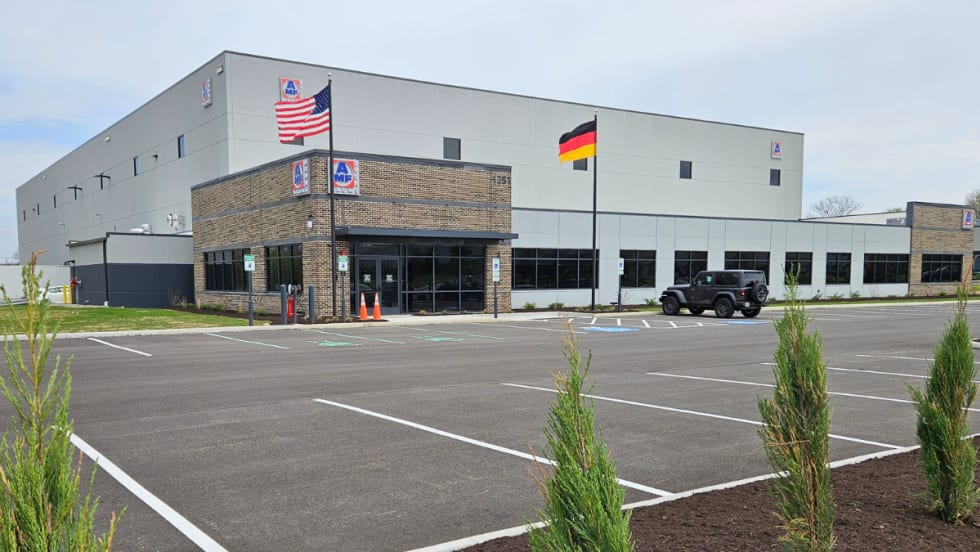
Inside AMF Bruns of America’s New Ohio Manufacturing Facility [Photos]
Take a behind-the-scenes look at AMF Bruns of America’s new 41,000-square-foot Stow, Ohio, headquarters, featuring advanced manufacturing, expanded space, and future-ready mobility solutions.
Read More →
First Student Boosts Student Support in Wichita & Texas
First Student and Wichita Public Schools are using behavioral support strategies to improve student ride experiences, while a separate initiative expands access to after-school programs through a bus donation.
Read More →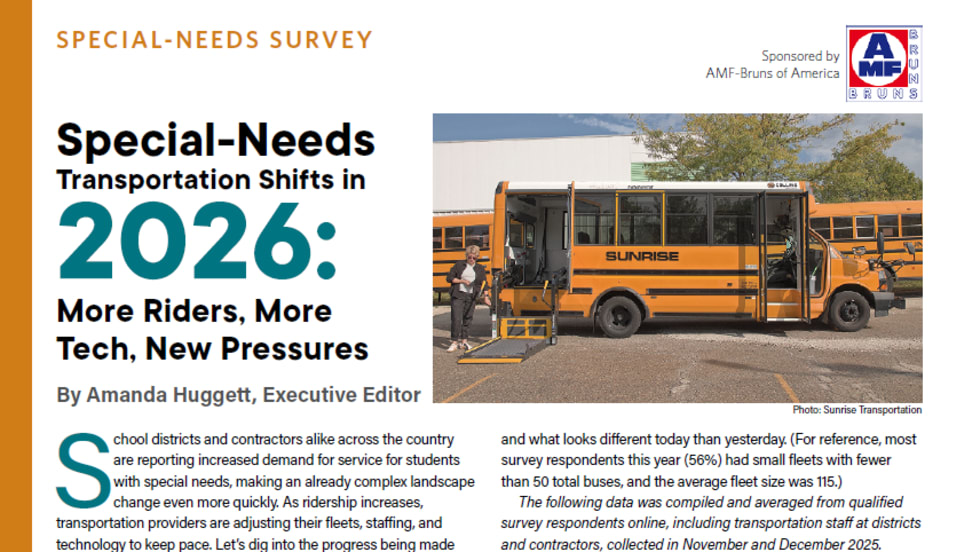
2026 Special-Needs Transportation Survey
What’s changing in special-needs transportation? This year, student transportation operators report a rising need, easing driver shortages, growing tech adoption, and evolving challenges. Sponsored by AMF Bruns of America.
Read More →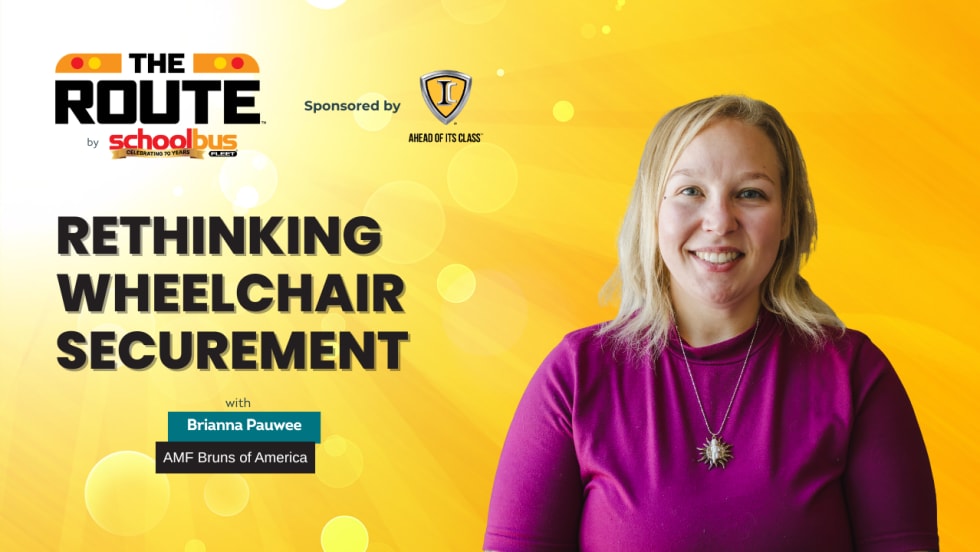
The Lived-Experience Gap in Mobility Tech: An Expert Take on Safe Student Transportation
Brianna Pauwee, a product application specialist at AMF Bruns of America and a wheelchair user, drops in to The Route to share practical securement and training insights, plus the story behind the new “Beyond Mobility” podcast. The Route is sponsored by IC Bus.
Read More →