




Q’Straint advises early planning to meet updated wheelchair passenger safety standards
The new WC18 standards will take effect December 2015. Q’Straint has developed the QRT-360, the first retractor to comply with the standards, according to the supplier.

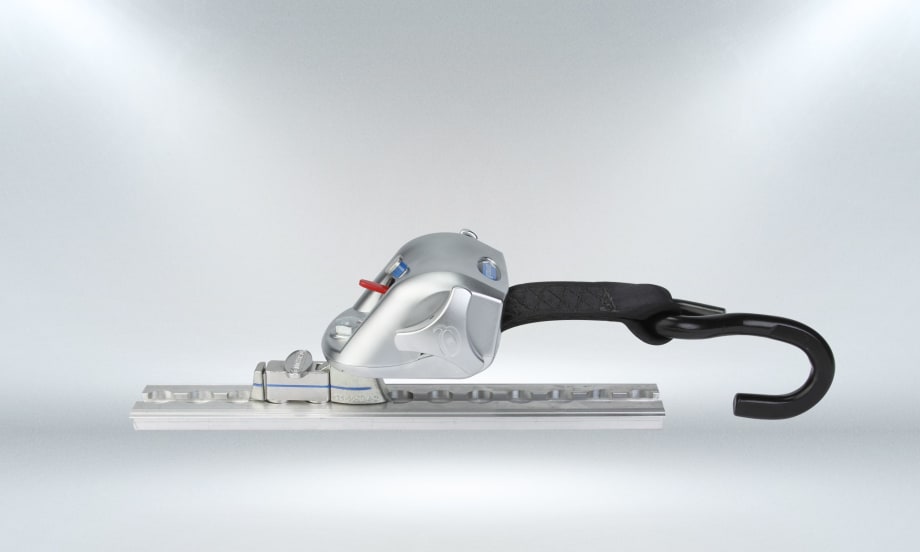
The QRT-360 retractor is fully automatic and designed to meet the new WC18 standards, according to Q'Straint.
FORT LAUDERDALE, Fla. — The Rehabilitation Engineering Assistive Technology Society of North America (RESNA) has updated the WC18 standards for wheelchair tie-down and occupant restraint systems (WTORS), and Bob Joseph, vice president of business development for Q’Straint, advises planning upgrades to fleets and personal mobility vehicles in advance.
The new standards will take effect December 2015.
Currently, WC18 requires that WTORS withstand a sled impact test using a 30 mph/20-g crash pulse, a 187 lb. surrogate wheelchair and a 170 lb. midsize adult male crash-test dummy where the lap belt is anchored to the vehicle.
Since new WC19 standards now require the availability of an optional wheelchair-anchored lap belt to hold the occupant into place, RESNA had to address the higher wheelchair forces that would be transmitted to the tie-down/securement systems when a person riding in a wheelchair is using that lap belt. As a result, RESNA developed the new WC18 standard requiring that WTORS must also be able to withstand the increased forces generated in a second impact test, in which the 170 lb. crash-test dummy is restrained by a lap belt that is anchored to the surrogate wheelchair rather than to the vehicle itself.
“Manufacturers of wheelchair and occupant restraint systems and those responsible for transporting people dependent on wheelchairs are planning now for the new safety regulations,” said Bob Joseph, vice president of business development for Q’Straint. “One way to ensure compliance with the new WC18 standards by the December 2015 deadline is to consider equipment upgrades to transportation fleets and personal mobility vehicles in advance.”
Q’Straint has developed the QRT-360, the first retractor to meet the new WC18 standards, according to the supplier. The QRT-360 is the first four-point, heavy duty, fully automatic retractable tie-down system designed, engineered and built to perform successfully in the required 30 mph frontal crash when a wheelchair passenger is traveling in a motor vehicle and is using the optional lap belt, according to Q’Straint. It also offers a shortened retractor footprint that allows for more flexibility in vehicle anchor-point locations to better accommodate large wheelchairs. The new product is therefore compatible with the widest variety of wheelchairs and is an acceptable solution to wheelchair securement in all types of motor vehicles, company officials said.
In addition, the self-tensioning tie-down system automatically tightens the straps during small wheelchair movements that occur during travel to eliminate slack. The belts continue to tighten during low-g vehicle accelerations, thereby further reducing the potential for wheelchair movement in the event of a collision. The webbing used in this system has also been redesigned and is twice as strong as the material used with other wheelchair and occupant restraint systems.
“The benefits of the new WC18 standards address not only improved passenger safety, but also offer a more efficient and independent securement process,” Joseph said. “All industry transit providers and those with private vehicles should begin their preparations for complying and update themselves on the new standards and the products that meet these standards.”
WC19 was the first industry standard in the U.S. for wheelchair manufacturers to address the design and performance of wheelchairs used as seats in motor vehicles, according to Q’Straint. WC18 governs the systems used to safely secure the wheelchairs within the personal or commercial vehicle.
More Special Needs Transportation
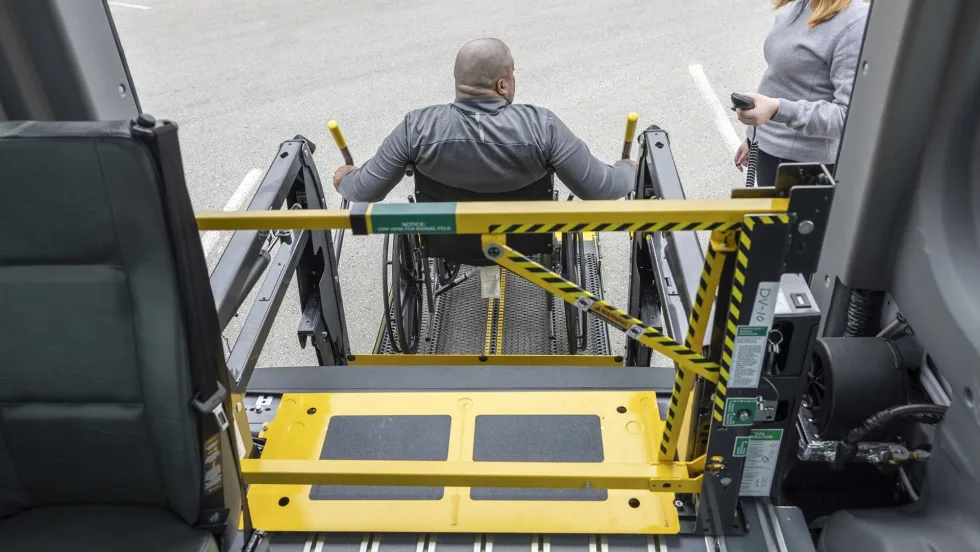
BraunAbility Introduces New Safety Barrier for Wheelchair Lifts
LiftSentinel is designed to add another layer of protection during wheelchair loading and unloading and can be retrofitted to many existing commercial lift installations.
Read More →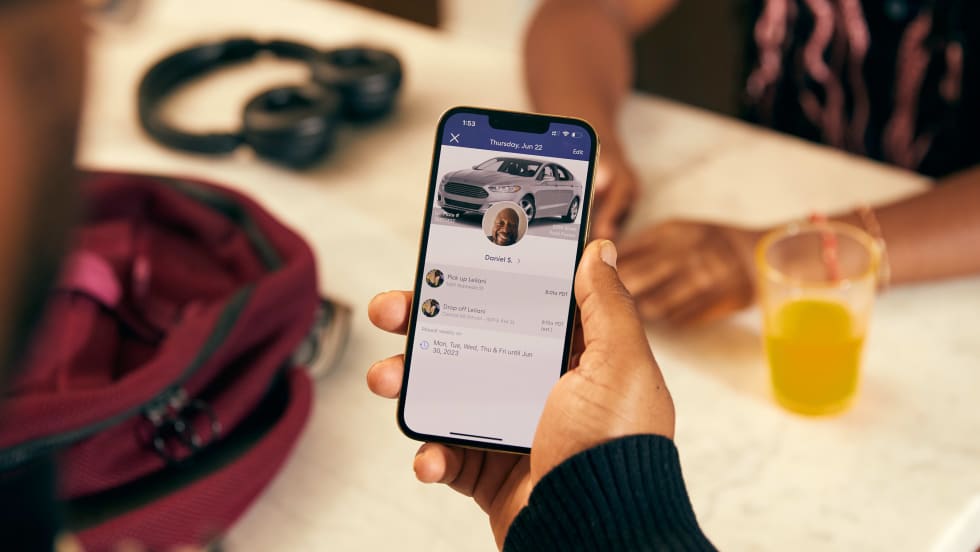
HopSkipDrive Launches New Safety, Driver Consistency Features for 2026-27 School Year
The company’s free ride recording, live ride tracking, and consistent driver assignments aim to improve safety and continuity for diverse student transportation needs.
Read More →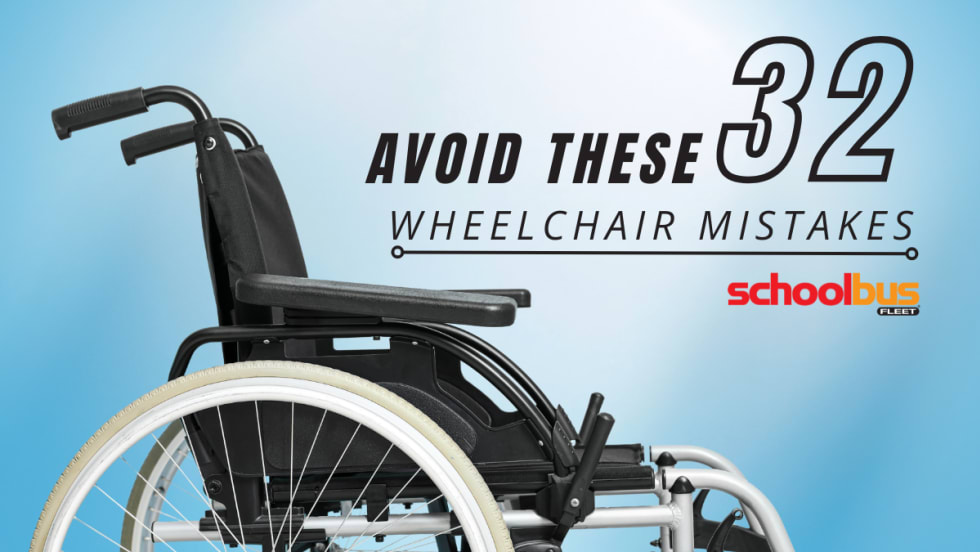
The Most Common Wheelchair Securement Mistakes on School Buses (and How to Fix Them)
Small missteps in wheelchair securement can have serious consequences. Here are 32 tips from experts to reduce risk and increase student safety on the bus.
Read More →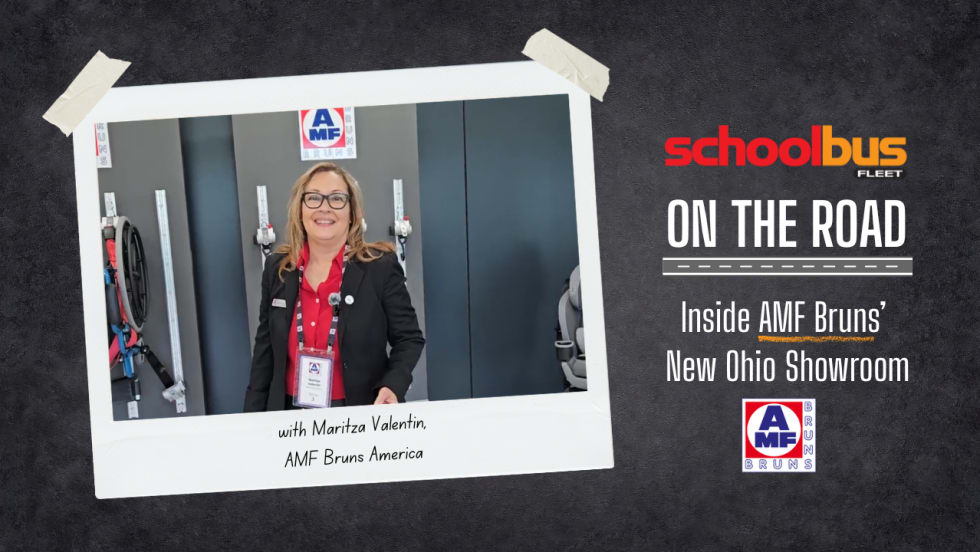
Inside AMF Bruns’ New Showroom: School Bus Securement Solutions Explained
Go inside AMF Bruns America’s new Ohio showroom with Maritza Valentin to see its FutureSafe technology, driver training tools, securement systems, and seating innovations.
Read More →
What AMF Bruns’ New Facility Means for Customers [Video]
Inside AMF Bruns’ new Stow, Ohio, operations: See how expanded space and innovation will enhance customer support and operations.
Read More →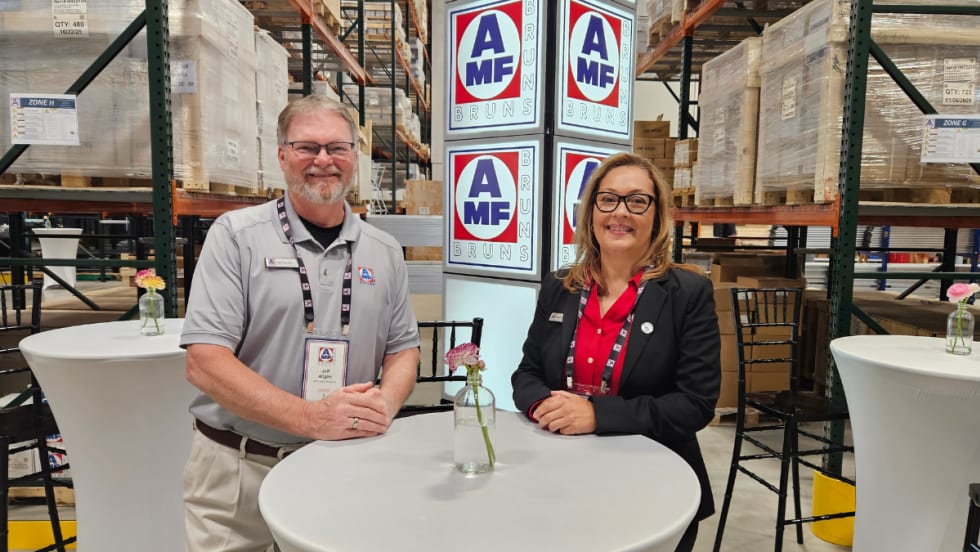
AMF Bruns Expands in Ohio, Investing in Growth and Community
With expanded production space, local investment, and a growing workforce, AMF Bruns is scaling its U.S. presence. Here’s an exclusive first look inside the new Stow, Ohio, HQ.
Read More →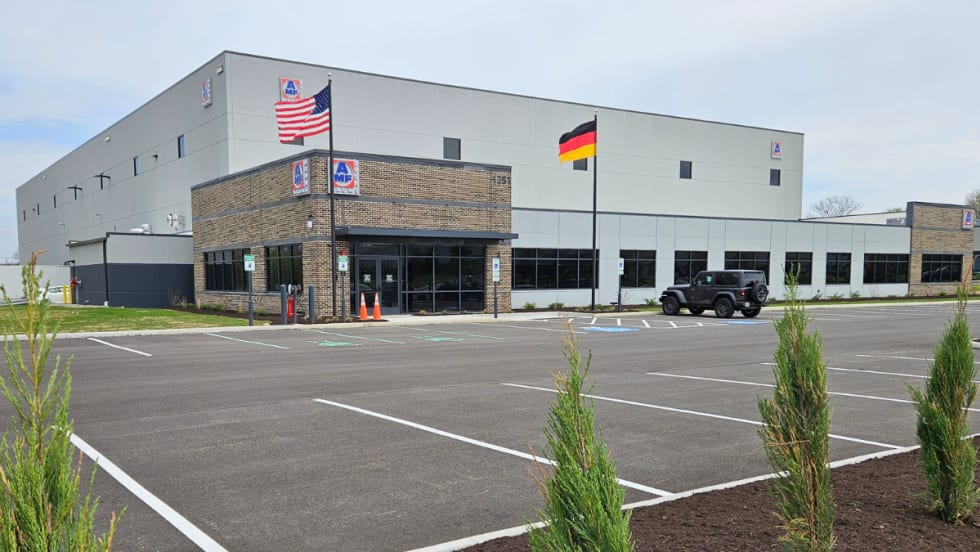
Inside AMF Bruns of America’s New Ohio Manufacturing Facility [Photos]
Take a behind-the-scenes look at AMF Bruns of America’s new 41,000-square-foot Stow, Ohio, headquarters, featuring advanced manufacturing, expanded space, and future-ready mobility solutions.
Read More →
First Student Boosts Student Support in Wichita & Texas
First Student and Wichita Public Schools are using behavioral support strategies to improve student ride experiences, while a separate initiative expands access to after-school programs through a bus donation.
Read More →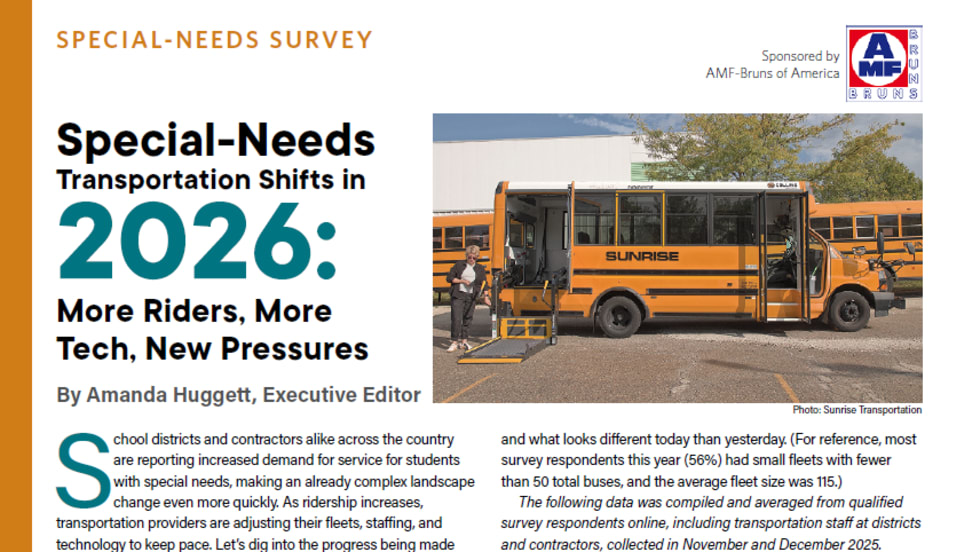
2026 Special-Needs Transportation Survey
What’s changing in special-needs transportation? This year, student transportation operators report a rising need, easing driver shortages, growing tech adoption, and evolving challenges. Sponsored by AMF Bruns of America.
Read More →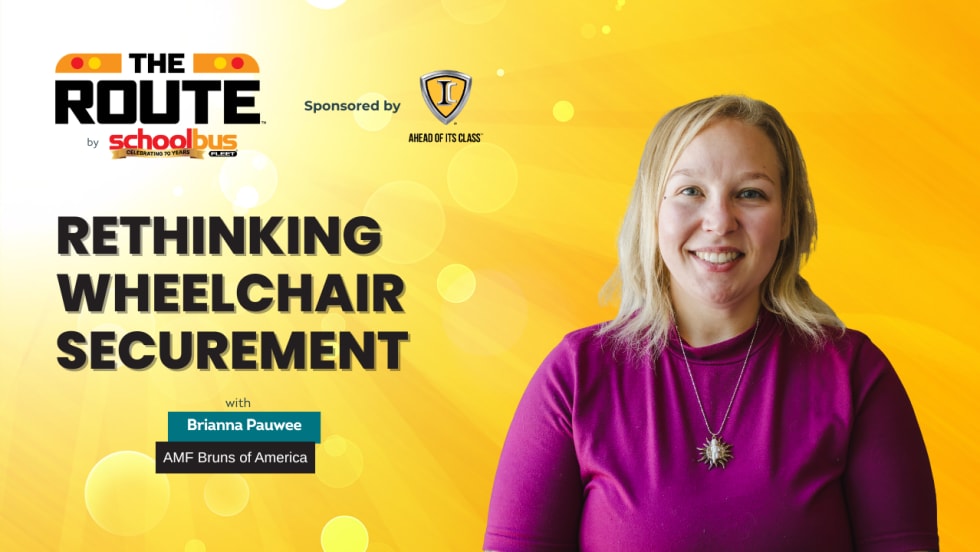
The Lived-Experience Gap in Mobility Tech: An Expert Take on Safe Student Transportation
Brianna Pauwee, a product application specialist at AMF Bruns of America and a wheelchair user, drops in to The Route to share practical securement and training insights, plus the story behind the new “Beyond Mobility” podcast. The Route is sponsored by IC Bus.
Read More →