




NTSB Issues Recommendations Related to EV Battery Fire Risks
Guidance in the federal agency’s report on four fires involving high-voltage, lithium-ion batteries includes updating emergency response procedures and providing information on the risks to emergency personnel.
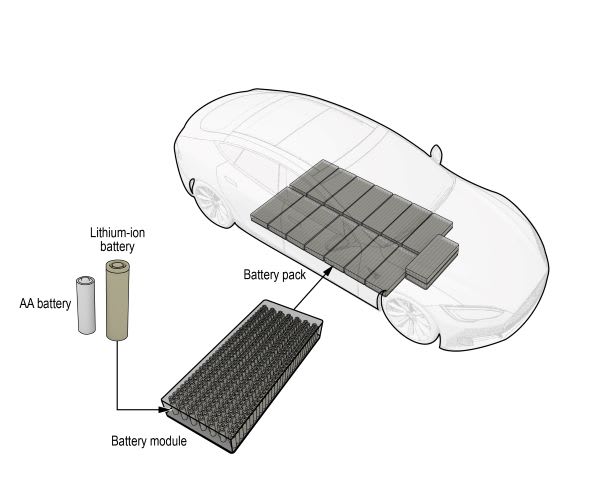
Pictured here is an illustration of a high-voltage, lithium-ion battery in an electric vehicle, showing the location of the vehicle’s battery pack, a detail of the battery module, and a size comparison between the lithium-ion batteries in the module and a typical AA battery.
National Transportation Safety Board graphic by Christy Spangler
The National Transportation Safety Board (NTSB) issued on Wednesday four safety recommendations based on its investigation of four electric vehicle (EV) fires involving high-voltage, lithium-ion batteries and hazards posed to emergency responders.
Fires in EVs powered by high-voltage lithium-ion batteries pose the risk of electric shock to emergency responders from exposure to the high-voltage components of a damaged lithium-ion battery, according to a news release from the NTSB. Another risk is that damaged cells in the battery can experience thermal runaway — uncontrolled increases in temperature and pressure — which can lead to battery reignition. The risks of electric shock and battery reignition/fire arise from the “stranded” energy that remains in a damaged battery.
The federal agency’s findings are based on three lithium-ion batteries that ignited and were damaged in high-speed, high-severity crashes, and a fourth lithium-ion battery fire occurred during normal vehicle operations.
All three of the crash-damaged batteries reignited after firefighters extinguished the vehicle fires. The battery in the fourth investigation did not reignite.
Safety issues with the high-voltage, lithium-ion batteries used in EVs first gained widespread attention when a Chevrolet Volt caught fire three weeks after a crash test in May 2011, according to the NTSB.
The federal agency’s first investigation of EV battery fires on U.S. roadways was in 2017, when a high-voltage lithium-ion battery caught fire after an EV left the road and crashed into a residential garage at high speed.
Between 2017 and 2018, the NTSB investigated two other EV high-speed, high-severity crashes that resulted in post-crash fires and one non-crash fire. During its investigations, the NTSB considered the safety risks to first and second responders posed by the vehicles’ high-voltage, lithium-ion batteries. Those risks are addressed in the NTSB’s Safety Report 20/01, “Safety Risks to Emergency Responders from Lithium-Ion Battery Fires in Electric Vehicles.”
The report identified two main safety issues in its investigation:
The inadequacy of vehicle manufacturers’ emergency response guides.
The gaps in safety standards and research related to high-voltage lithium-ion batteries involved in high-speed, high-severity crashes.
Here’s a summary of the NTSB’s recommendations:
To the National Highway Traffic Safety Administration (NHTSA): When determining a vehicle’s U.S. New Car Assessment Program score, factor in the availability of a manufacturer’s emergency response guide and its adherence to International Organization for Standardization standard 17840 and SAE International recommended practice J2990. (H-20-30)
Additionally, NHTSA should convene a coalition of stakeholders to continue research on mitigating or de-energizing stranded energy in high-voltage lithium-ion batteries, reducing the hazards associated with thermal runaway resulting from high-severity crashes, and publish the research results. (H-20-31).To manufacturers of EVs equipped with high-voltage lithium-ion batteries: Model emergency response guides on International Organization for Standardization standard 17840, as included in SAE International recommended practice J2990, and incorporate vehicle-specific information on fighting high-voltage lithium-ion battery fires; mitigating thermal runaway and the risks of high-voltage lithium-ion battery reignition and stranded energy; and safely storing an EV with a damaged high-voltage lithium-ion battery. (H-20-32)
To fire protection associations: Inform members about the circumstances of the fire risks described in the report and the guidance available to emergency personnel who respond to high-voltage lithium-ion battery fires in EVs. (H-20-33)
To highlight the lessons learned in the report, the NTSB produced a video that is available on the NTSB’s YouTube Channel.
More Alternative Fuels

CALSTART and Forth Combine to Form Catalyst Mobility
The new name represents a renewed vision for the nonprofit focused on advancing clean, equitable, and affordable transportation solutions that move people and goods.
Read More →
Alt-Fuel Moves: New Buses, Charging Hubs & Real-World EV Testing
Propane and electric school bus deployments continue to grow as districts add new vehicles, expand charging infrastructure, and gather more real-world operating data.
Read More →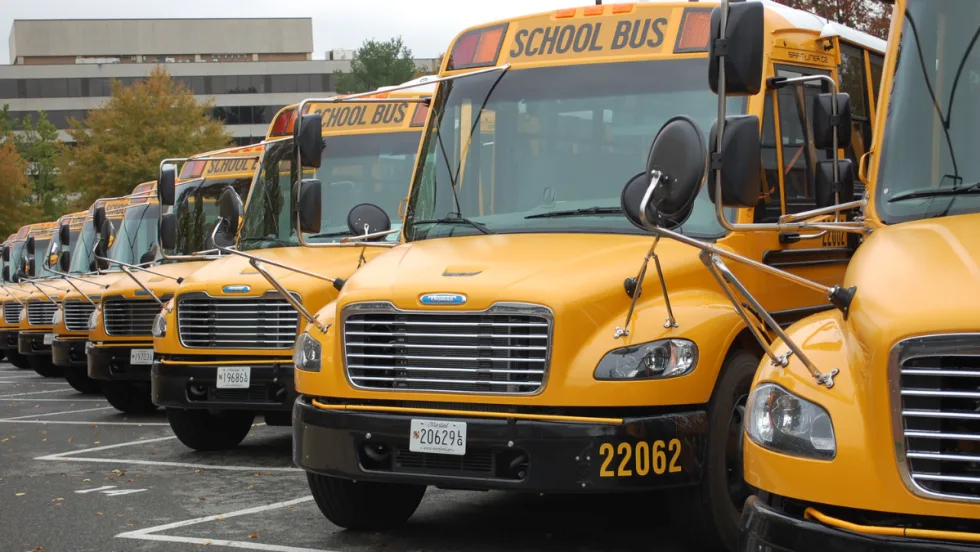
Fewer Electric School Bus Models Reshape the U.S. Market
WRI’s latest buyer’s guide points to a consolidating electric school bus market, but fewer options may reflect a maturing industry rather than fewer meaningful choices for school bus operators.
Read More →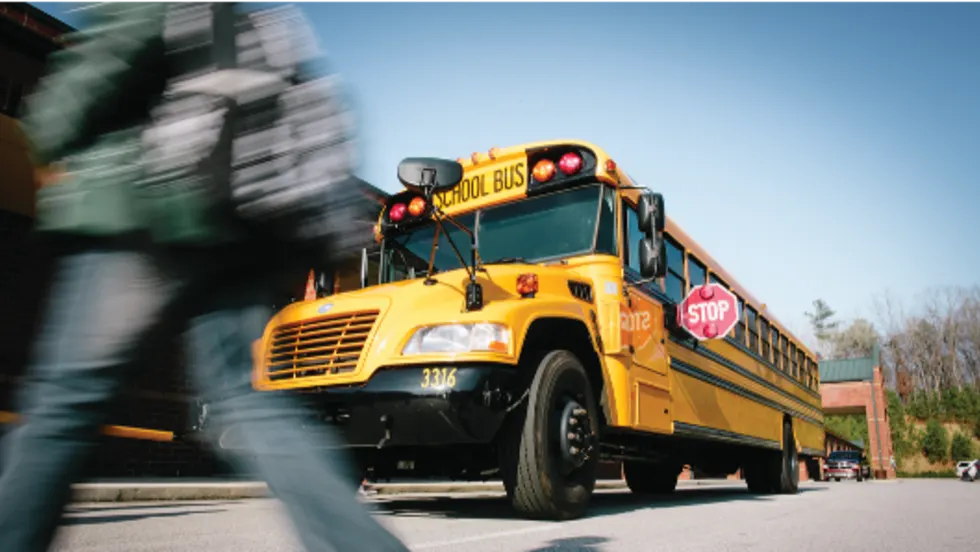
The Fuel Budget You Can Actually Predict: How Propane Autogas Keeps Money in the Classroom
Learn how propane autogas helps school districts manage fuel costs with predictable pricing, lower maintenance, and reduced emissions from former transportation director Joel Stutheit.
Read More →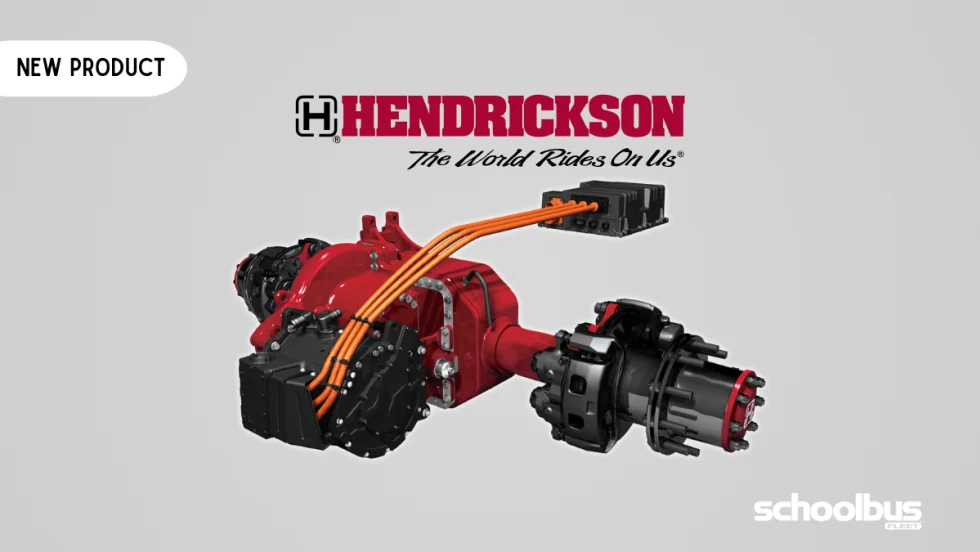
Hendrickson, Driventic Introduce New Electric Powertrain for School Buses
ELECTRAAX, the electrified, lightweight drive axle offers integrated ePowertrain efficiency and modular flexibility for Class 6–7 school bus use.
Read More →
The Mobility House Joins PowerFlex in Fleet Electrification Deal
The acquisition combines intelligent charging software, bidirectional charging expertise, and fleet electrification services to support the growing adoption of electric school buses across North America.
Read More →
Alt-Fuel Moves: Electric School Bus Investments Hit the Road
See which districts across the U.S. are putting electric school buses into service, expanding charging infrastructure, and planning the next phase of fleet electrification.
Read More →
With Fuel Volatility Ahead, School Districts Turn to Propane
While diesel prices peaked above $5 this spring, districts with propane autogas-powered fleets paid under $2 per gallon, according to PERC.
Read More →
EPA Unveils Proposed Changes to 2027 Heavy-Duty Engine Rules
The federal agency has proposed changes to next year’s targets that would eliminate DEF derates, ease warranty requirements, and retain current NOx emissions standards.
Read More →
Alt-Fuel Moves: EV Charging & Infrastructure Projects Gain Momentum
The latest developments include new funding, charging infrastructure, utility investments, and fleet technologies designed to support the transition to electric school buses nationwide.
Read More →