




Navigating the Shift to Electric Bus Air-Conditioning, Heating in 4 Steps
New York City Commits to Full School Bus Fleet Electrification by 2035
Mayor Bill de Blasio announces on Earth Day that the city is working toward making the entire fleet electric, starting with a purchase of 75 electric school buses in the next two years.

Nicole Schlosser・Former Executive Editor
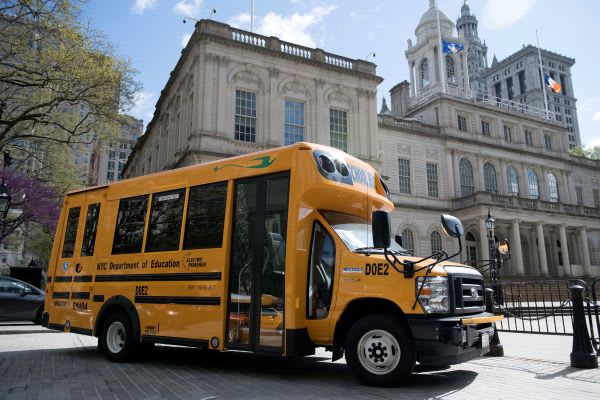
Mayor Bill de Blasio announced that all New York City school buses will be electric by 2035. Shown here is one of the city's first electric school buses.
Photo courtesy New York City Mayoral Photography Office
4 min to read
All New York City school buses will be electric by 2035, Mayor Bill de Blasio announced on Thursday.
In partnership with the city, the NYC School Bus Umbrella Corp. (NYCSBUS), an independent nonprofit that will manage school bus operations, is pursuing a goal of transitioning its portion of the buses serving the city to an all-electric school bus fleet by 2030, de Blasio said in the Earth Day announcement, which was part of a press conference posted on Facebook Live on fighting the climate crisis.
Watch de Blasio make the announcement about electric school buses in the video, posted on his office’s Facebook page, below. (He shares the information at around the 7:30 mark.) New York City Schools Chancellor Meisha Porter and Ben Furnas, director of the mayor’s Office of Climate and Sustainability, also unveiled one of the city's new Type A electric school buses in the video.
Through the partnership, the city will purchase 75 electric school buses as part of the total 960 buses they will manage in the next two years to advance this goal. The buses will be wheelchair-accessible, said Victor Calise, commissioner for the Mayor's Office for People with Disabilities, in a news release from de Blasio’s office.
The move from a diesel school bus fleet to an all-electric fleet is expected to have significant climate, health, and cost-saving impacts: The new fleet can potentially reduce 30% of carbon emissions from school buses, remove enough air pollution citywide to avoid two premature deaths each year, reduce asthma emergency department visits and respiratory and cardiac hospitalizations, and save about $18 million in healthcare costs, according to de Blasio’s office.
“Today we are doubling down on reducing air pollution and carbon emissions from our vehicles,” De Blasio said. “The clean transportation future we need is being built right here, right now.” "For our kids' sake, it's time to leave the internal combustion engine behind,” Furnas said. “Electrifying our school buses will give our schoolchildren cleaner air to breathe while confronting the climate crisis and accelerating the transition away from fossil fuels. Thank you to the Department of Education for your commitment to an all-electric school bus fleet and thank you to NYCBUS for leading the way.”
The announcement comes as school districts across the U.S., including at least one in New York state, also make plans to transition to full-fleet electrification.
The city’s commitment builds on Executive Order 53, which mandates that all 30,000 vehicles in its non-emergency fleet will be electric by 2040. When the NYC Clean Fleet commitment was made in February 2020, the school bus fleet servicing New York City public school students was owned by private companies, according to de Blasio’s office. Starting this year, NYCSBUS will operate 960 school buses and work in partnership with the city to manage their school bus operations, targeting routes in environmentally and socioeconomically disadvantaged neighborhoods.
"I thank Mayor de Blasio, Chancellor Porter, and Director Furnas for making this commitment that will have a lasting positive influence on the children and families we serve, and our environment,” said Matt Berlin, NYCSBUS's CEO. “We look forward to working with our partners in the administration, city council, and advocacy community to implement the mayor's ambitious vision."
The new electric school buses, related infrastructure, and staffing needs will cost $30 million over the next two years. Long-term ownership costs are expected to be lower than diesel buses, according to de Blasio’s office.
Emissions from all cars, buses, and trucks make up about 30% of the city’s carbon footprint. The air pollution from that traffic contributes to 320 premature deaths and 870 emergency department visits annually, with the highest concentration of pollution occurring in low-income neighborhoods, de Blasio's office said in the news release. Reducing dependence on cars by utilizing alternative modes of transportation coupled with wide-scale adoption of electric vehicles (EVs) where cars are needed is a critical component of the city’s plan to reach carbon neutrality by 2050 and deliver a just transition to a green economy.
More broadly, to support citywide electric vehicle adoption, the administration will expand legislation that requires all new parking lots include EV charging infrastructure
“Our children deserve an environment that is cleaner, greener, and brighter than how we left it, and this announcement brings us one step closer to that reality,” Porter said in the news release from de Blasio's office. “New York City is pioneering this important work to combat climate change and reaffirming our commitment to healthier school communities across the five boroughs.”
More Alternative Fuels

CALSTART and Forth Combine to Form Catalyst Mobility
The new name represents a renewed vision for the nonprofit focused on advancing clean, equitable, and affordable transportation solutions that move people and goods.
Read More →
Alt-Fuel Moves: New Buses, Charging Hubs & Real-World EV Testing
Propane and electric school bus deployments continue to grow as districts add new vehicles, expand charging infrastructure, and gather more real-world operating data.
Read More →
Fewer Electric School Bus Models Reshape the U.S. Market
WRI’s latest buyer’s guide points to a consolidating electric school bus market, but fewer options may reflect a maturing industry rather than fewer meaningful choices for school bus operators.
Read More →
The Fuel Budget You Can Actually Predict: How Propane Autogas Keeps Money in the Classroom
Learn how propane autogas helps school districts manage fuel costs with predictable pricing, lower maintenance, and reduced emissions from former transportation director Joel Stutheit.
Read More →
Hendrickson, Driventic Introduce New Electric Powertrain for School Buses
ELECTRAAX, the electrified, lightweight drive axle offers integrated ePowertrain efficiency and modular flexibility for Class 6–7 school bus use.
Read More →
The Mobility House Joins PowerFlex in Fleet Electrification Deal
The acquisition combines intelligent charging software, bidirectional charging expertise, and fleet electrification services to support the growing adoption of electric school buses across North America.
Read More →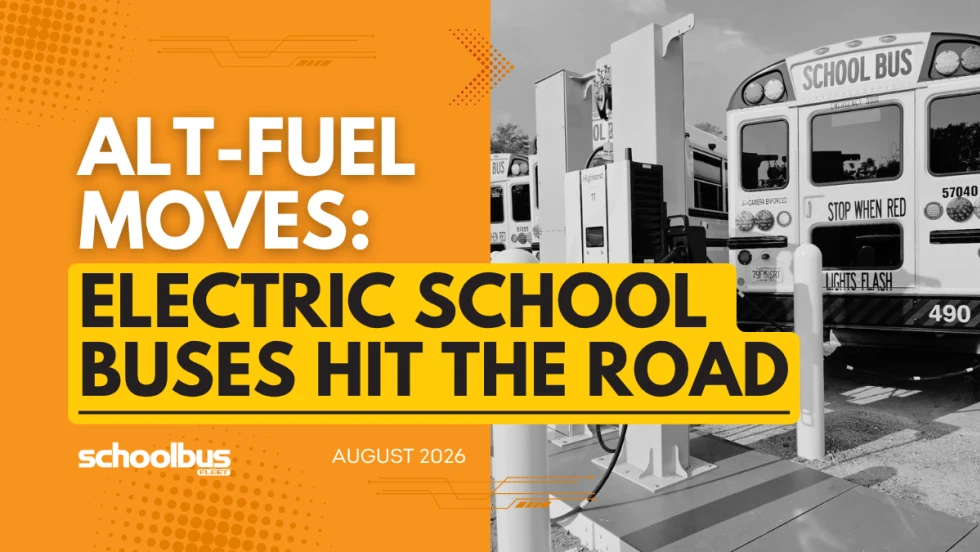
Alt-Fuel Moves: Electric School Bus Investments Hit the Road
See which districts across the U.S. are putting electric school buses into service, expanding charging infrastructure, and planning the next phase of fleet electrification.
Read More →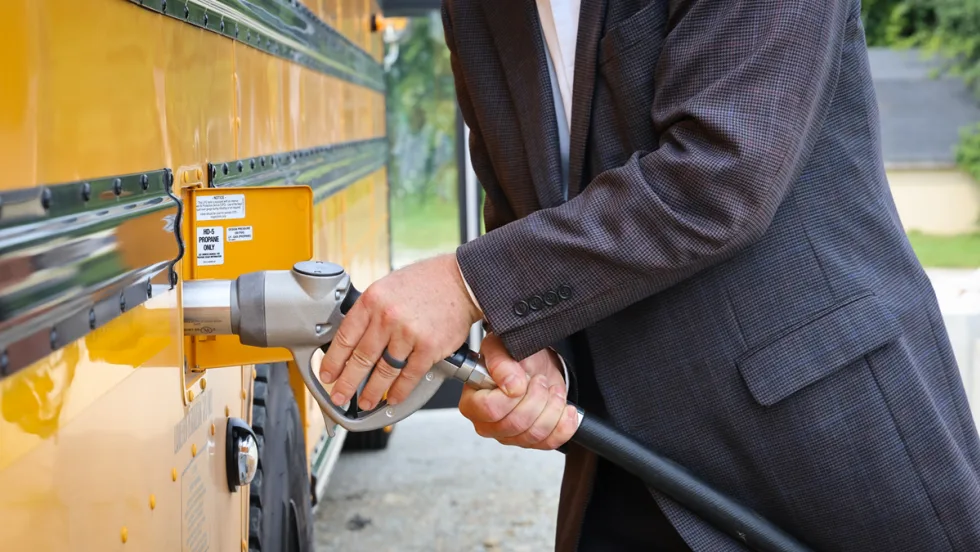
With Fuel Volatility Ahead, School Districts Turn to Propane
While diesel prices peaked above $5 this spring, districts with propane autogas-powered fleets paid under $2 per gallon, according to PERC.
Read More →
EPA Unveils Proposed Changes to 2027 Heavy-Duty Engine Rules
The federal agency has proposed changes to next year’s targets that would eliminate DEF derates, ease warranty requirements, and retain current NOx emissions standards.
Read More →
Alt-Fuel Moves: EV Charging & Infrastructure Projects Gain Momentum
The latest developments include new funding, charging infrastructure, utility investments, and fleet technologies designed to support the transition to electric school buses nationwide.
Read More →