




Md. districts aim to capture stop-arm violations
Several counties in the state are turning to camera systems to combat the persistent problem of illegal school bus passing. Directors of transportation discuss their efforts with SBF.

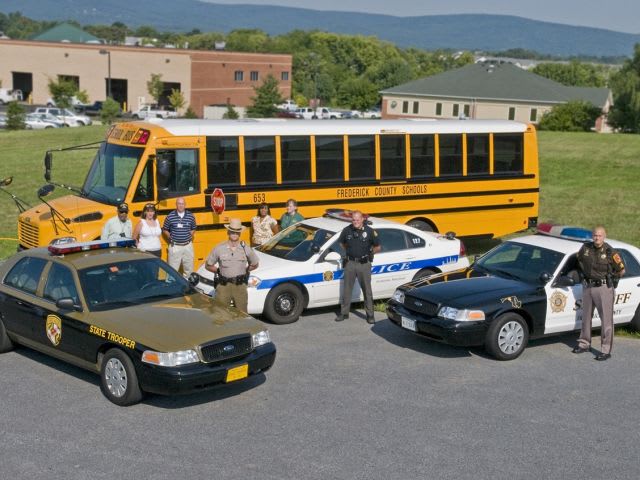
Frederick County (Md.) adopted a stop-arm camera ordinance in February. This photo, of officials from the school district's transportation department and three law enforcement agencies, was taken when legislation was initiated.
Several counties in Maryland are turning to stop-arm cameras to combat the persistent problem of illegal school bus passing.
Veronica Lowe, director of transportation for Frederick County Public Schools, told SBF that her district has seen an increase in the number of bus-passing incidents in recent years. The tally for the 2010-11 school year was 457, although that only includes the violations that the district's bus drivers were able to record. In the previous school year, the total was 231.
"We recognized that it was a huge problem that was affecting the safety of our students," Lowe said.
She and other leaders from Frederick County took the issue to the state General Assembly. They worked on state legislation, enacted in spring 2011, that enables Maryland counties to pass their own bills to allow the use of stop-arm cameras in citing motorists who illegally drive by stopped school buses.
"We saw that other states had bills named after a child who was killed" in a stop-arm running incident, Lowe noted. "We wanted to get legislation out there before that happened."
Frederick County adopted a stop-arm camera ordinance on Feb. 7. Previously, a stop-arm runner could only be cited if a police officer witnessed the violation.
The school district is now in the process of selecting a vendor to provide stop-arm cameras. A few systems will be tested in a side-by-side comparison.
Lowe said that the interested vendors had been asked "to be very specific about the cameras, the clarity, what they could capture, what speed, how many lanes over. And for the processing of that data — how it would transfer over to the sheriff and what they would have to do as far as review and approving."
Frederick County Public Schools expects to equip about 40 of its 433 buses with the camera systems. It is expected that the vendor will supply the cameras at no cost based on a split of the fines that are collected, with the county getting the rest (the proportions haven't been determined yet). The fines can be up to $250.
"We wanted to make it clear that this isn't a moneymaker for us," Lowe noted. "Our hope is that the violations will go down to zero."
Toward that end, the district will also launch a campaign to educate the public about stop-arm violations.
Elsewhere in Maryland, Washington County’s commissioners on Tuesday approved an enabling ordinance for stop-arm cameras. It will go to a public hearing within the next few weeks.
“Our sheriff’s department is really spearheading this, which is wonderful,” said Barbara Scotto, supervisor of transportation for Washington County Public Schools.
Also, grant money has been used to have officers on overtime crack down on stop-arm running. And Scotto said that Washington County is working to educate the public on when and why they need to stop for school buses.
Montgomery County passed its own legislation on Tuesday.
Todd Watkins, director of transportation for Montgomery County Public Schools, said that his district is waiting for approval of funding for the camera systems. He expects to initially outfit about 25 buses with the units, at a cost of around $5,000 to $8,000 each.
The district already has some basic stop-arm cameras, but Watkins said that the new systems will be much more sophisticated, with motion detection and automatic sending of the data to law enforcement.
The new systems will be moved from bus to bus as needed, targeting areas with higher rates of illegal bus passing.
Before the new cameras go into service, the district will do a media blitz to get the word out. Watkins said he expects the cameras to be a significant deterrent.
"Our county has a lot of intersection cameras and speed cameras. You can see people changing their behavior around those," he said. "All we're looking to do is change behavior in the area of school buses."
In Charles County, the school district and the sheriff's department have been working together to develop a school bus stop-arm camera program.
"We are currently running a pilot with two vendors on six school buses," said Richard Wesolowski, director of transpor-tation for Charles County Public Schools. "[We] have not made any definitive decision yet. However, cost is going to be a big factor."
More Safety
HopSkipDrive Reports Progress on Safety Advisory Council
More than a year after forming the council, independent safety experts have helped shape new rider-safety features and policy progress, with a new goal to address rider behavior.
Read More →
What the 2026 National School Bus Safety Month Resolution Means for Student Transportation
The bipartisan resolution highlights illegal school bus passing, student safety during loading and unloading, and the need for driver training and public education.
Read More →
School Bus Stop-Arm Violations Decline 53% Across Verra Mobility Programs
Verra Mobility shares how school bus stop-arm cameras and school zone safety programs are changing driver behavior, reducing violations, and protecting students.
Read More →
Most Bus Crashes Aren’t Your Fault. Here’s How to Prove It.
A guide for what to do in between a school bus crash and a claim: what to preserve, who to notify, and how to keep the facts available when they matter.
Read More →
National School Bus Safety Week 2026: Tips, Toolkits & Resources to Keep Students Safe
School bus safety takes more than awareness. Explore expert tips, enforcement strategies, and free resources to help protect students on every ride.
Read More →
2 Killed, Dozens Injured in Florida School Bus Crash
A multi-vehicle collision caused a Polk County school bus carrying 37 students to overturn on its way to Winter Haven High School.
Read More →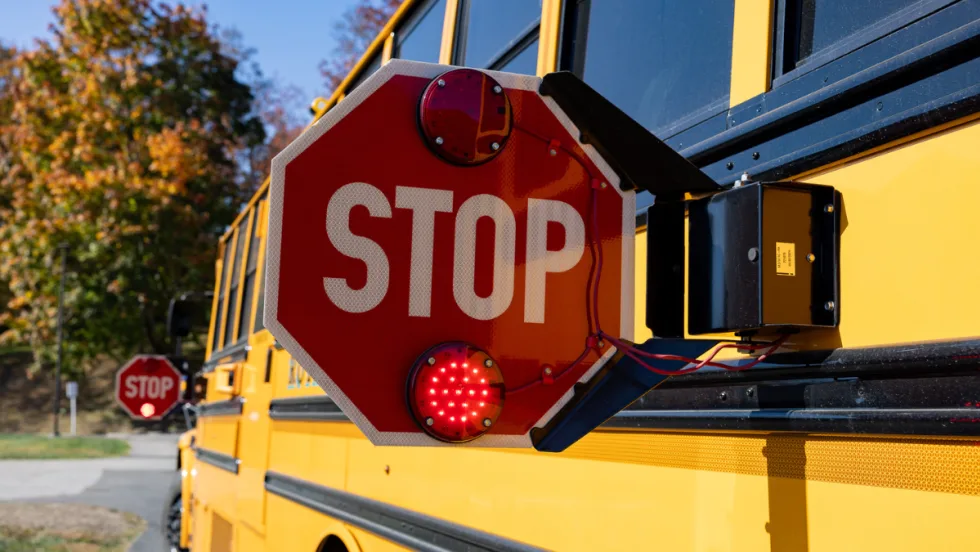
Illegal School Bus Passing Drops 24% in New York Districts
With fewer than 5% of citations involving repeat offenders, Westchester County officials said enforcement, education, and community partnerships are helping change driver behavior.
Read More →
School's Back. Here's What Happened to Traffic, Speeding & Distraction
What happens to traffic when school resumes? New data analysis examines changes in distracted driving, congestion, and speeding around schools.
Read More →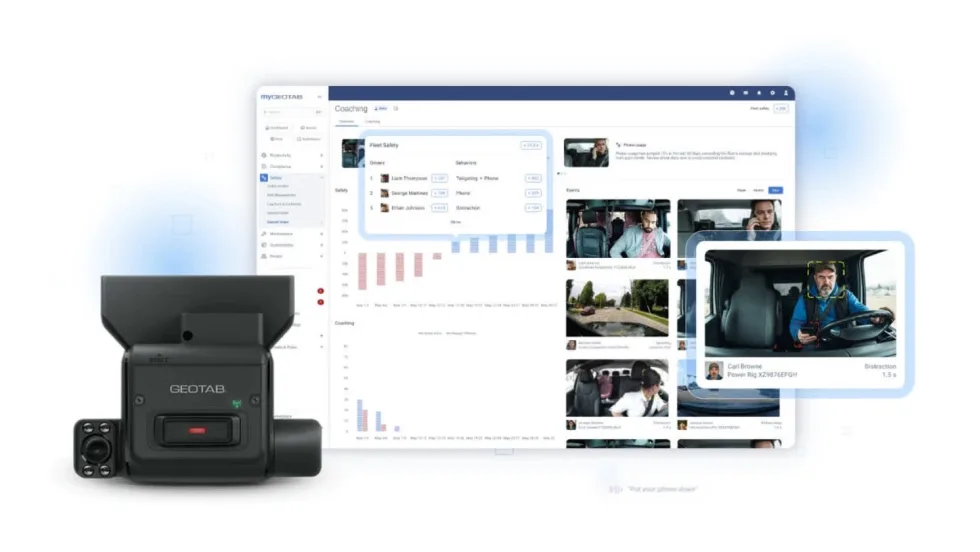
Geotab Expands Fleet Safety Tools With Video Coaching, Risk Insights
New safety and video capabilities aim to help fleet managers assess risk, support drivers, and take targeted action through video coaching, red-light violation detection, and more.
Read More →
How to Build a Better School Bus Driver Training Program
Is it time to strengthen your driver training? Here’s how to pick the right talent and improve recruitment, retention, and safety. This video is brought to you by IC Bus.
Read More →